Mirabella Yacht
Yacht Interior Design at Its Most Demanding
The Mirabella project represents one of the most technically and aesthetically demanding commissions in our portfolio. Yacht interior design operates under constraints that no land-based project imposes: strict weight limits, constant motion, salt-air corrosion, and spatial ratios where every centimetre must earn its place. Meeting those constraints without sacrificing luxury is the discipline that defines this work.
Design Approach
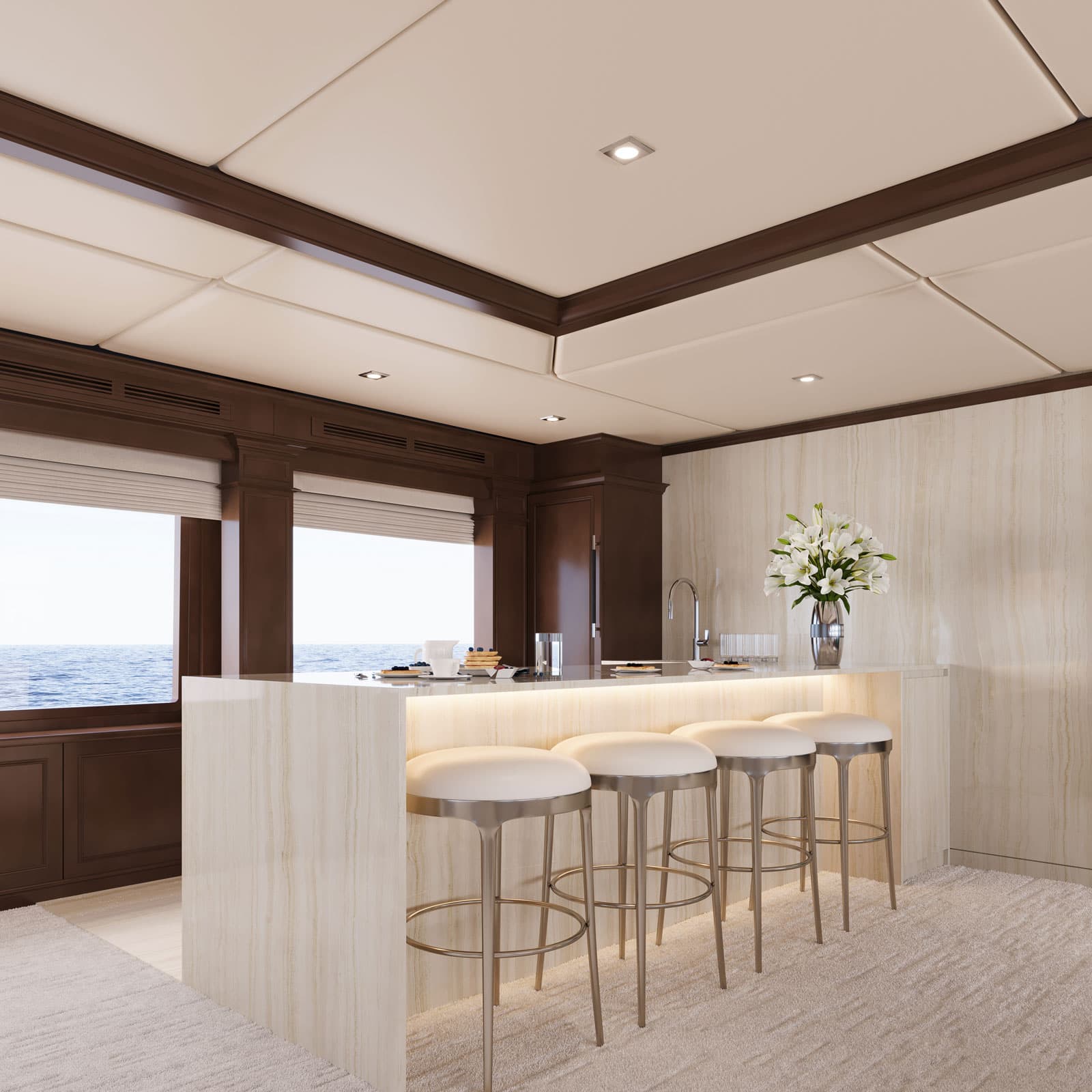
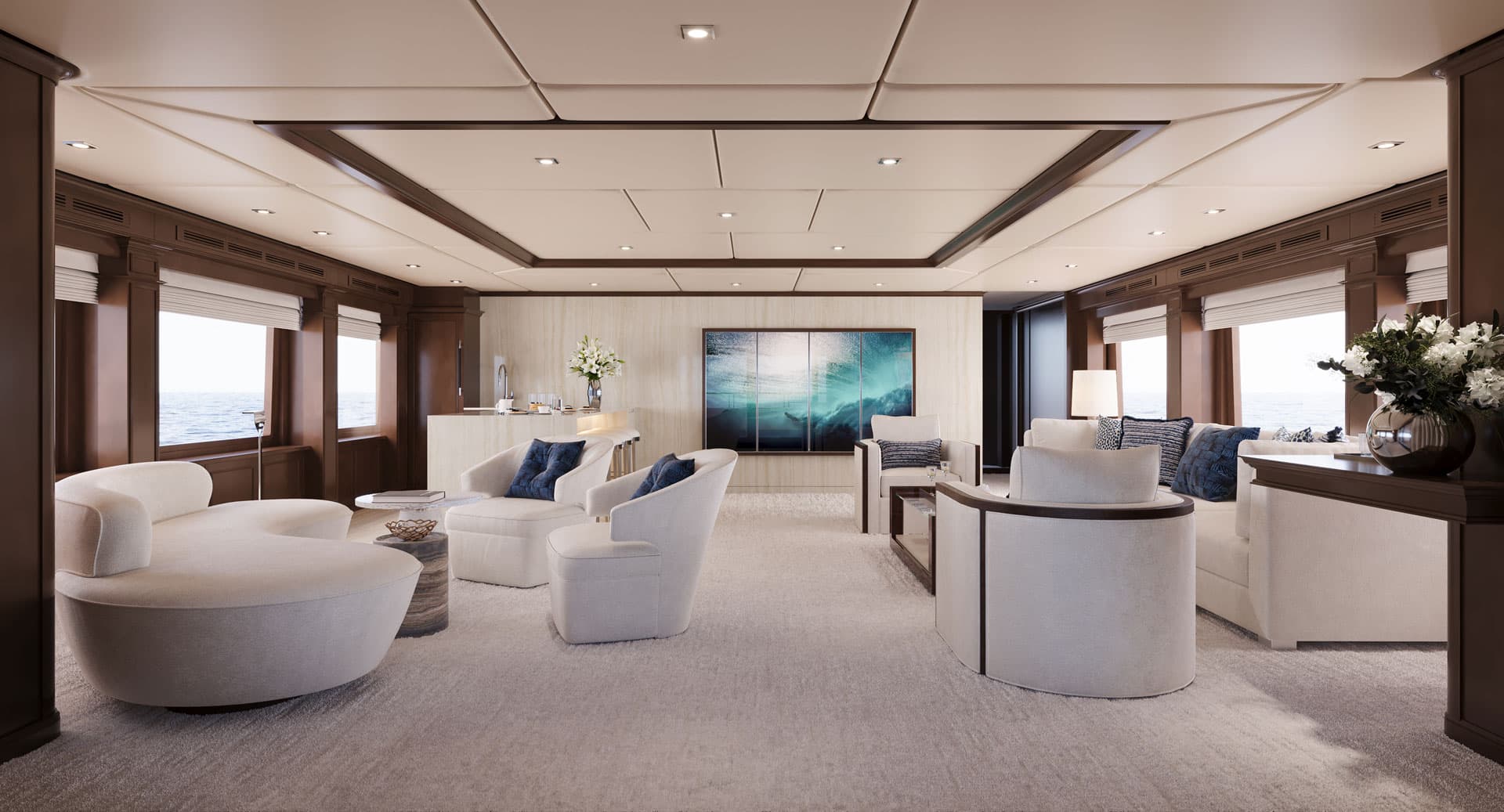
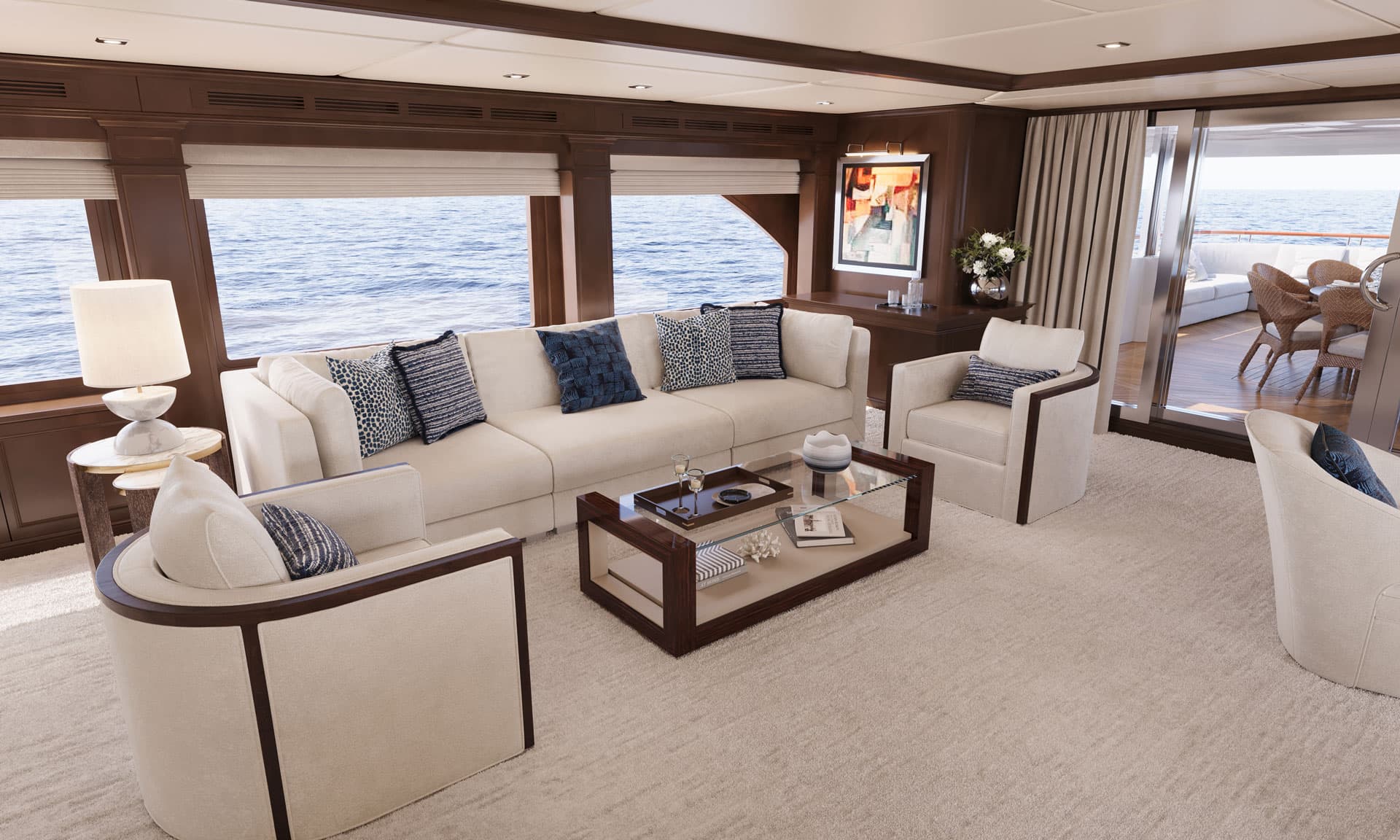
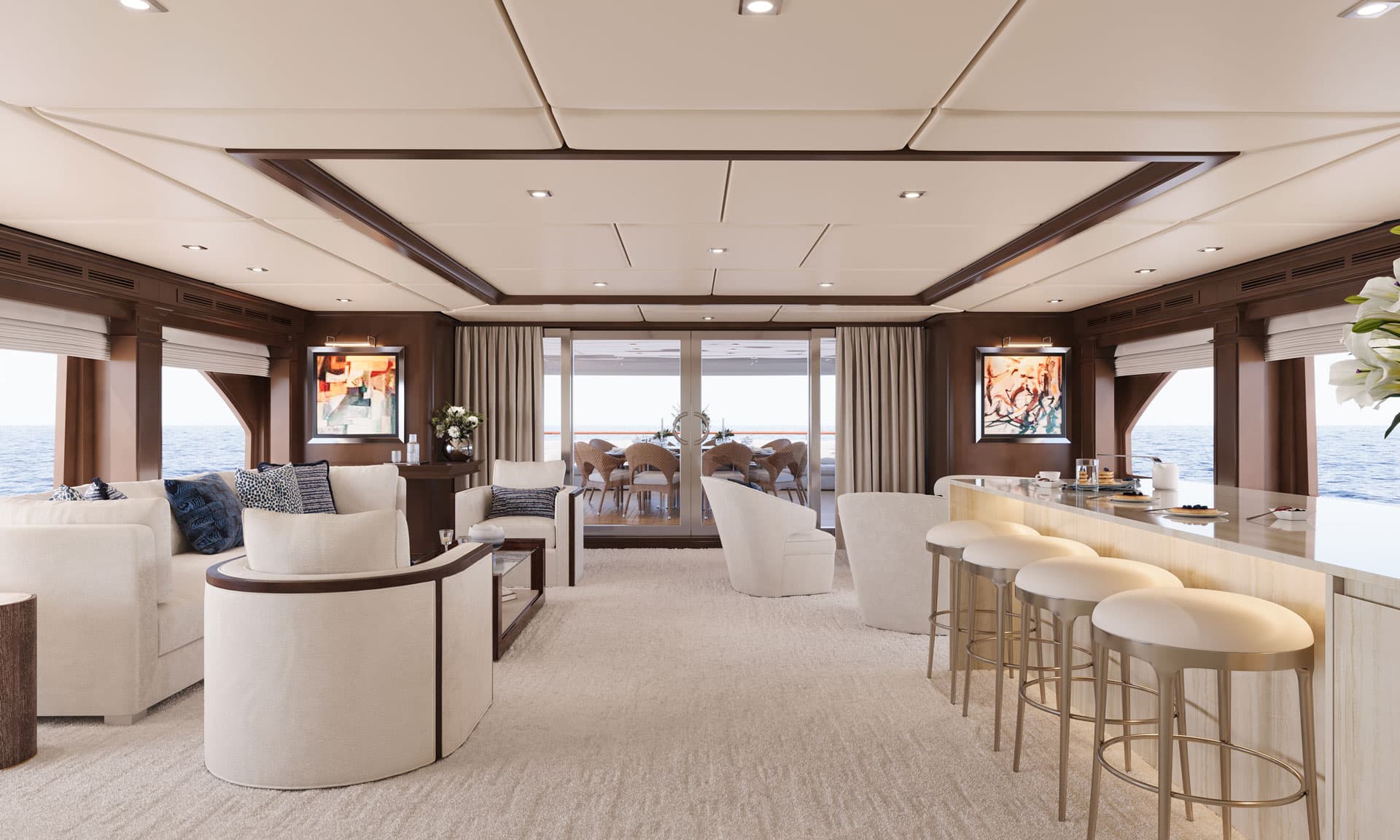
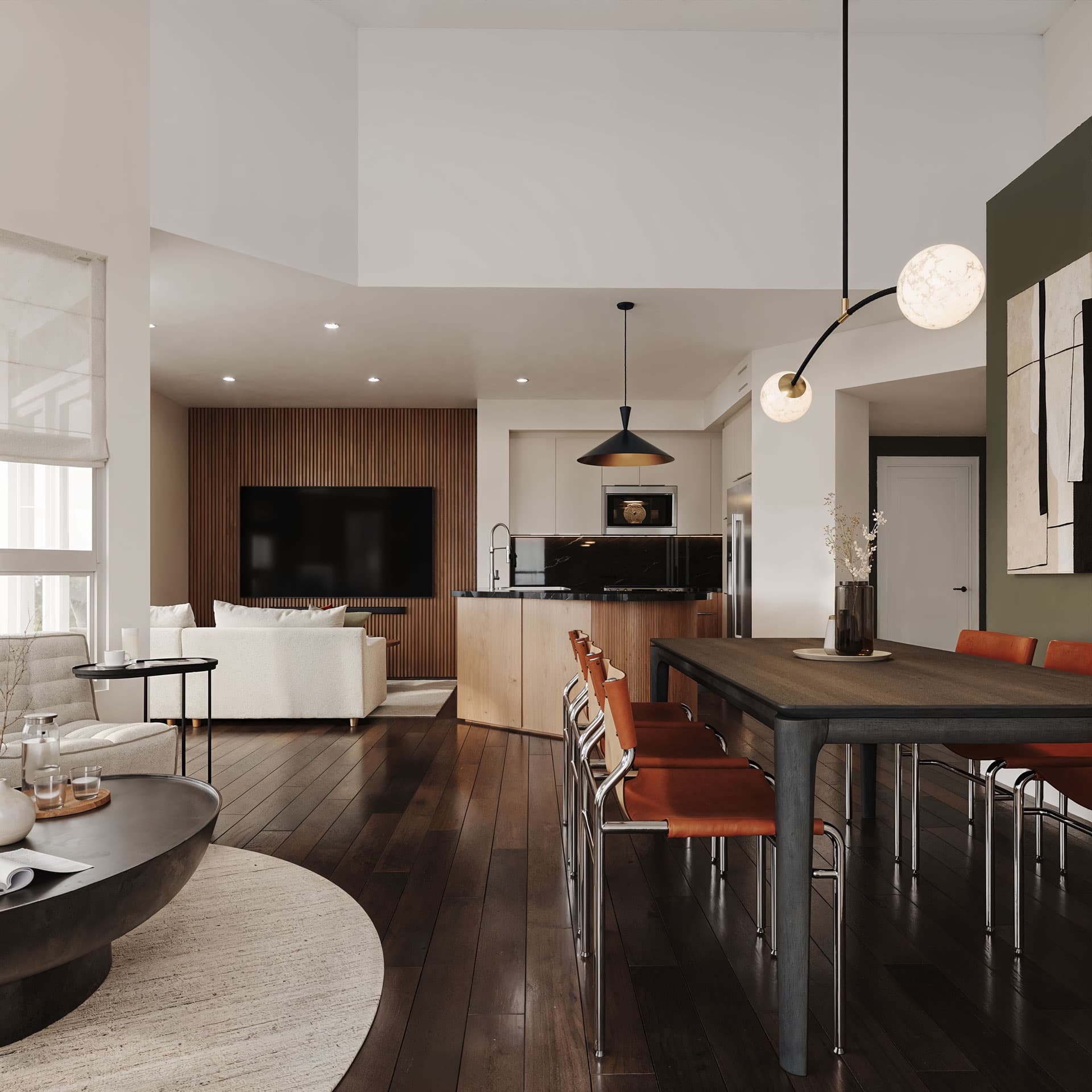
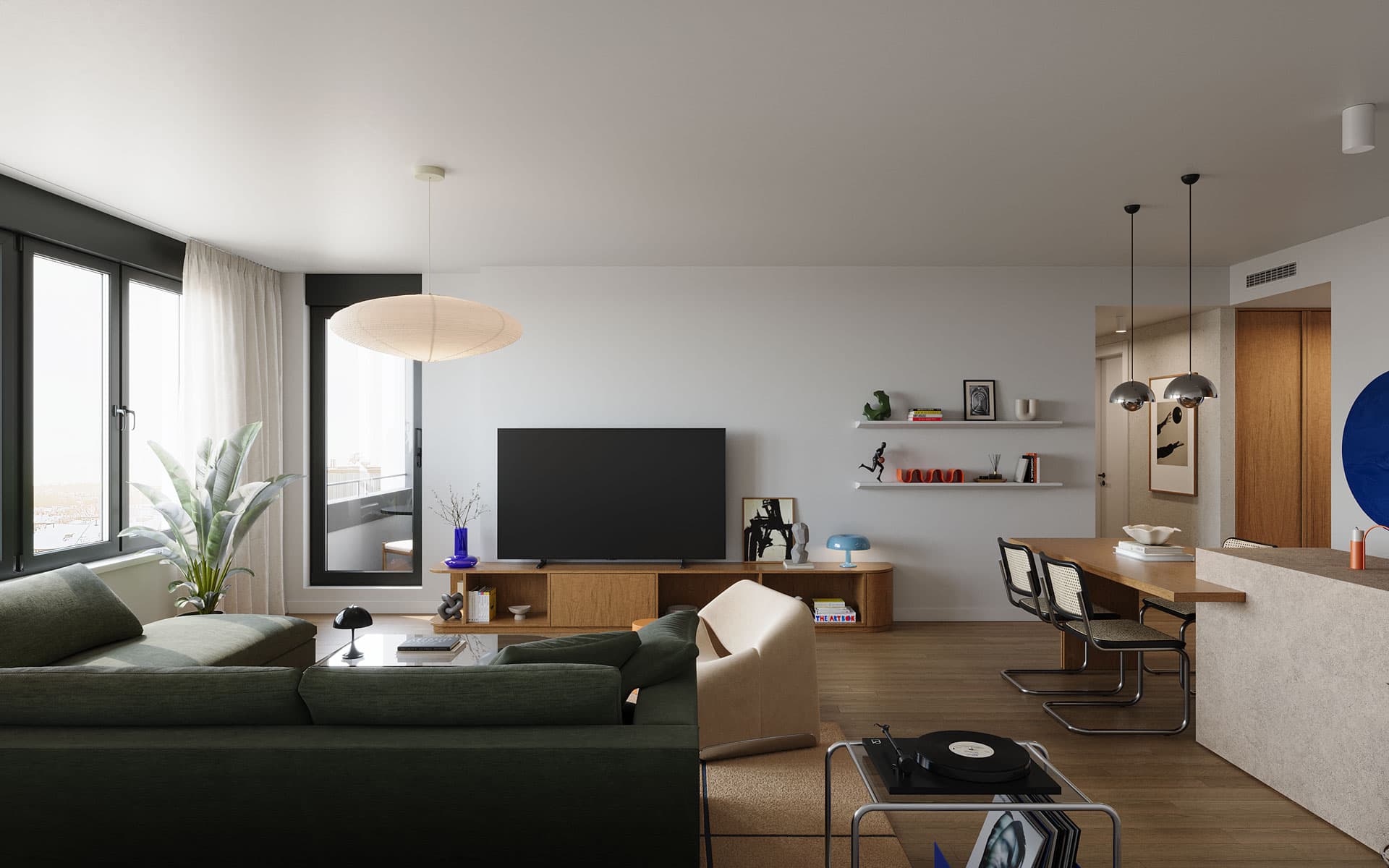
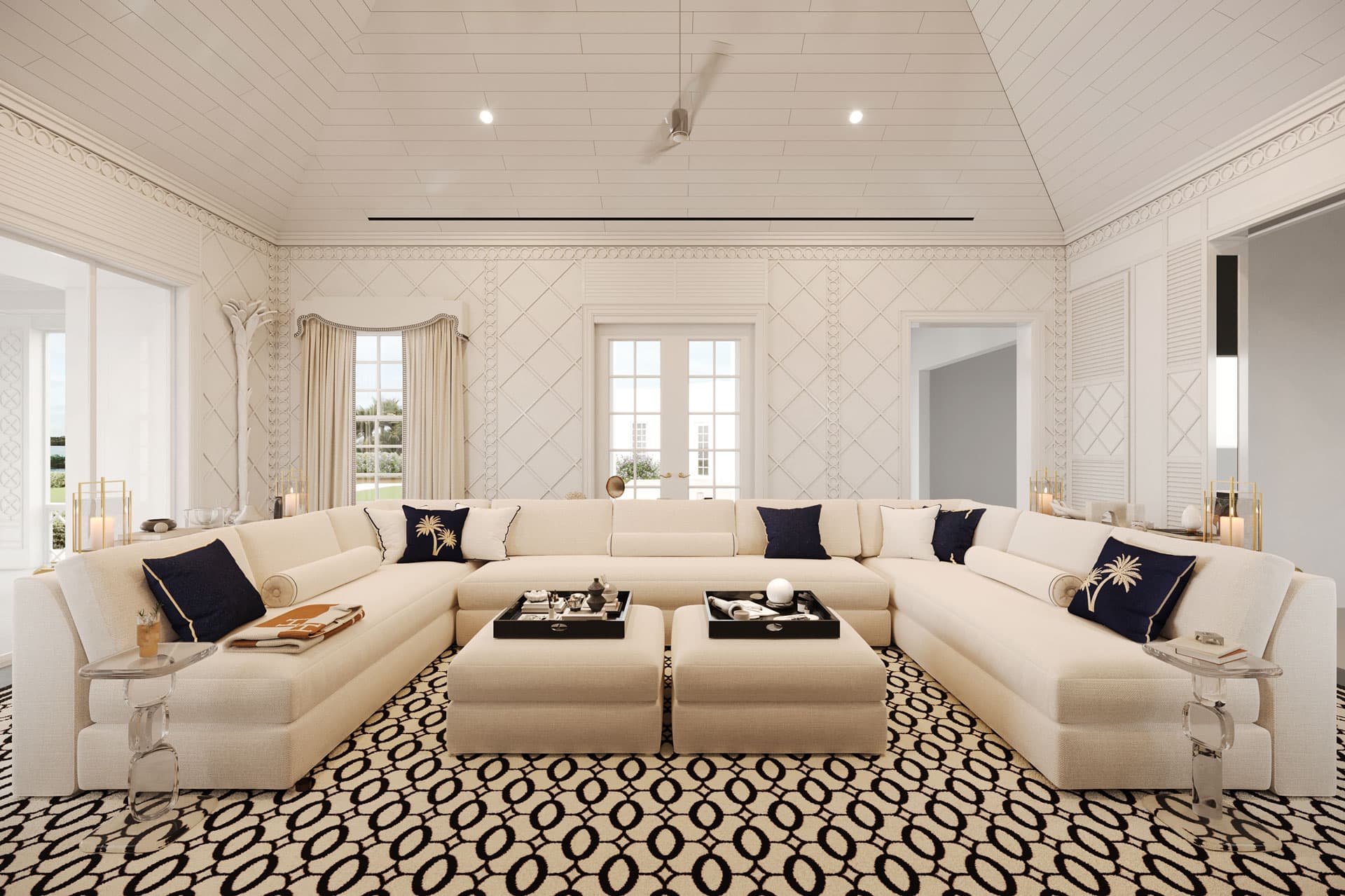
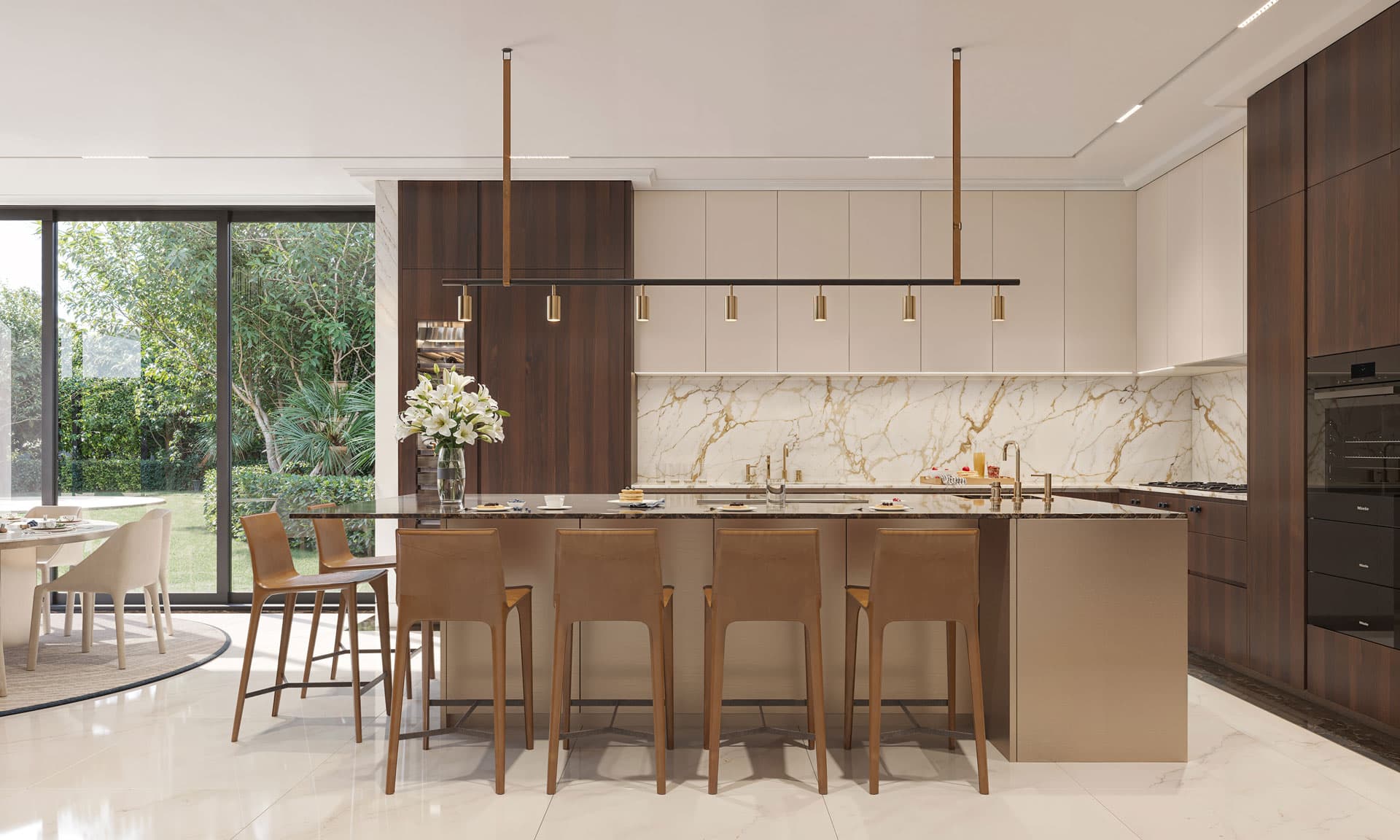
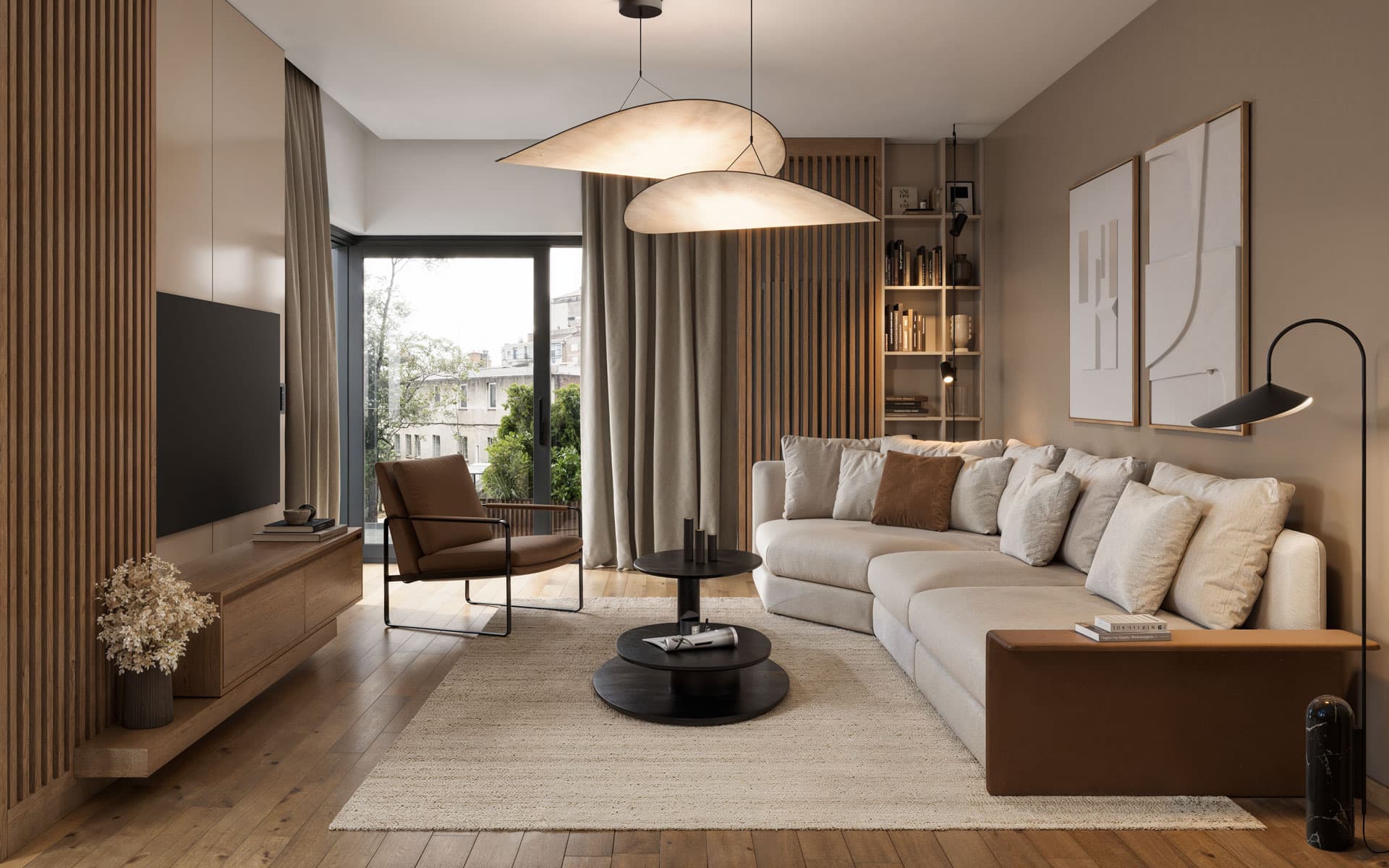
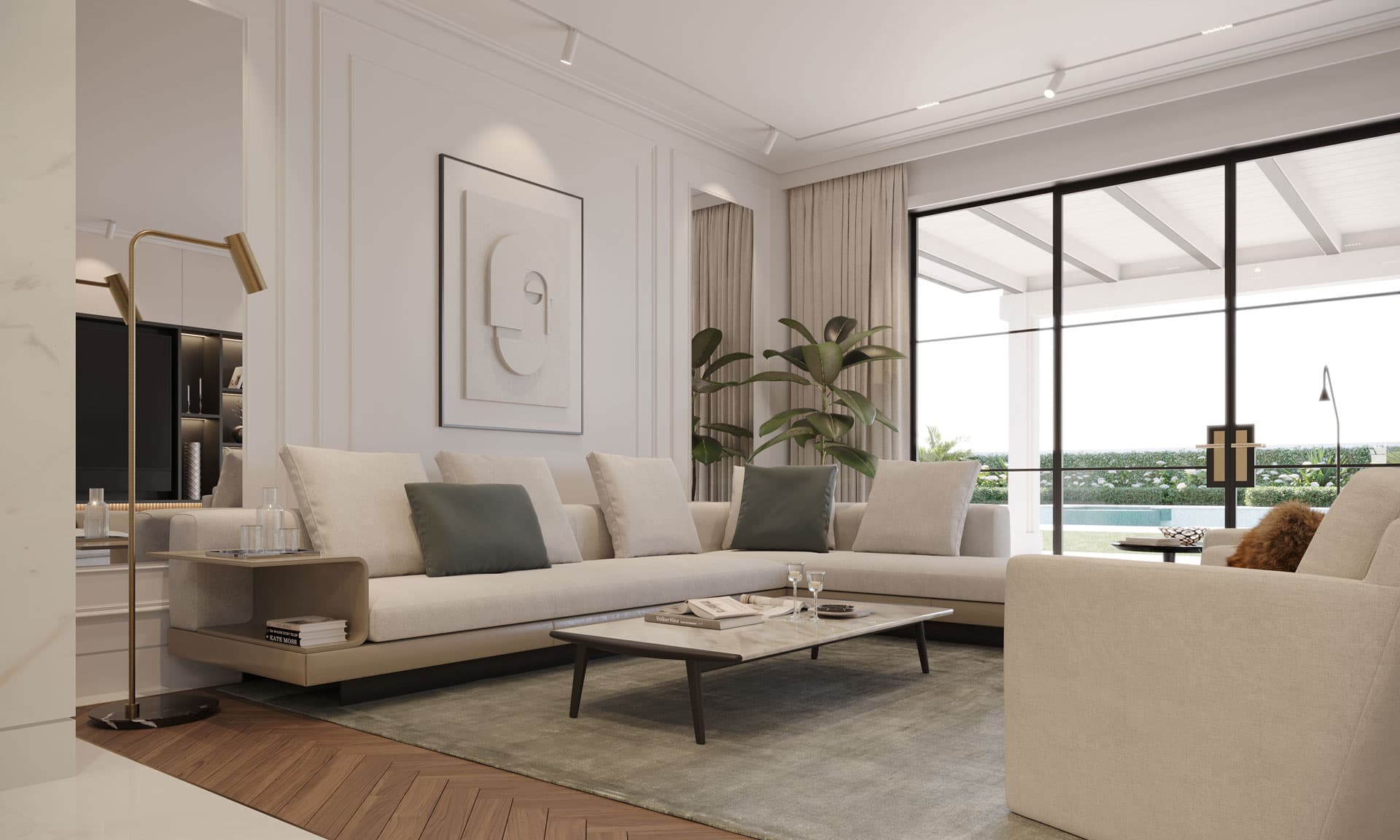
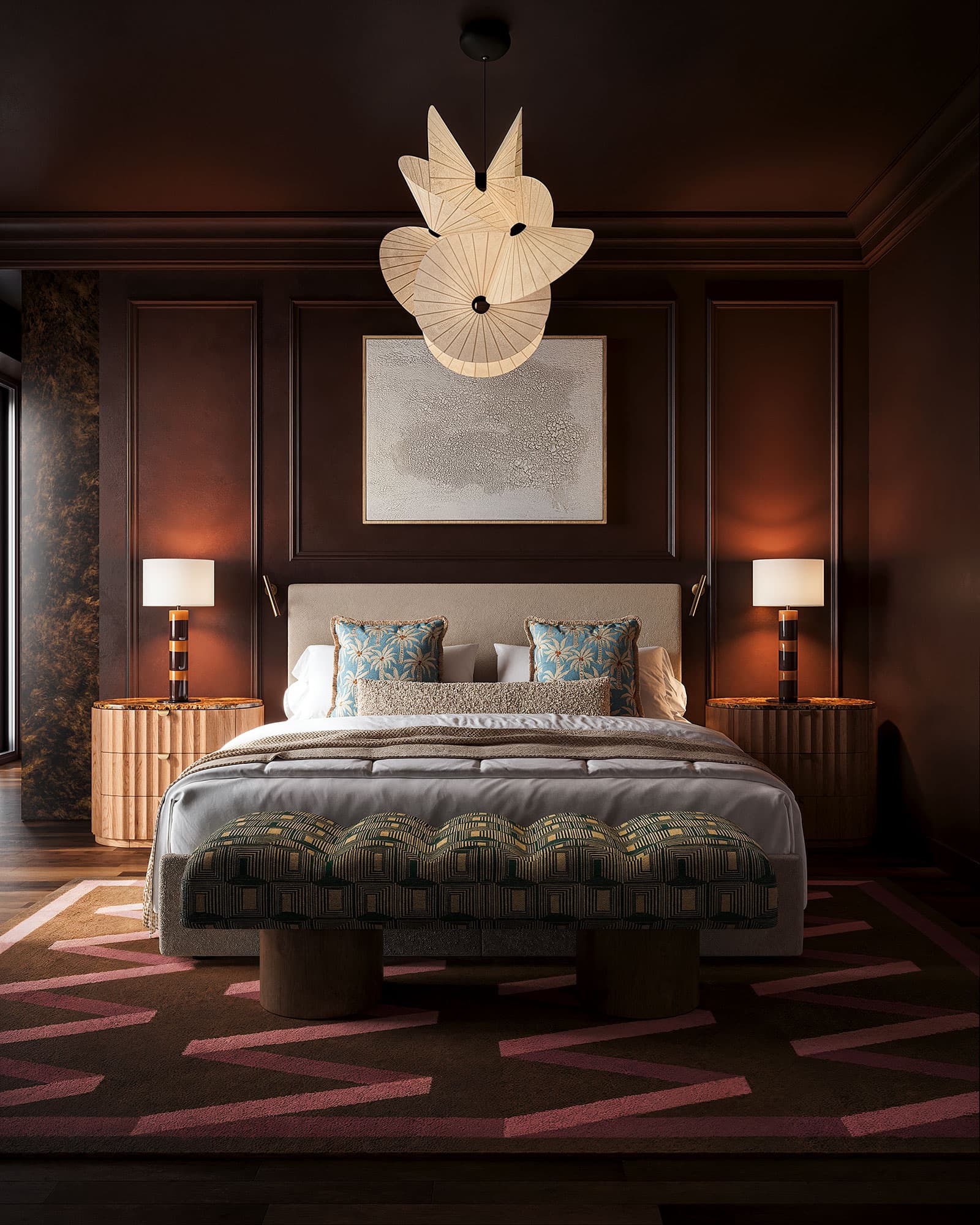
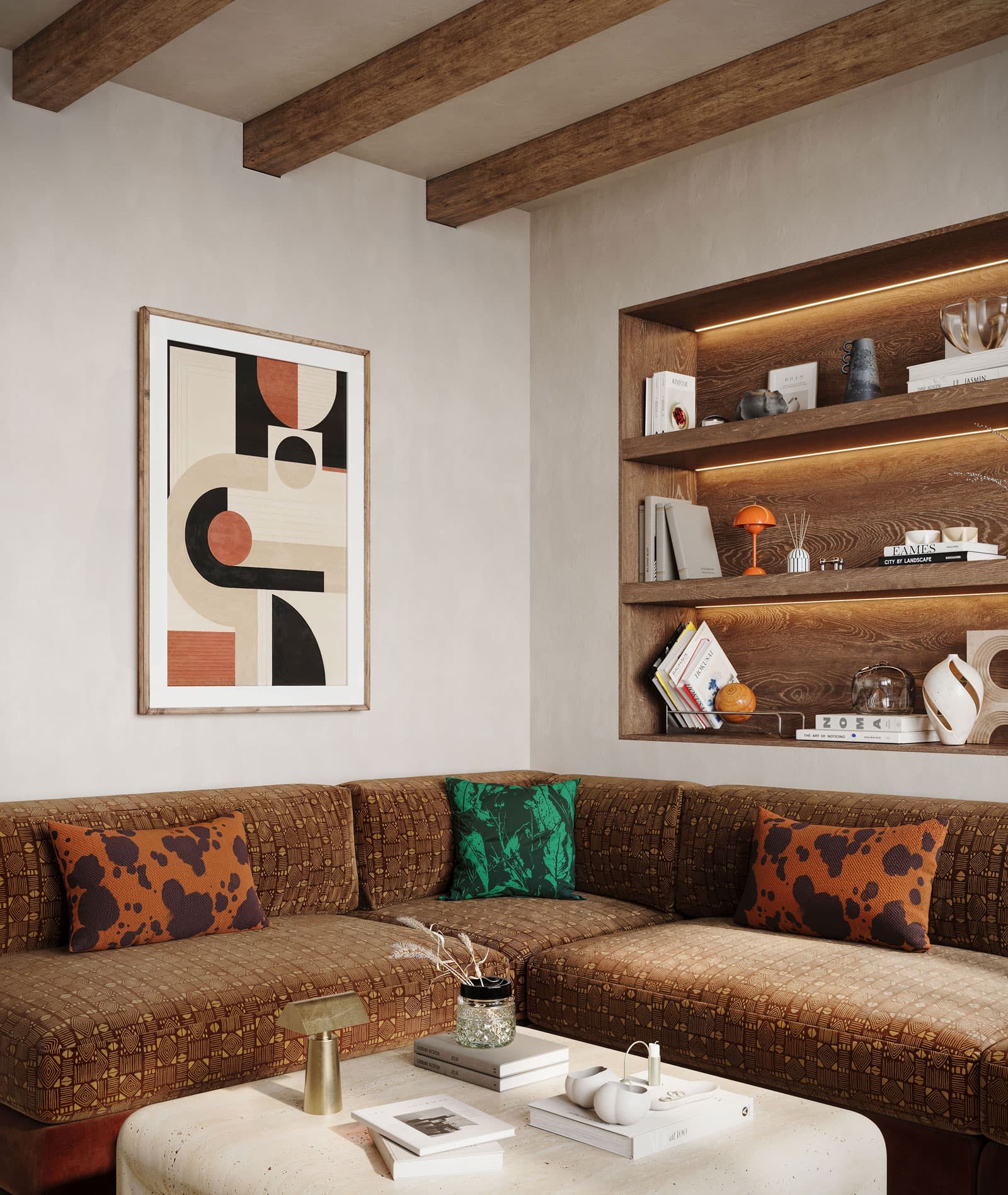
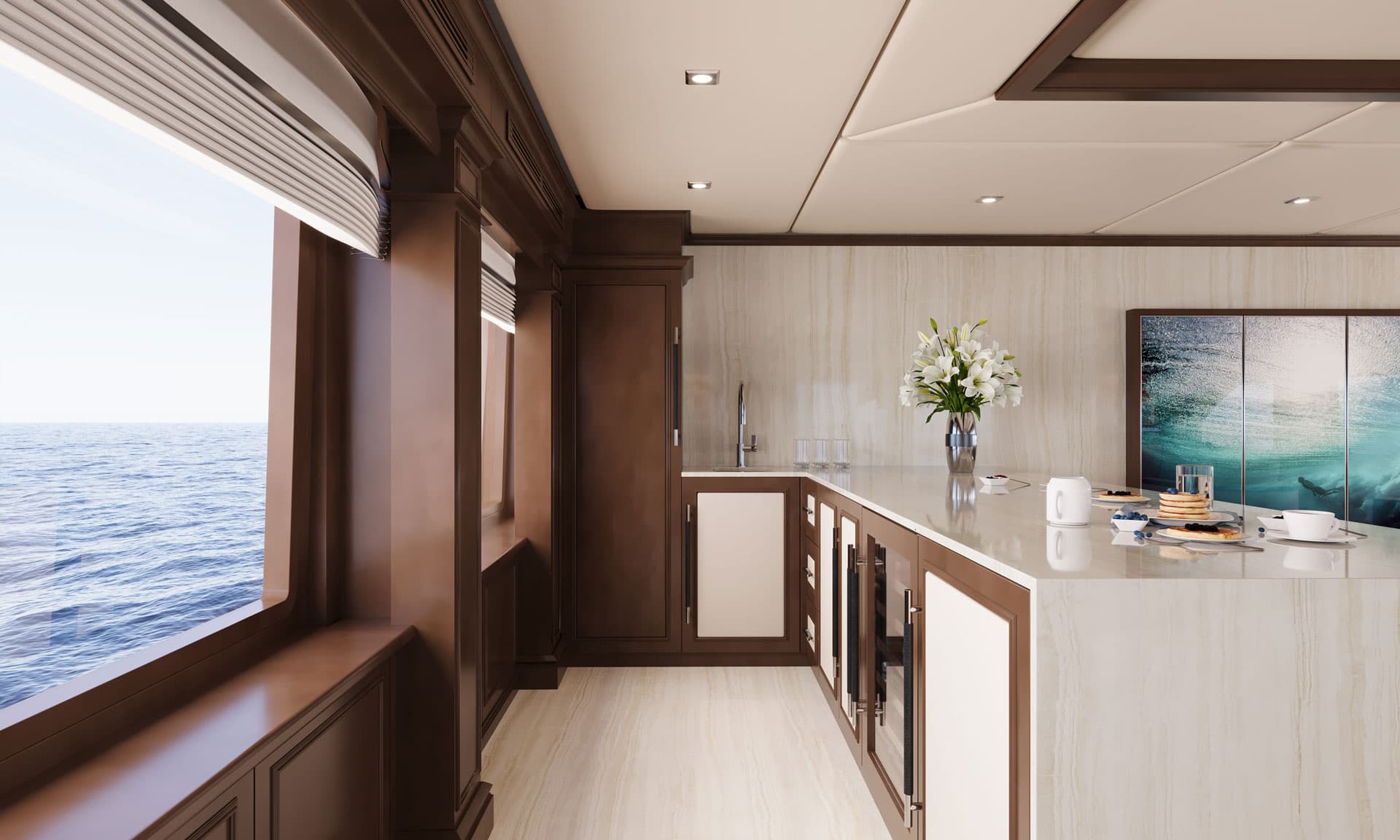
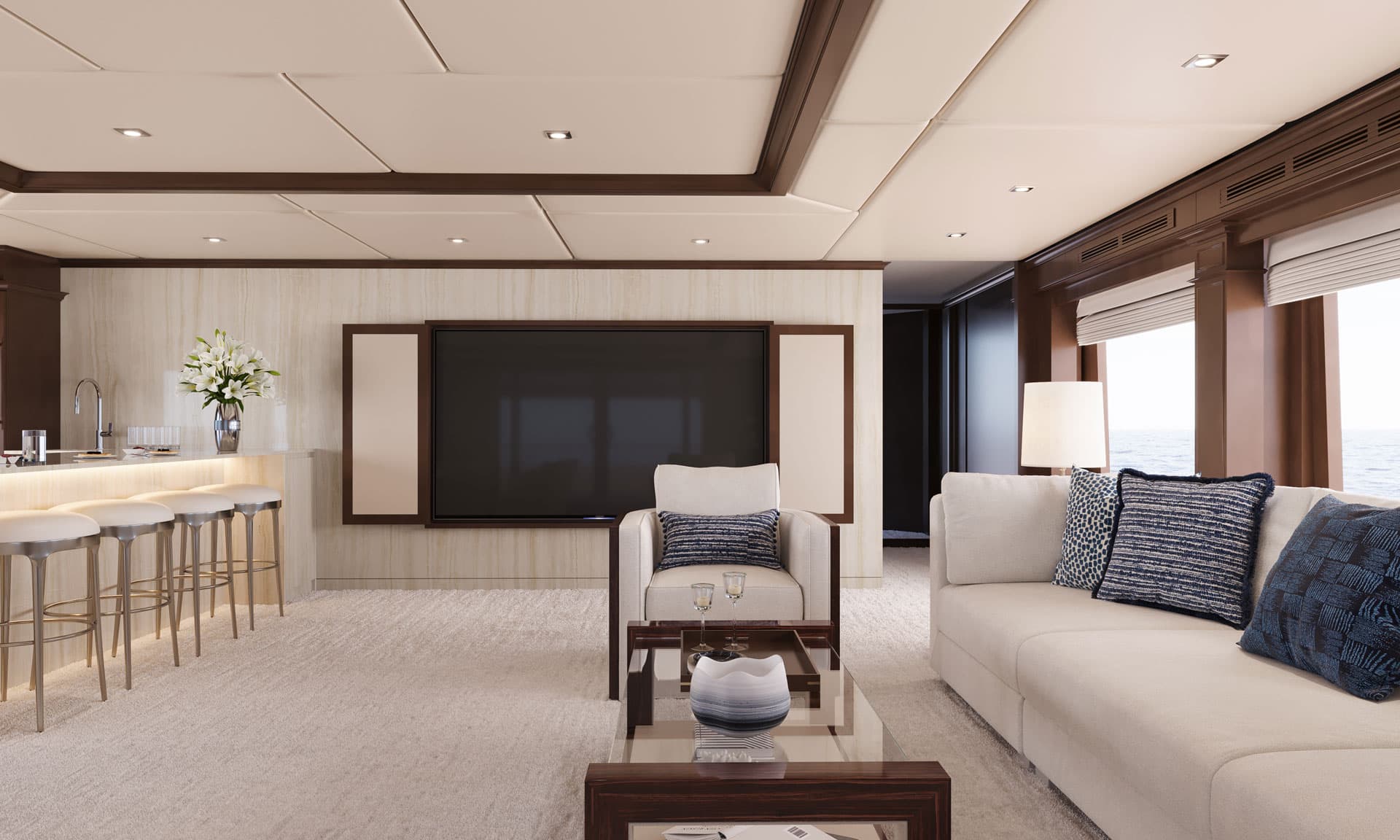
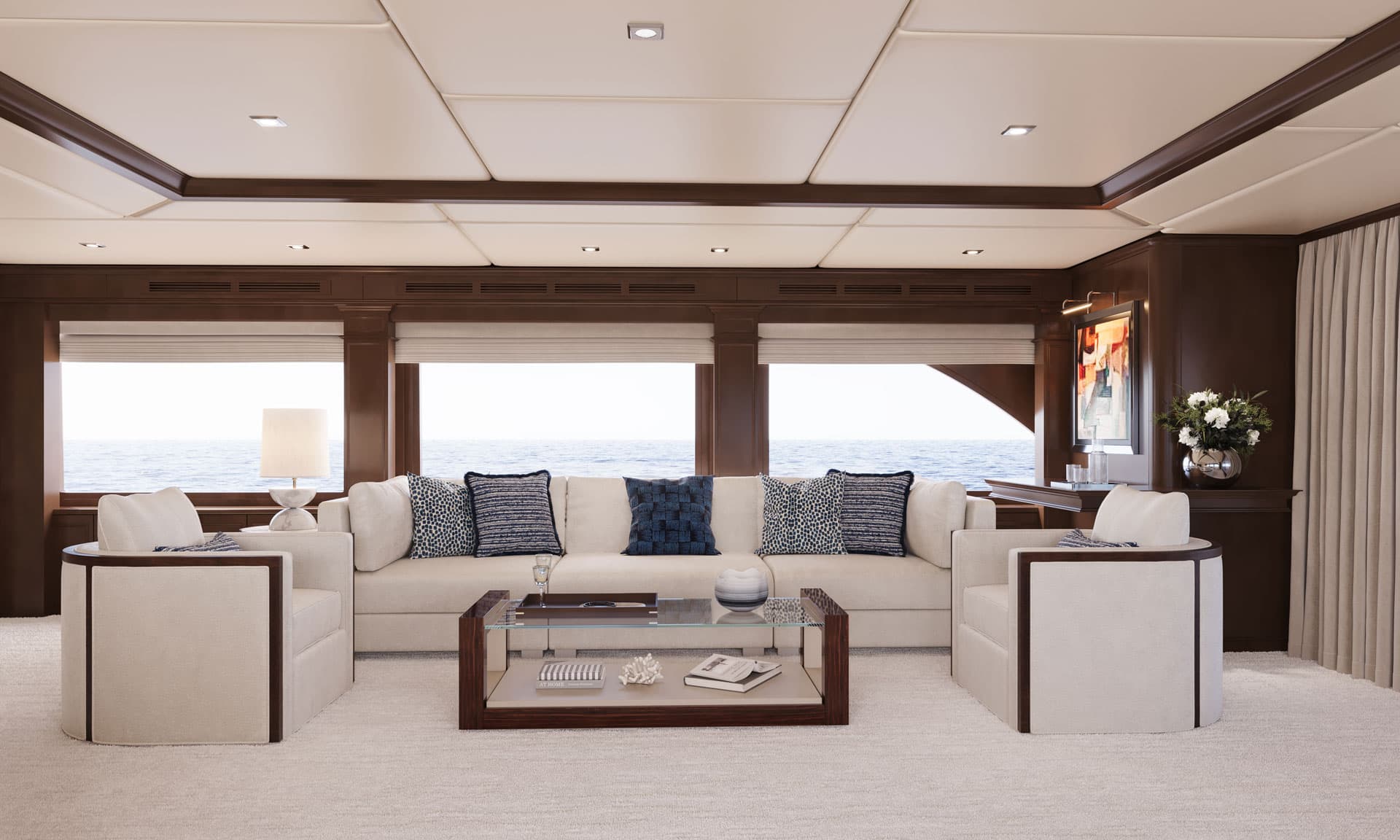
Our approach centred on treating each space aboard the Mirabella as a complete room in its own right - not a compromise scaled down from something larger. The main salon was conceived as a full living environment, with lounge, dining, and circulation zones that flow naturally despite the compact footprint. Custom millwork runs throughout, integrating storage invisibly into walls, seating bases, and cabinetry faces so the eye reads coherent surfaces rather than accumulated furniture.
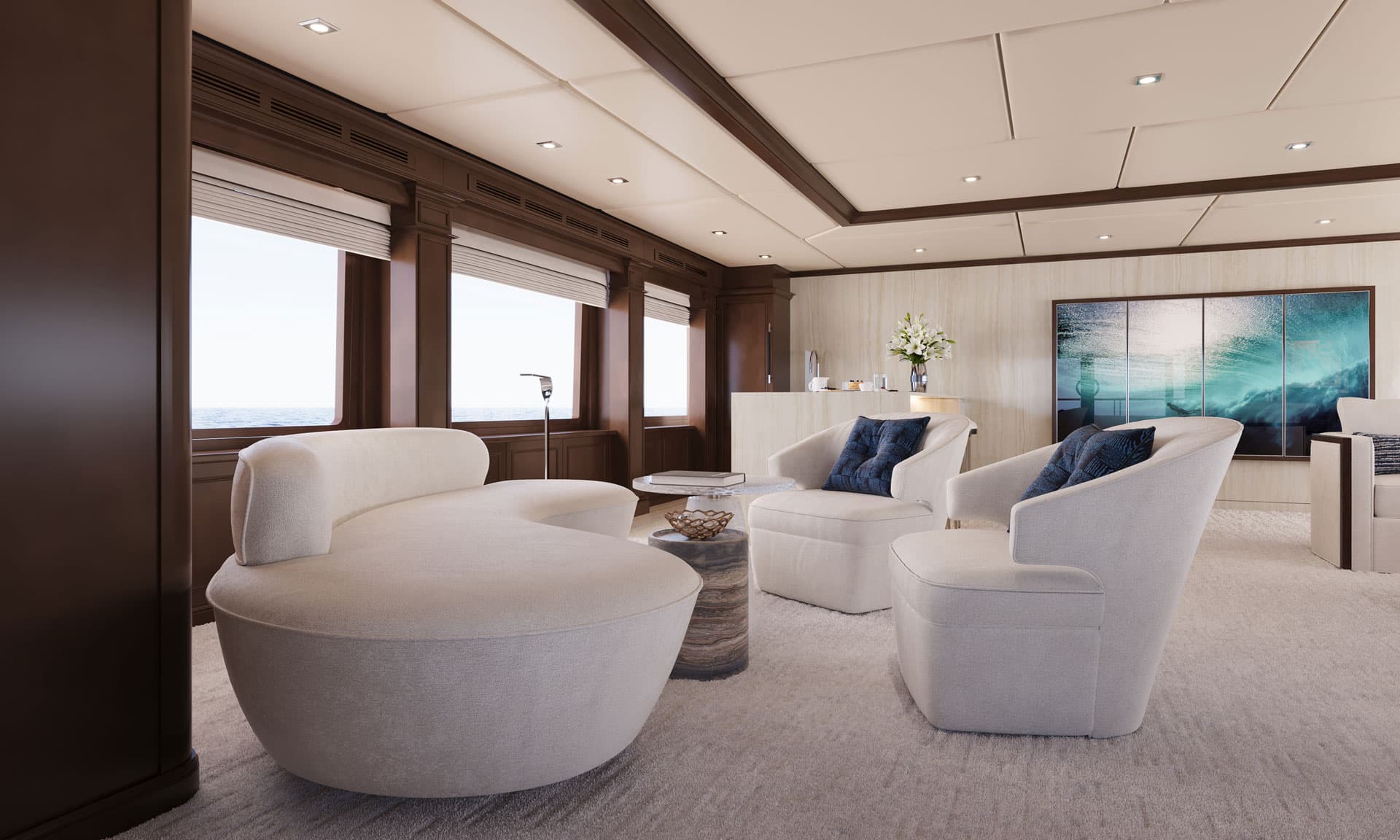
Proportions were calibrated for the seated human body in motion - lower sightlines, wider armrests, deeper cushion profiles - creating comfort that holds in both calm waters and open sea. Read more about our approach to yacht interior design on the blog.
Material Selection
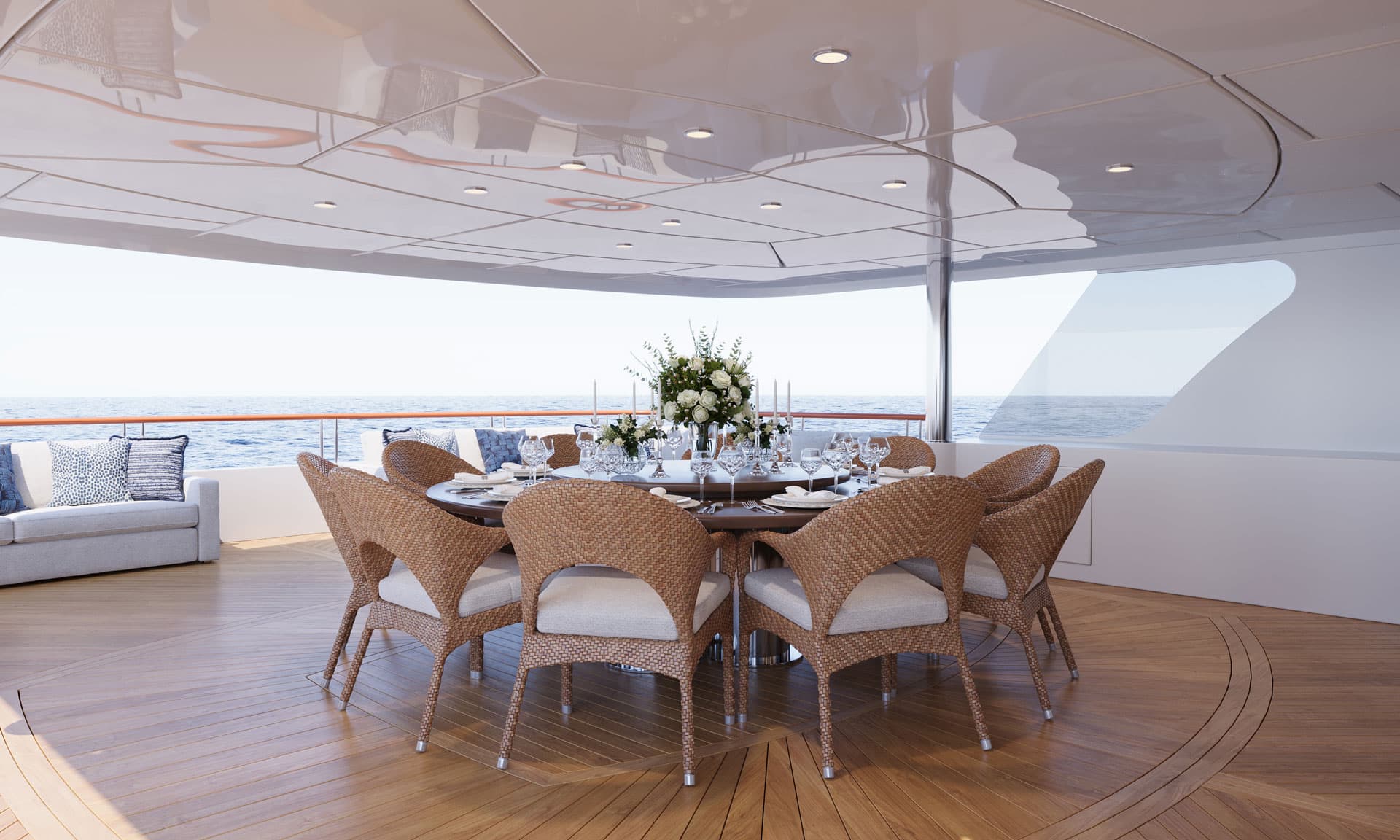
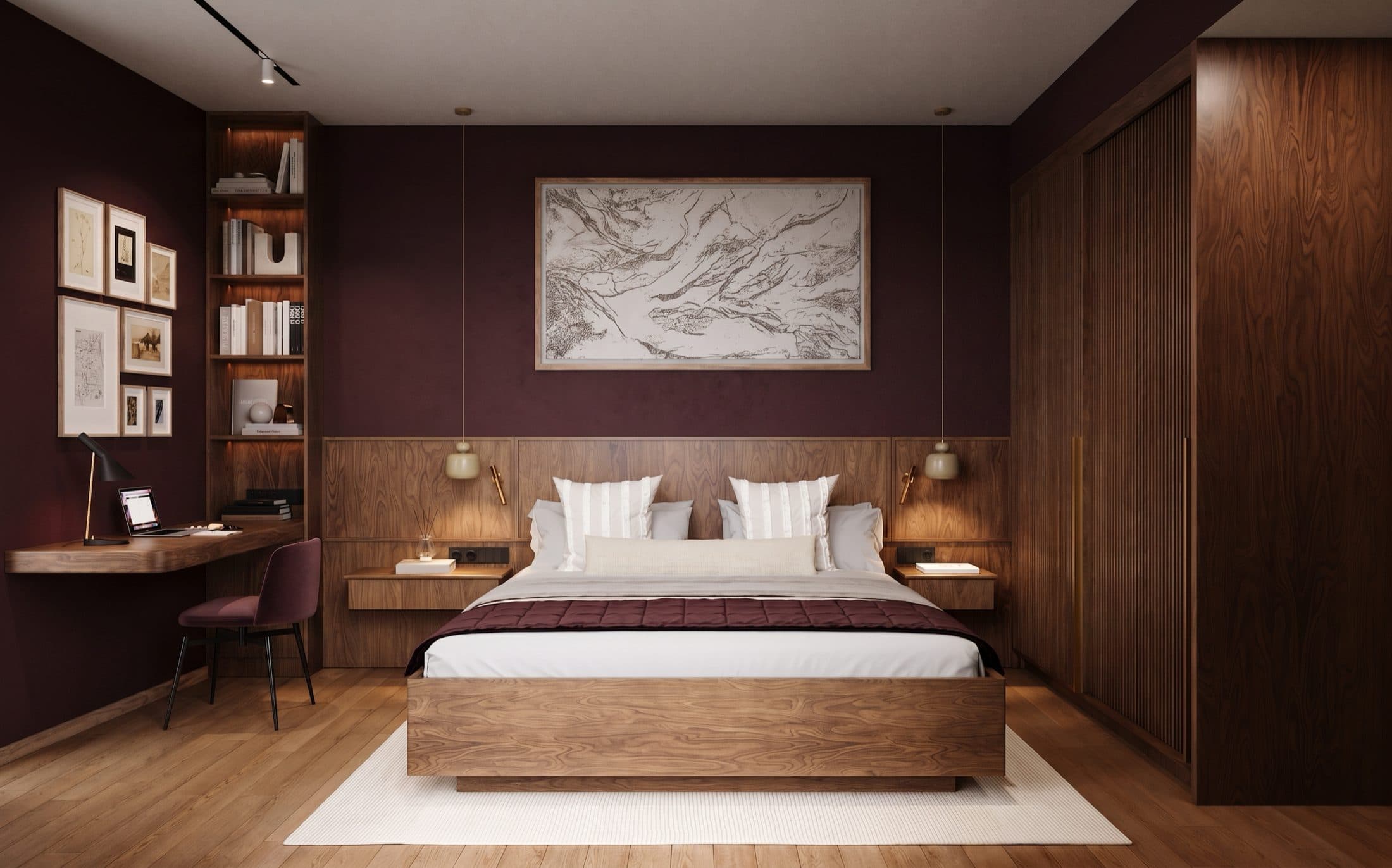
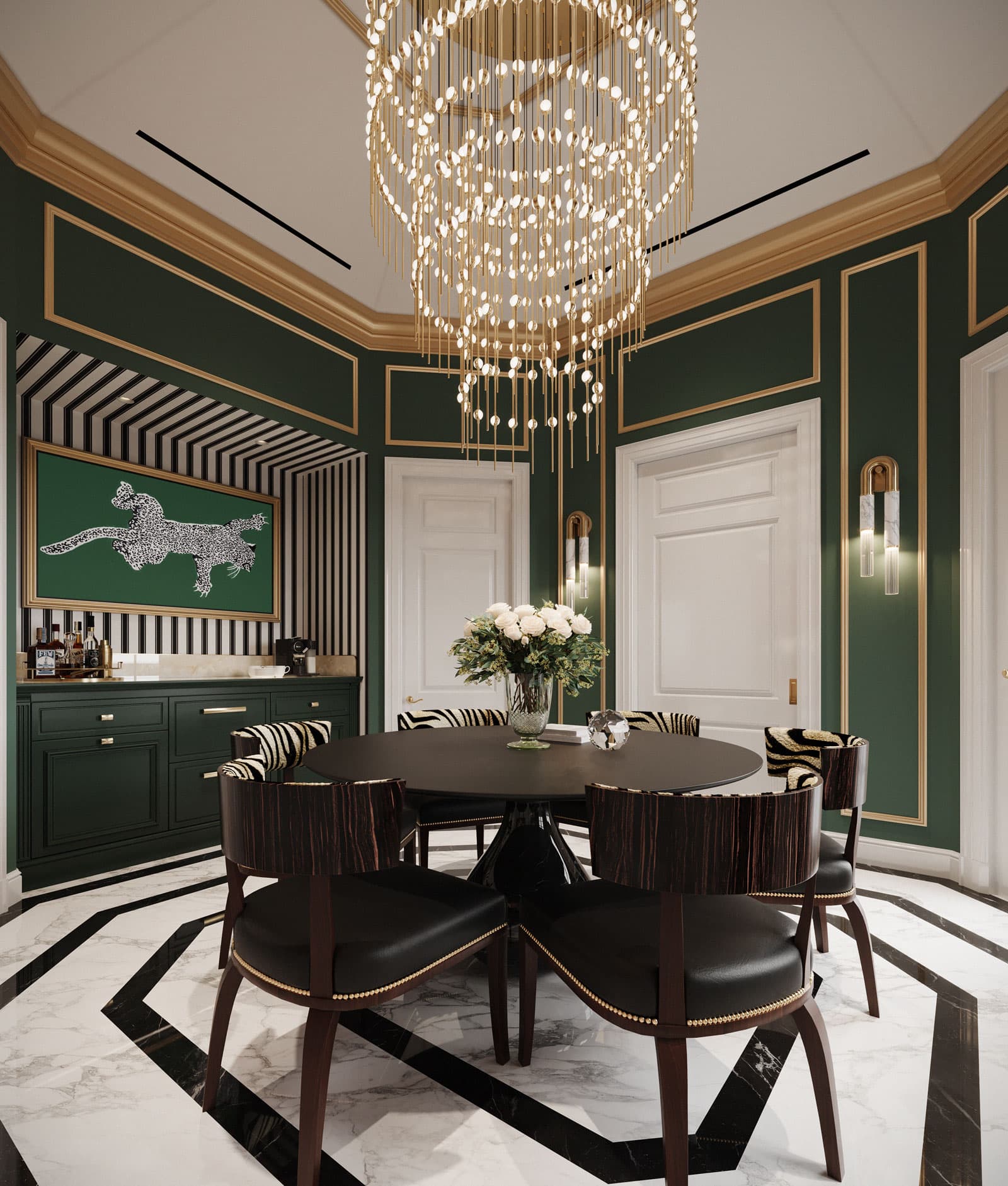
Every material was chosen for the marine environment first, then for beauty. Marine-grade teak was selected for interior accents: it resists moisture, develops a warm patina over time, and connects the interior visually to the teak deck above. Upholstery fabrics were specified for UV stability and ease of cleaning while retaining the hand-feel expected in high-end residential work. Metal hardware is unlacquered brass throughout - it will age, but gracefully, building character rather than simply degrading.
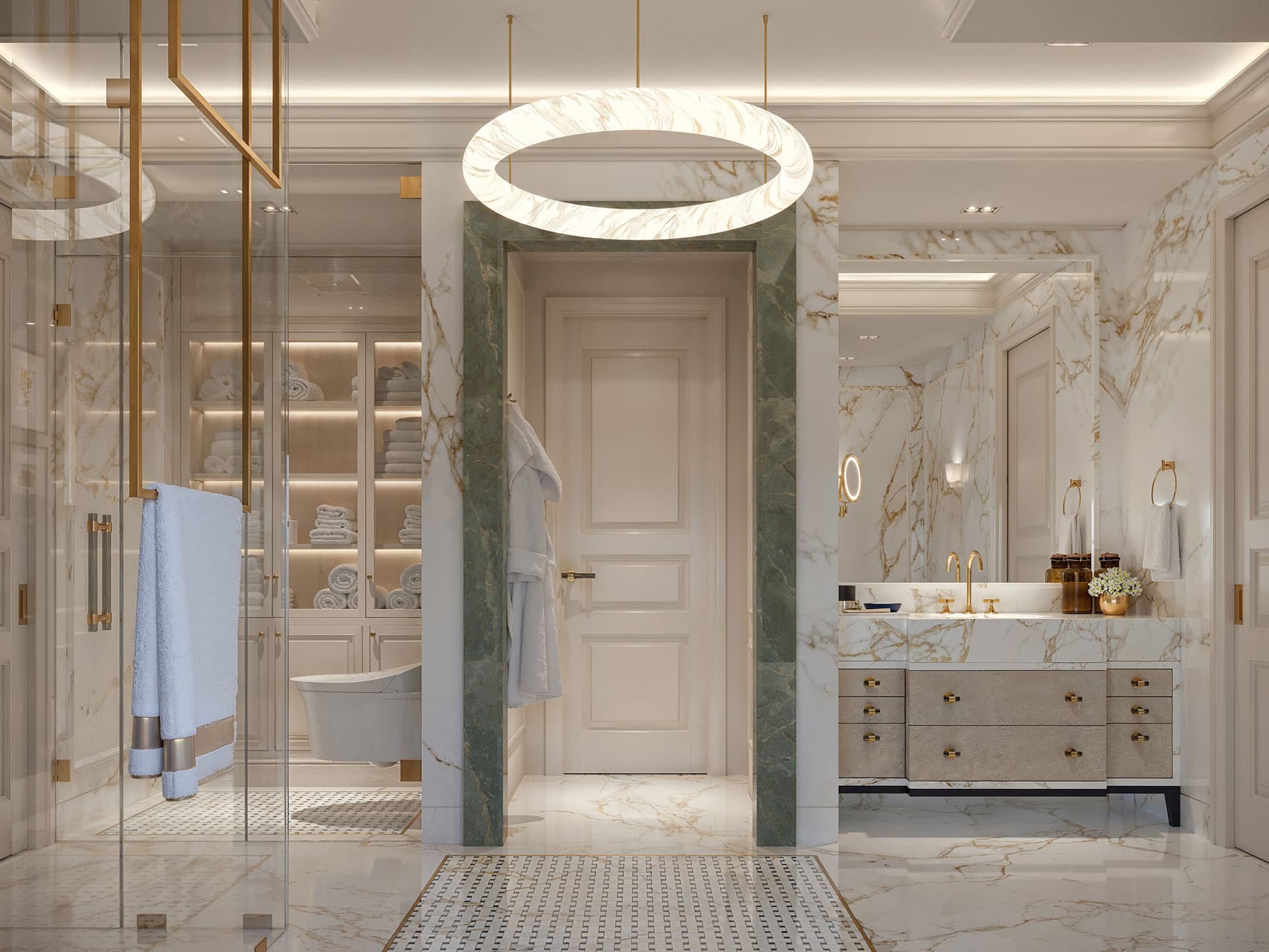
Stone surfaces in the heads and galley are sealed to resist salt-air penetration while maintaining their natural variation. We sourced the same quality of material we would specify for a villa project - the marine environment demanded it be more carefully chosen, not less.
Space and Light
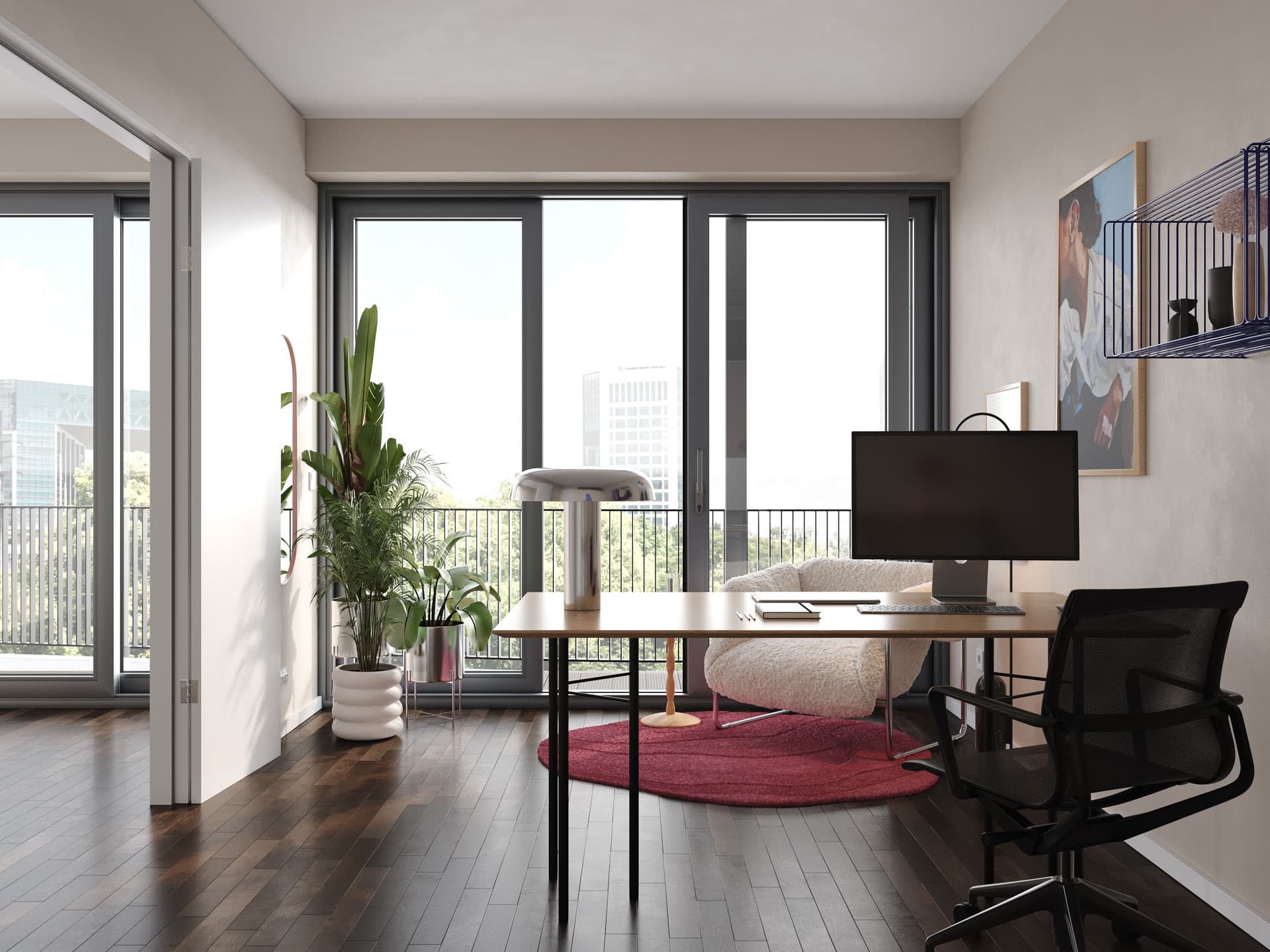
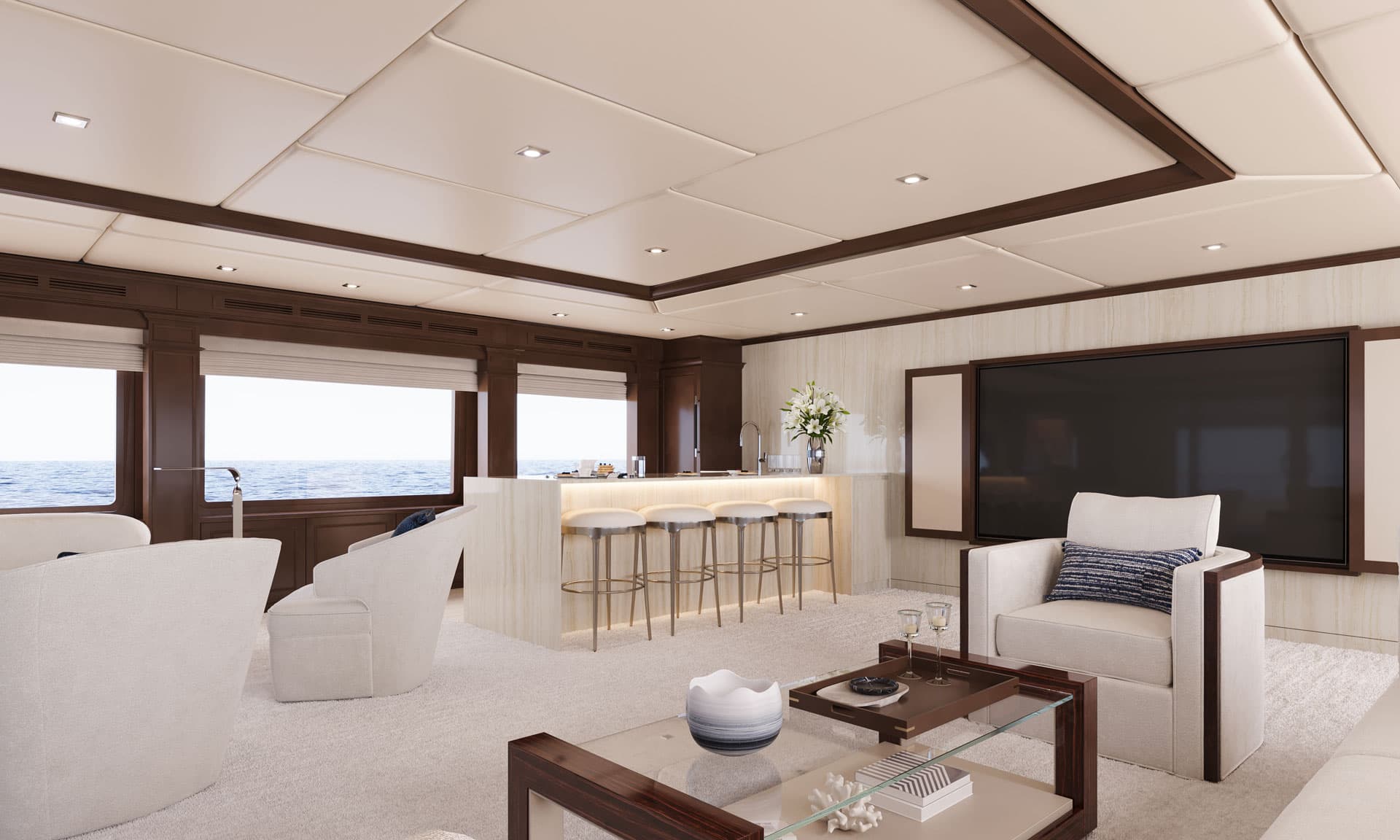
Light was the primary spatial tool. Panoramic windows were left entirely unobstructed, with window treatments that retract fully out of sight. A large mirror panel in the main salon reflects the seascape back into the room, visually doubling its depth. The lighting scheme layers ambient, task, and accent sources on dimmable circuits, allowing the atmosphere to shift from working daylight to intimate evening warmth without changing a fixture.
The Result
The Mirabella interior achieves what good yacht design always aims for: a vessel that feels genuinely luxurious rather than merely expensive, and spaces that invite you to stay rather than reminding you of their constraints. If you are considering a yacht interior commission or a similarly demanding project, we would welcome the conversation.