Office Interior Design Berlin - Workspaces That Perform
Book Your Free Call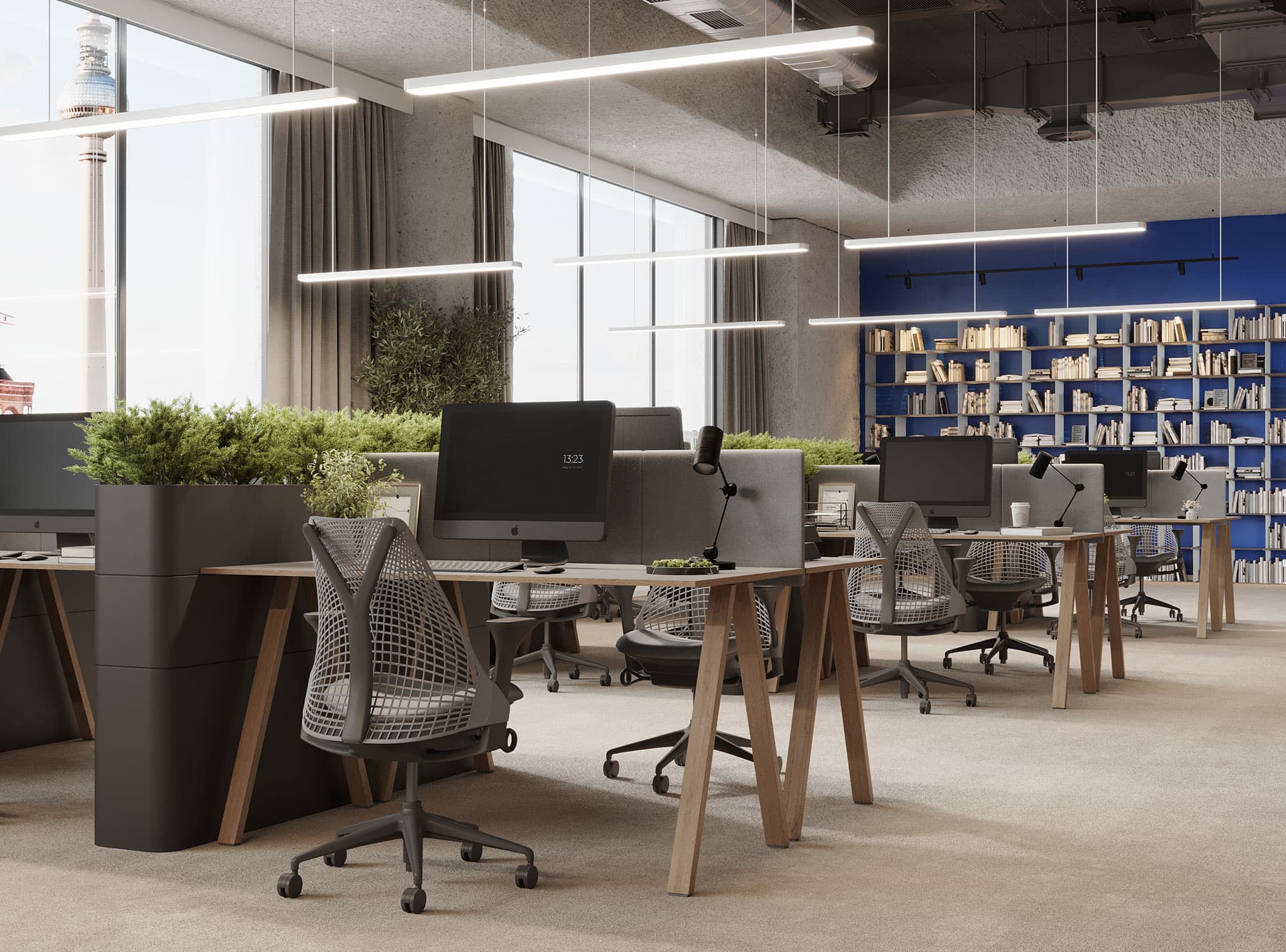
Office interior design Berlin has shifted dramatically in recent years. The pressure to draw people back to a physical workspace - in a city where talent is mobile and remote work is culturally embedded - has made the quality of the office environment a genuine competitive factor. House of Nuances brings the same precision and material intelligence we apply to residential projects to commercial interiors: creating workspaces that are worth commuting to.
The Case for Design-Led Workspaces
A poorly designed office costs money in ways that are rarely quantified: in distracted focus, in poor acoustic privacy, in the friction of an environment that does not support the work being done. The inverse is equally true. Workspaces that are thoughtfully planned - acoustically, ergonomically, spatially - generate a return that is visible in productivity, retention and the quality of work produced.
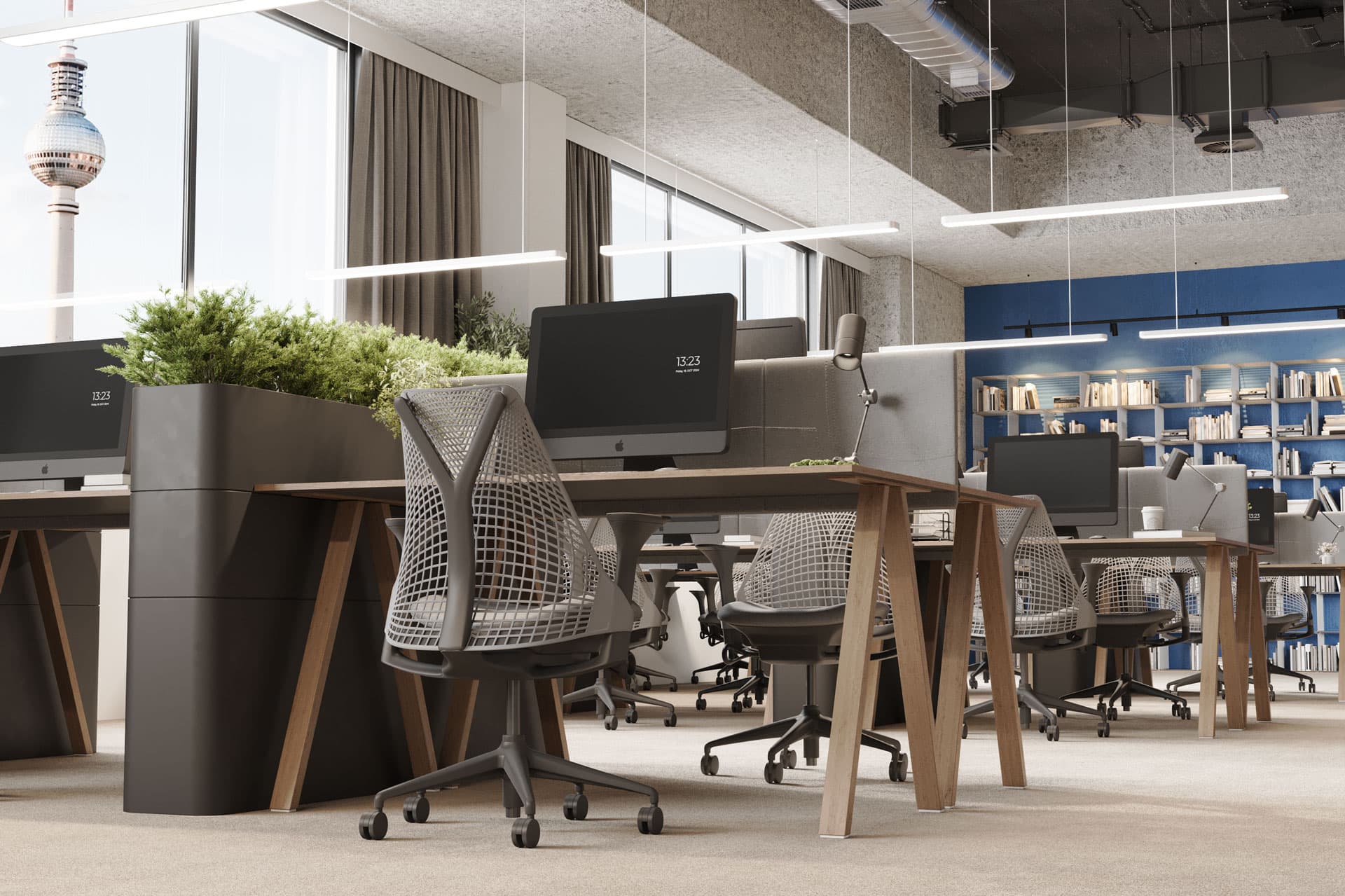
Berlin's commercial market has a particular character: warehouses converted to studios, Gründerzeit villas repurposed as agency offices, new-build commercial floors in mixed-use developments. Each type demands a different design response. Our experience across building types means we arrive on site already familiar with the constraints and possibilities of the space, not discovering them for the first time.
Our Approach to Commercial Interior Design
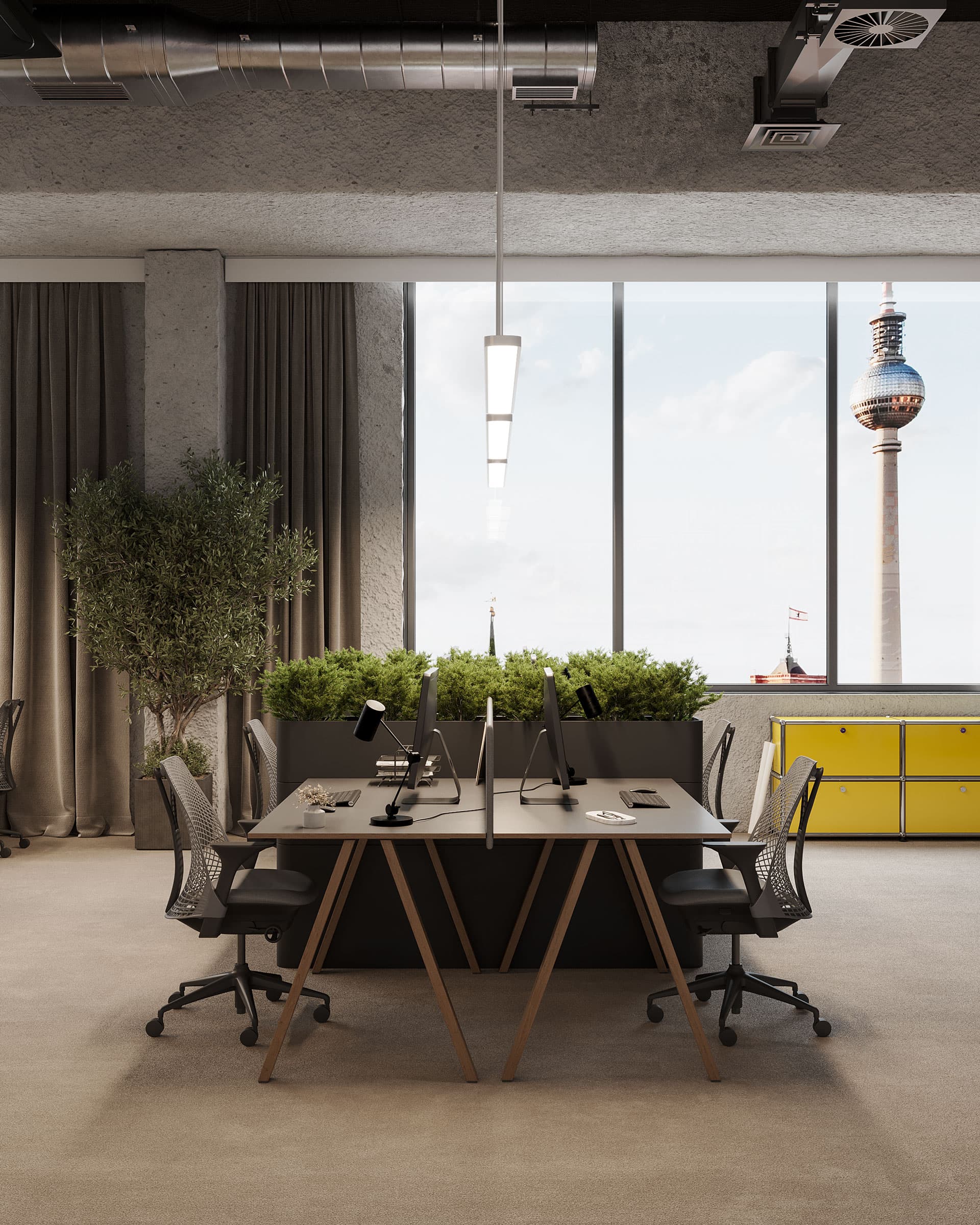
We begin every commercial project with a use analysis: understanding how the space is actually occupied at different times of day and week, what kinds of work need to happen in it, what the acoustic and privacy requirements are, and how the brand should read physically. From this, we develop a spatial strategy before touching any specification.
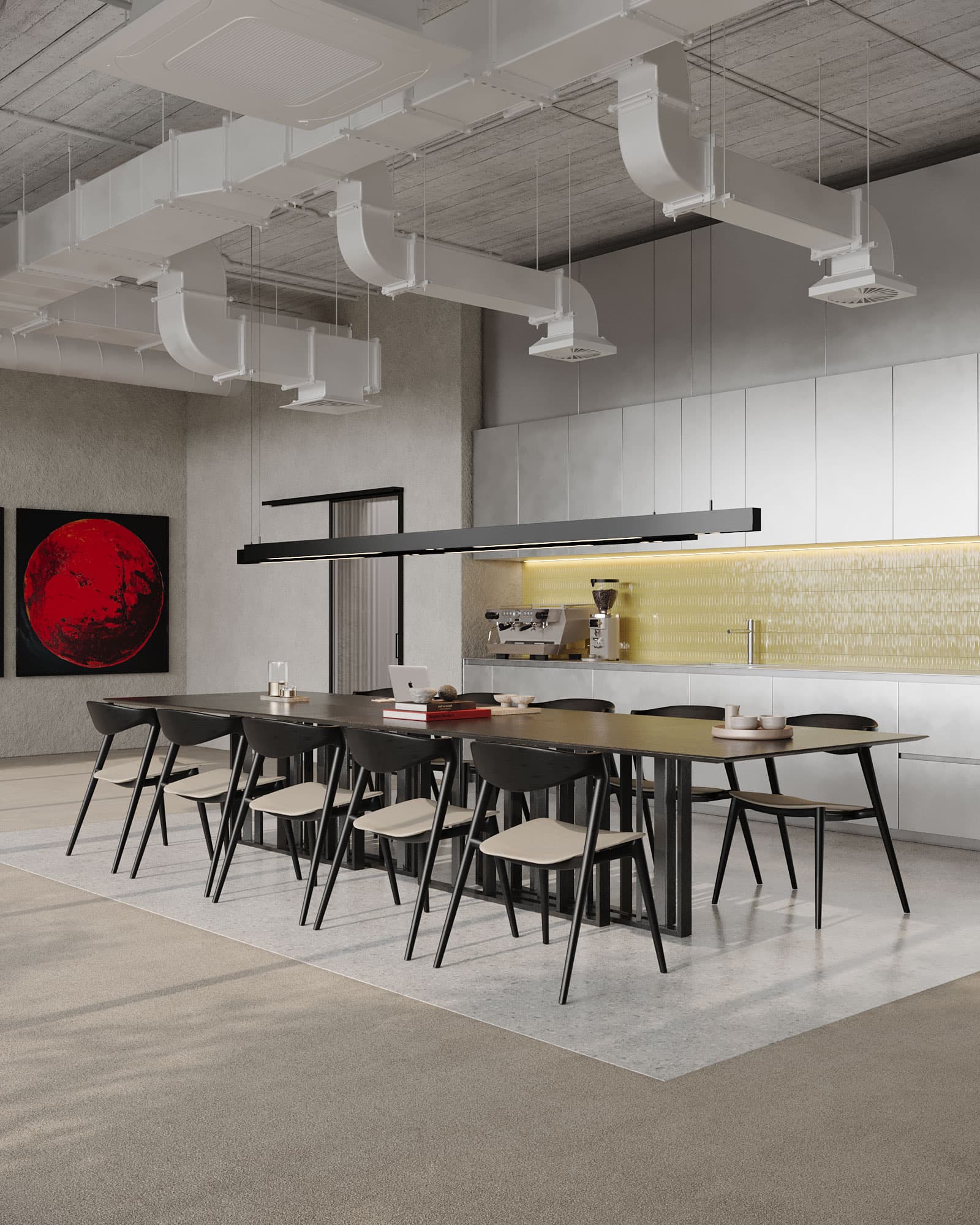
A well-planned office does not need to be expensive. It needs to be correctly zoned - quiet focus areas separated from collaborative zones, arrival spaces that convey the brand without overpowering it, meeting rooms that are genuinely fit for purpose rather than status symbols. Our design process is oriented around function first, aesthetics second - though in our experience, the two are rarely in conflict when the brief is well understood. Our thinking on multifunctional spaces translates directly to commercial environments.
Acoustic Design in Berlin Offices
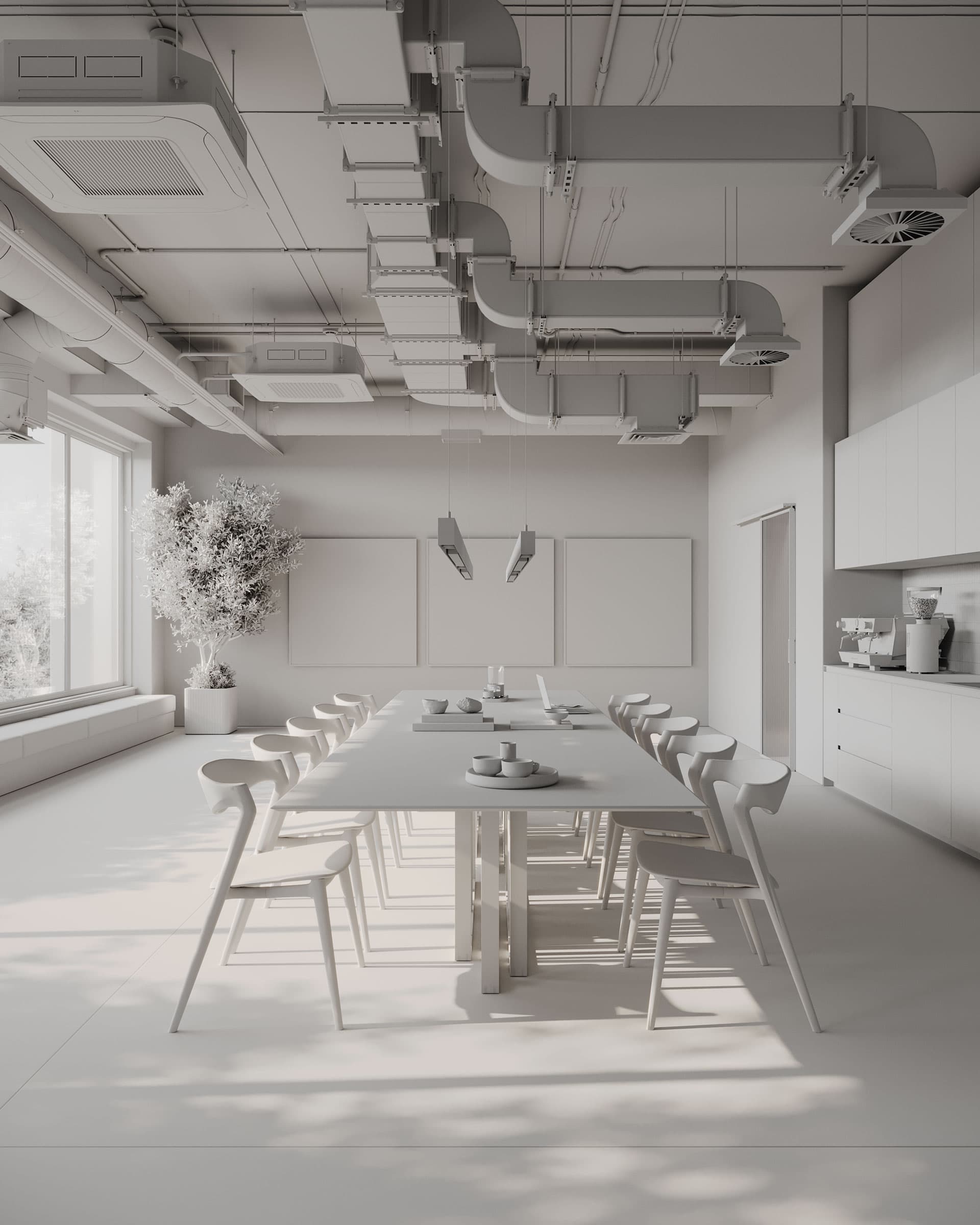
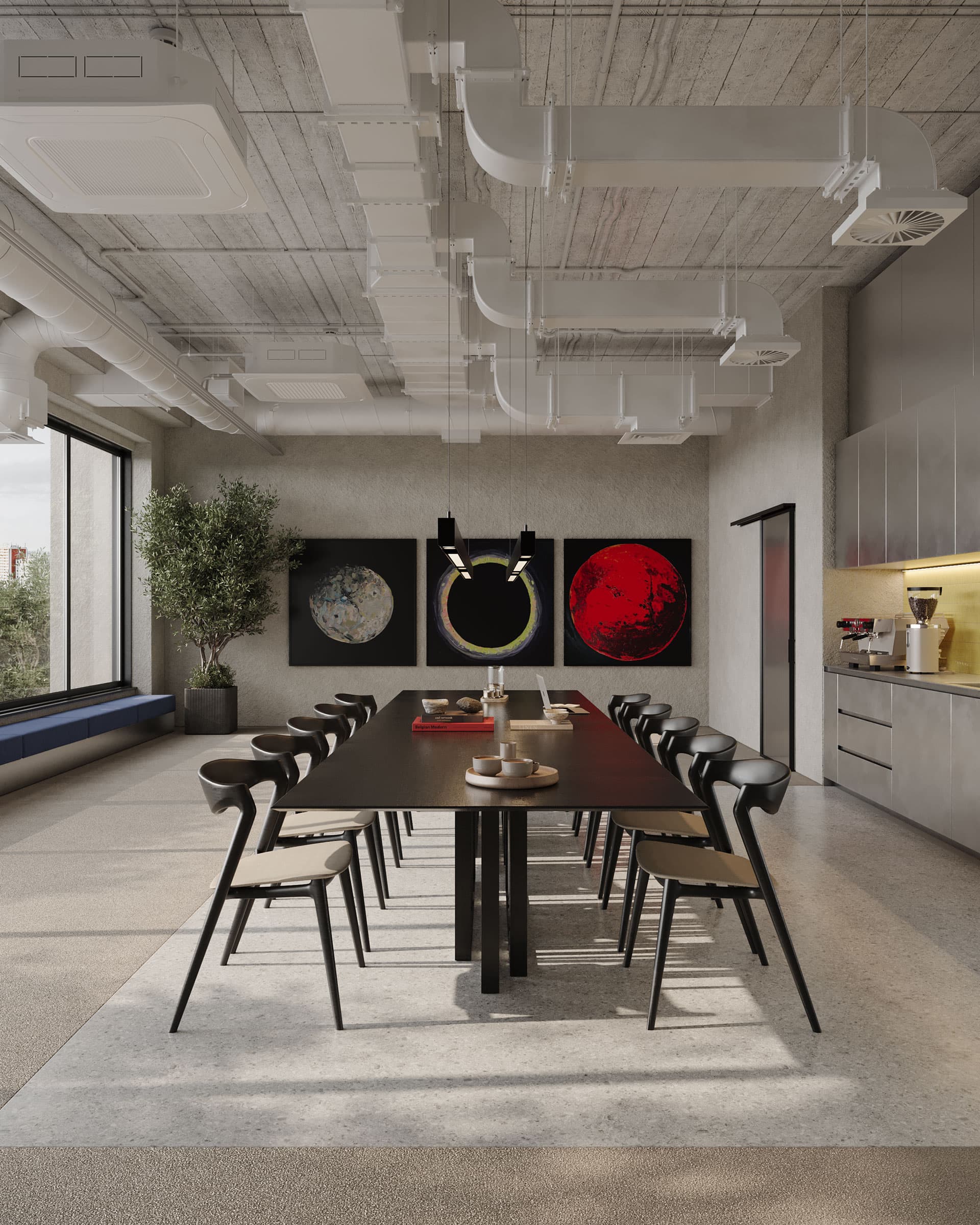
Acoustic management is the most commonly underestimated aspect of commercial interior design. Open-plan offices in Berlin's converted warehouses and loft spaces present specific challenges: high ceilings, hard floors, exposed concrete and large glazing all reflect sound rather than absorb it. The result - without deliberate acoustic treatment - is a space where concentration is difficult and phone or video calls become intrusive for the entire floor.
We address acoustics at the design stage, not as a retrofit. Ceiling-mounted acoustic panels, fabric-faced joinery, textile wall treatments and strategic placement of soft furnishings are integrated into the spatial design rather than added afterwards. The result is a workspace that feels calm rather than chaotic, even at full occupancy.
Brand Expression in the Physical Workspace
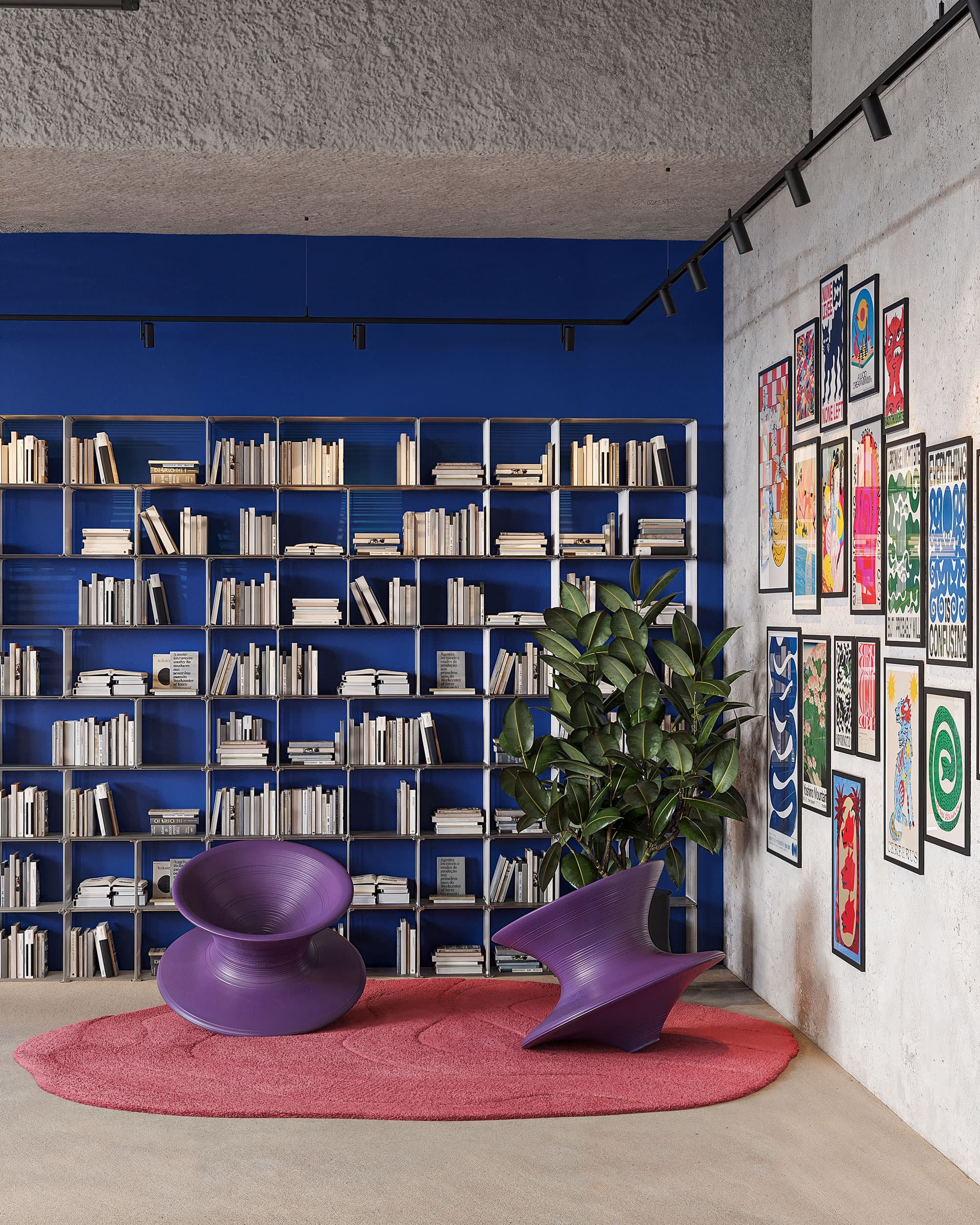
For businesses where the office is also a client-facing space - agencies, studios, professional services firms, boutique retailers - the design needs to do more than support internal work. It needs to communicate something about the organisation to every visitor who walks through the door. We approach this as a spatial branding question: what are the three or four things this business most needs to convey, and how can the physical environment express them without resorting to logo walls and branded colour schemes?
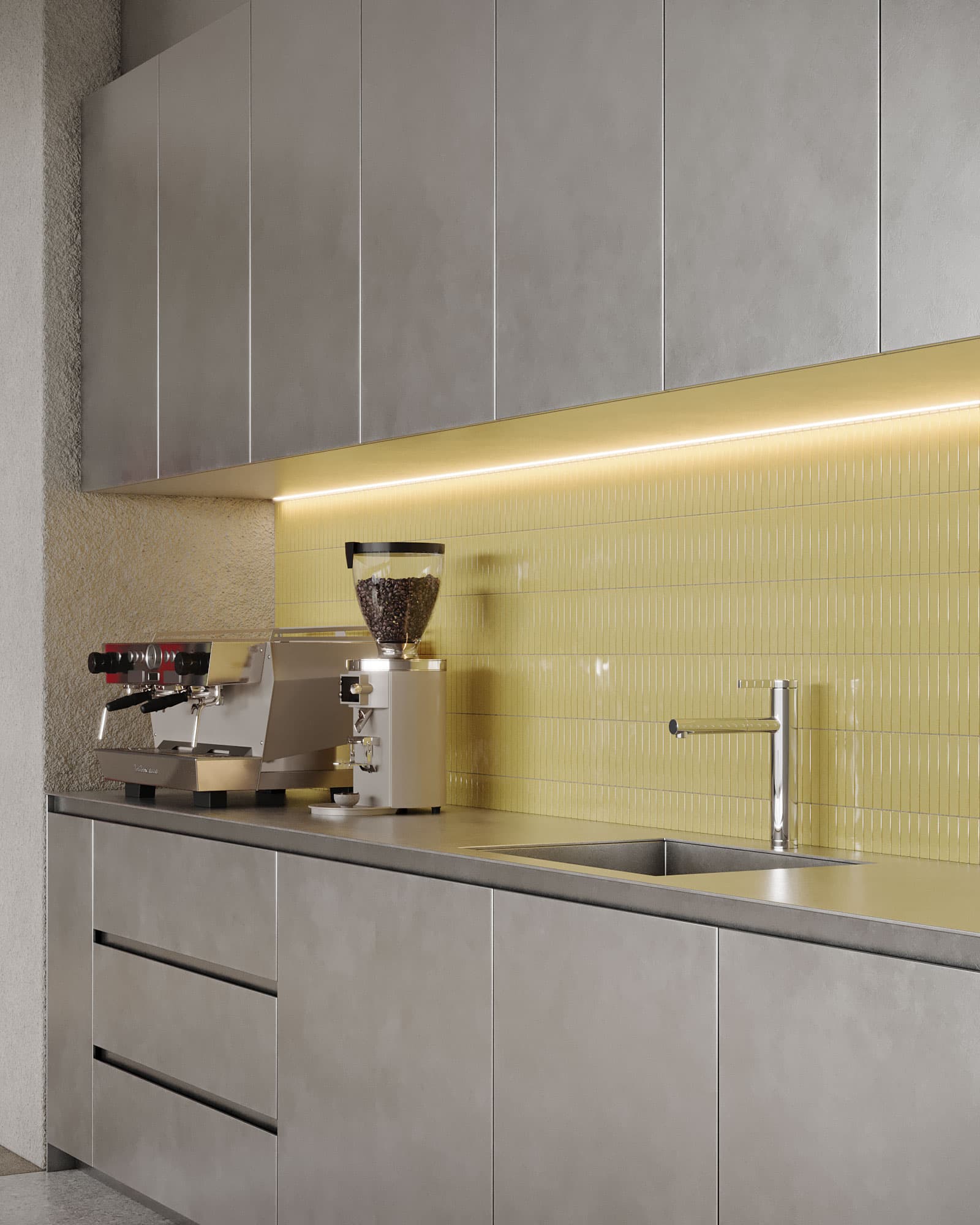
Material quality, spatial generosity, acoustic calm and considered lighting are more powerful brand signals than graphic application. Our portfolio includes commercial projects where these principles have been applied to create environments that are immediately distinctive without being self-consciously designed. Contact us to discuss your office brief.
Fit-Out and Project Management
Commercial interior projects have different logistical demands from residential ones. Fit-out programmes need to respect business continuity - minimising disruption to operating teams, phasing work around critical business periods, meeting regulatory requirements for commercial occupancy. We manage commercial fit-outs with the same rigour we bring to residential projects: detailed programmes, clear contractor briefings, proactive site management and a single point of contact for every decision that needs making. See our full service overview and pricing information for more detail.
Frequently Asked Questions
How long does an office interior design project in Berlin take?
Design and fit-out timelines for commercial projects depend on the scale of works and the complexity of any structural or building services changes required. A straightforward refurbishment of an existing tenancy - new finishes, furniture, lighting - can be completed in eight to twelve weeks. Projects involving structural alterations, new mechanical and electrical services, or Denkmalschutz-protected buildings typically run four to six months from brief to handover.
Can you work around our business operations during the fit-out?
Yes. We plan commercial fit-outs with business continuity as a primary constraint. This typically means phased works, out-of-hours programming for disruptive elements, and clear communication of what is happening and when to the relevant teams. We have managed fit-outs in occupied buildings successfully and understand the planning this requires.
What is a typical cost per square metre for office interior design in Berlin?
Commercial fit-out costs in Berlin vary widely depending on specification level and the existing condition of the space. A standard refurbishment - new flooring, lighting, painting, furniture - typically runs €400-800 per square metre. A high-spec fit-out with bespoke joinery, acoustic treatment and full mechanical and electrical services typically runs €1,000-1,800 per square metre. Design fees are additional and proportional to scope.
Do you work with startups and smaller businesses, or only large commercial clients?
We work with businesses of all sizes. Some of our most interesting commercial projects have been for smaller organisations - agencies, creative studios, boutique professional services firms - where the design can be genuinely tailored rather than derived from a corporate standard. Budget constraints focus the design thinking, and the results are often more distinctive than larger projects with open-ended budgets.
Ready to Get Started?
Schedule a free consultation with our team to discuss your vision and explore how we can bring your space to life.