Creative Workspace Interior Design Berlin
Book Your Free Call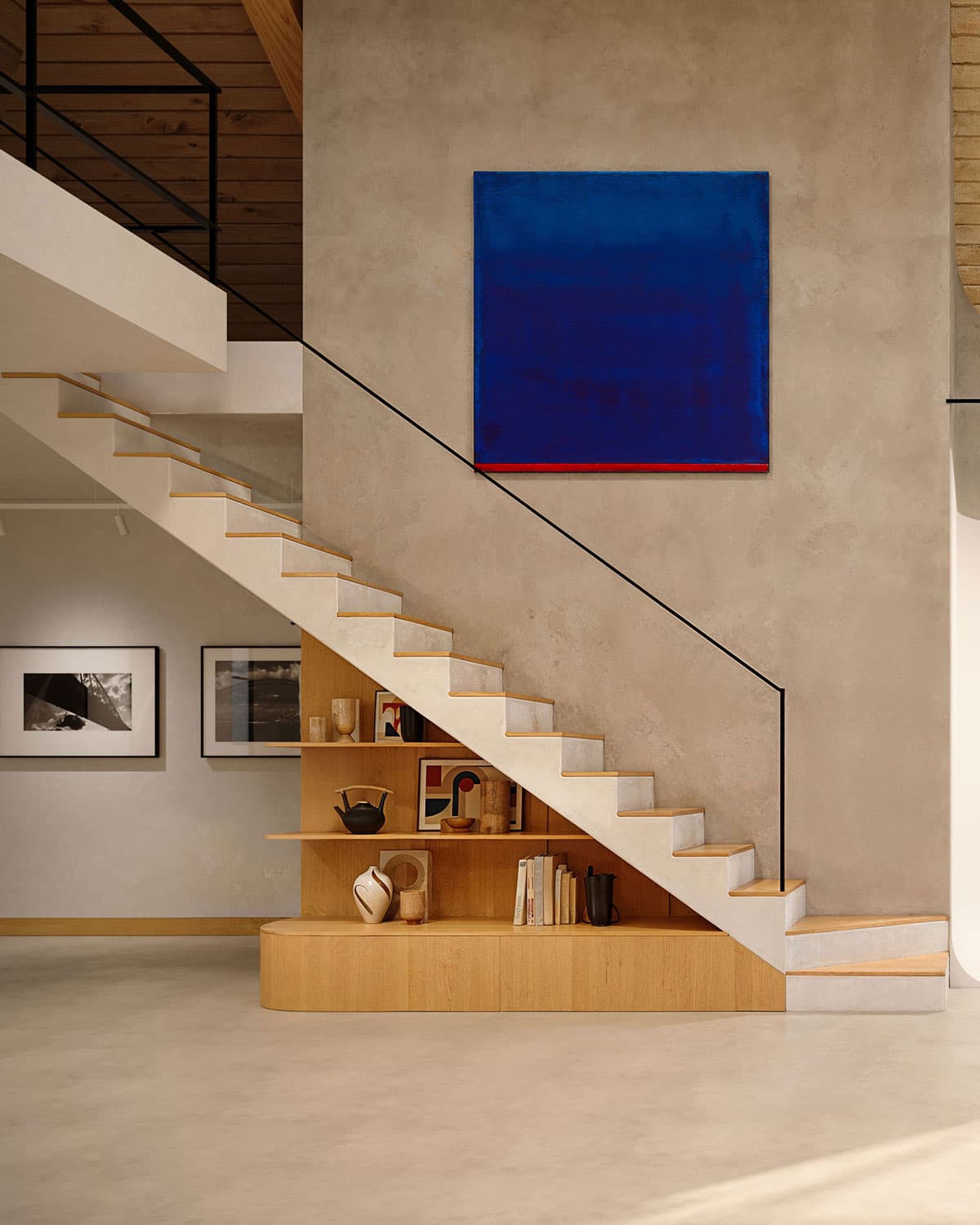
Creative workspace interior design in Berlin is one of the most demanding briefs in commercial design. A creative studio or co-working space must attract talent, inspire work, reflect a brand's identity, and function under the pressure of daily use - all simultaneously. House of Nuances has designed creative workspaces across Berlin: spaces that people choose to work in, rather than simply tolerate.
Creative Workspace Interior Design: What It Requires
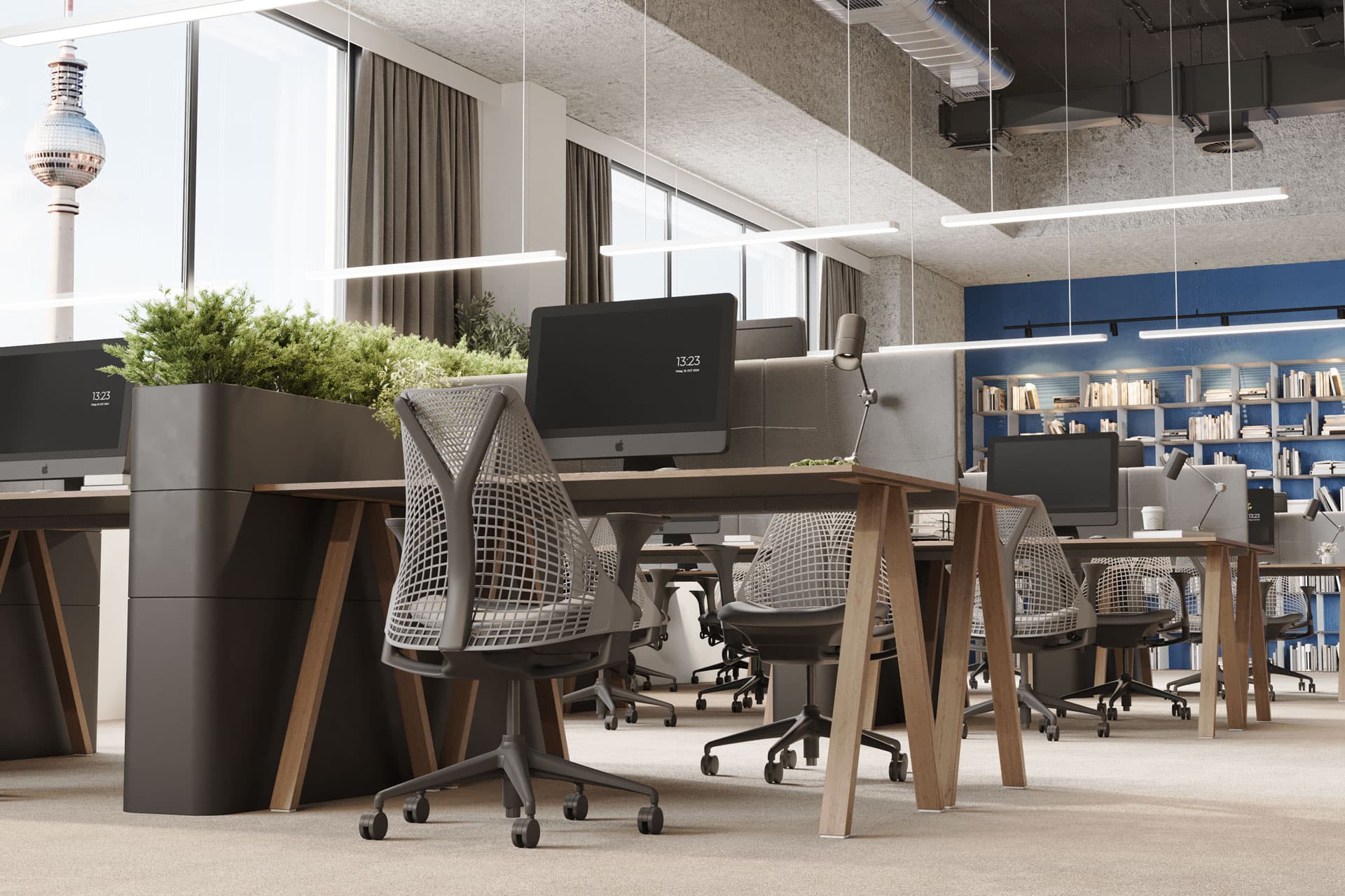
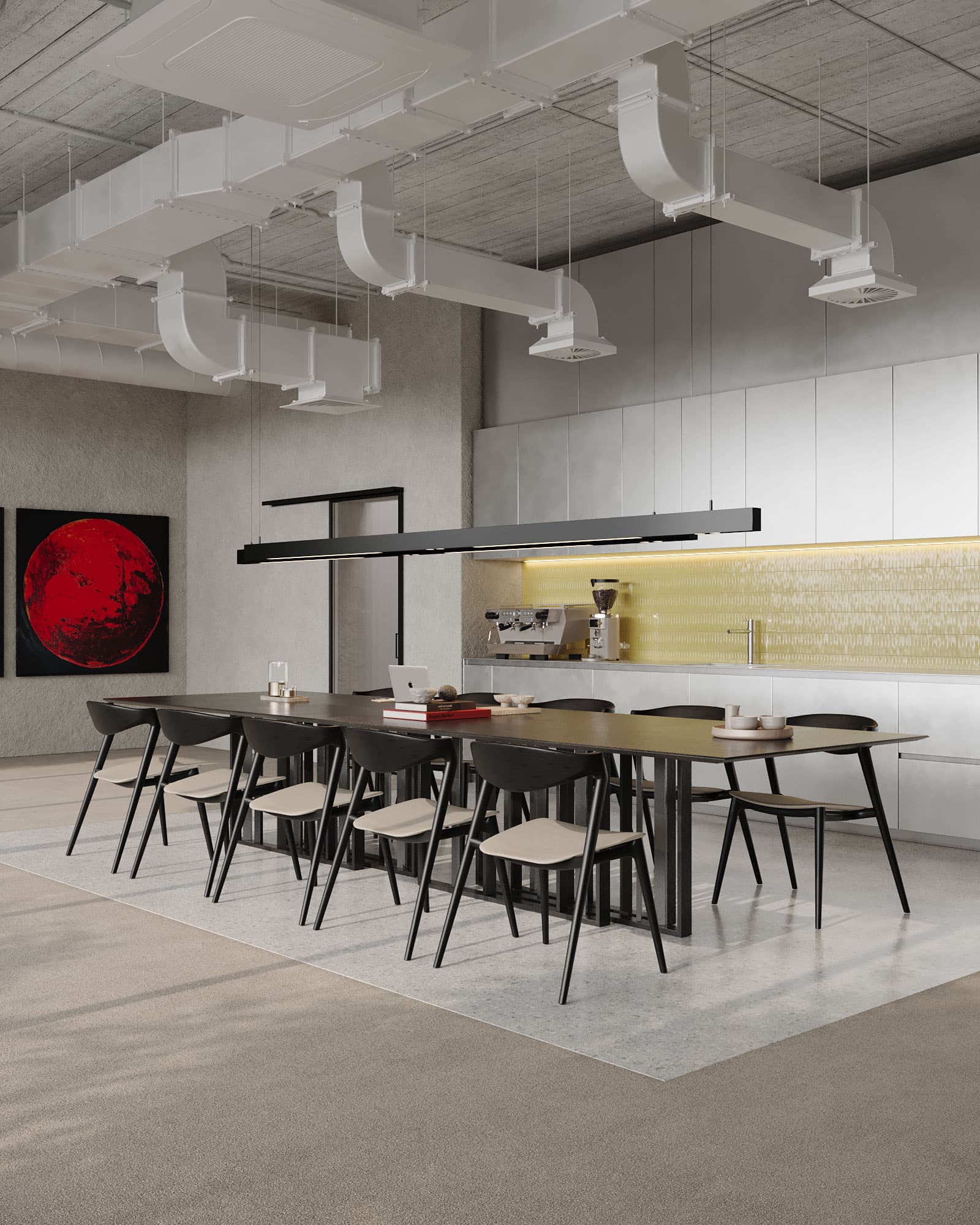
A creative workspace is not a standard office with exposed brickwork added. It requires the same rigorous briefing and spatial thinking as any high-end residential project, applied to a different set of constraints: acoustic performance across open plan areas, material durability in high-traffic zones, lighting that supports focused work and video calls equally, and a spatial sequence that gives teams different environments for different modes of work.
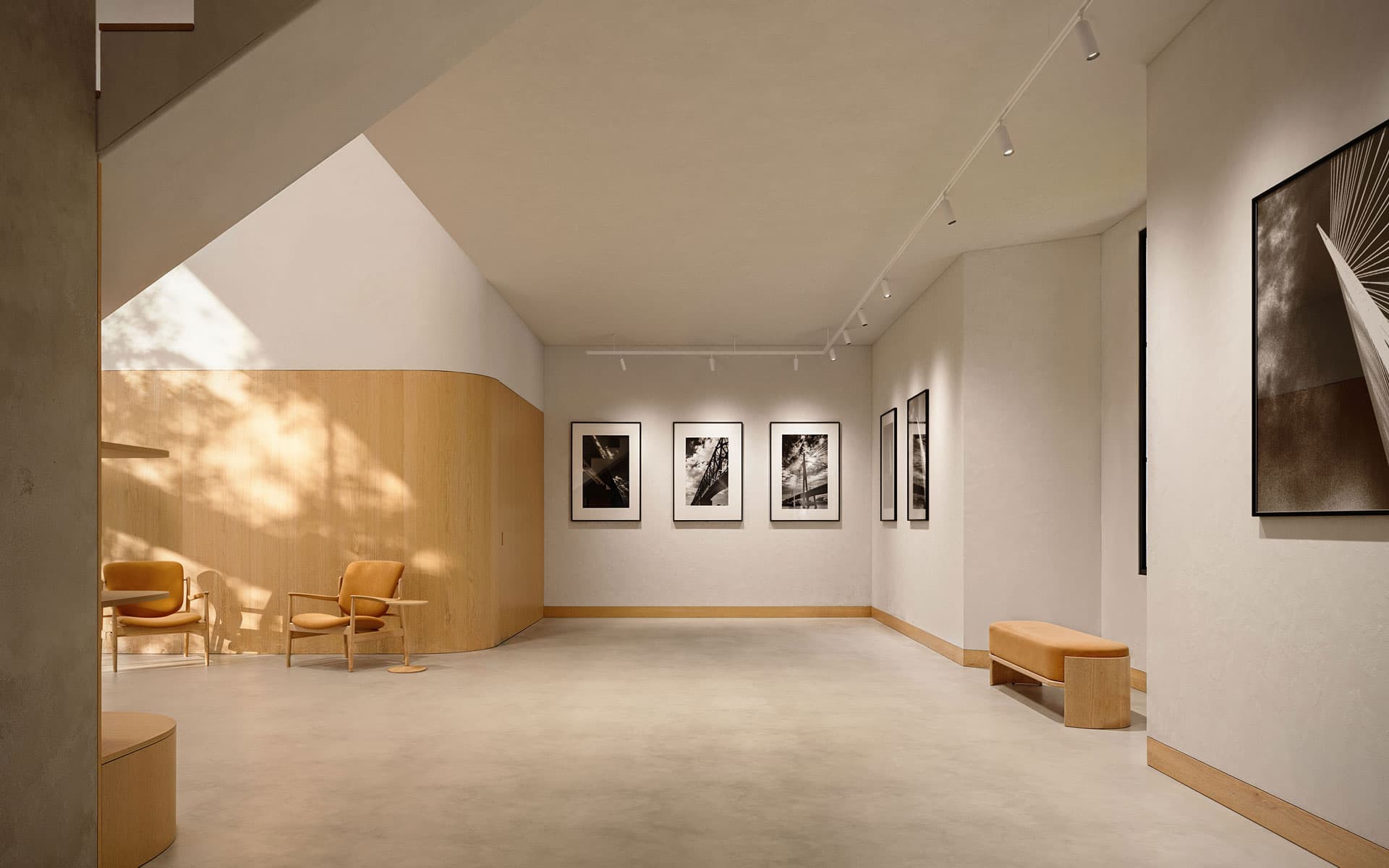
We approach every creative workspace commission by mapping how the team actually works - when they need silence, when they need collision, when they need to impress a client, when they need to disappear. The spatial layout follows from that map, not from a generic open-plan template. Our House of Culture project demonstrates this: a repurposed Berlin building transformed into a multi-mode cultural workspace where exhibition, community gathering, and quiet working coexist within a single coherent design.
Co-Working Space Design in Berlin
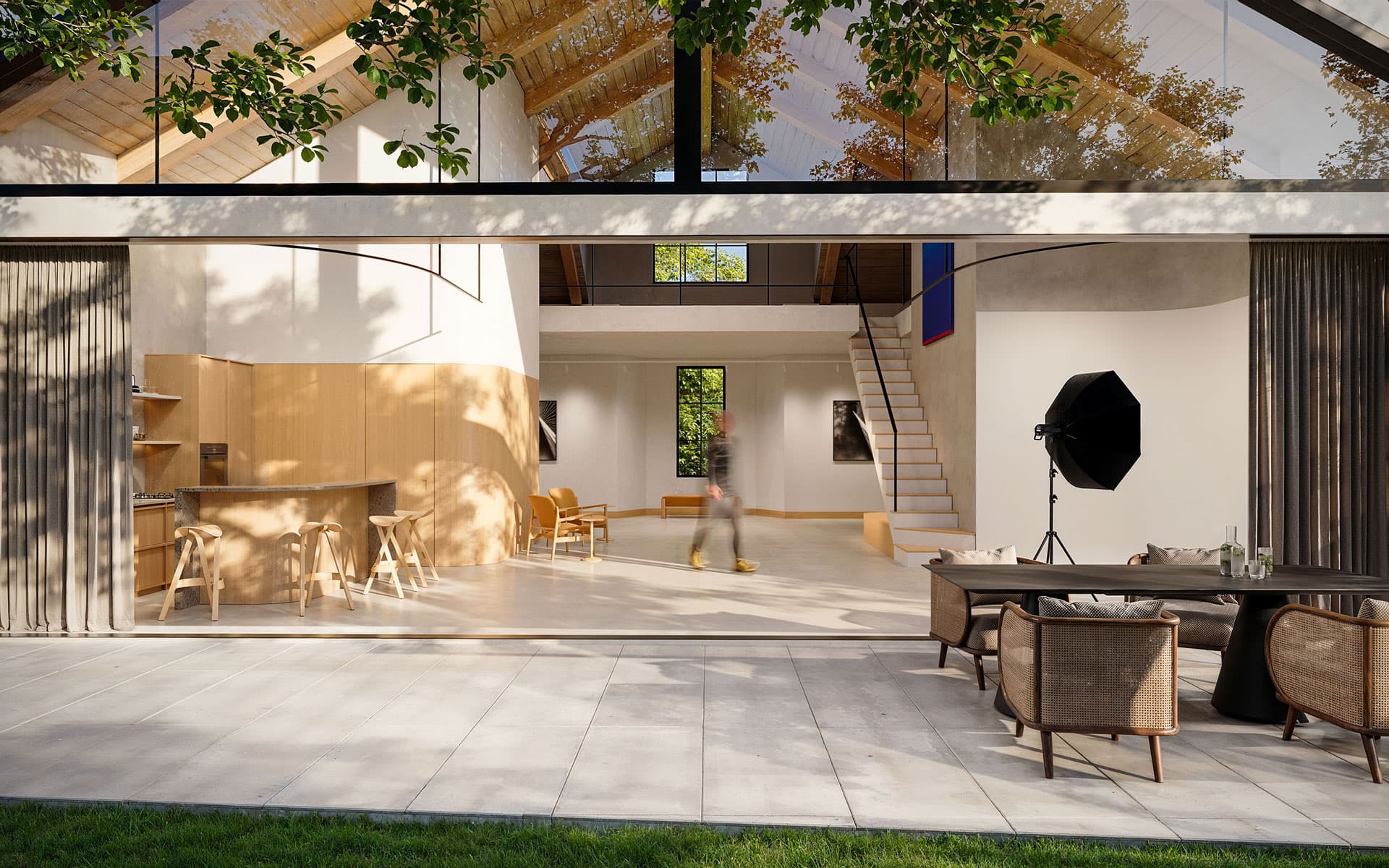
Co-working space design carries specific requirements beyond the standard creative office. The space must serve people who do not know each other, working on projects that have nothing to do with one another, and still feel coherent rather than generic. That requires a clear spatial hierarchy: zones that are clearly for focus, zones that are clearly for collaboration, zones that are clearly for informal exchange - with transitions between them that feel designed rather than arbitrary.
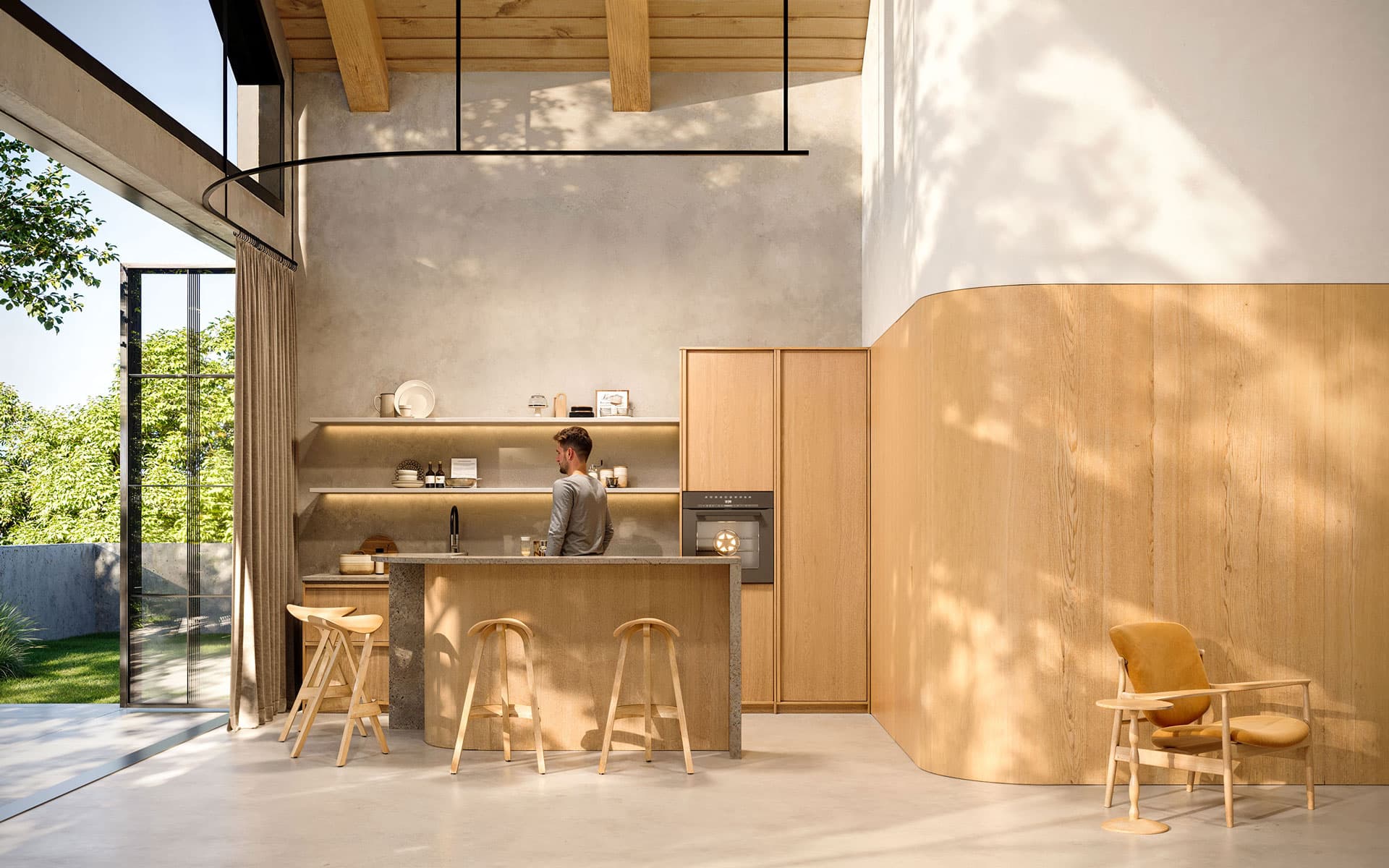
Material and finish quality matters more in co-working than in private offices, because the surfaces take more impact and the impression they make on visiting clients has direct commercial value for the operators. We specify accordingly: materials that perform over a five-year horizon, finishes that clean easily, furniture that holds up to all-day use. Our Alexanderplatz Office - a bespoke creative workplace in central Berlin - demonstrates how material discipline and considered zoning create a workspace that works as hard as the people in it.
Studio and Atelier Spaces
Artist studios, design agencies, architecture practices, photography studios - each has a distinct brief. A photography studio needs different light management from a graphic design agency; an architecture practice has different storage and display requirements from a software team. We work with the specific functional demands of each creative discipline before arriving at spatial and aesthetic decisions. The result is a workspace that grows from the work itself, not from a generic creative-industry template.
Our Design Process for Creative Workspaces
We begin every commercial workspace commission with a usage audit: how does the team currently work, where does it break down, what would they change if they could? This produces a brief that is specific enough to design from. We then develop concept options covering spatial layout, material palette, lighting strategy and furniture specification, and review these with you before moving into detailed design and procurement.
Full project management - contractor coordination, on-site oversight, snagging - is available as a service layer above the design fee. We have managed commercial fit-outs in Berlin from 60 to 600 square metres and are experienced in the specific procurement landscape: German tradespeople, European lead times, and the particular demands of listed buildings and Gewerbe properties in Berlin. Read more about our approach to lighting design for workspaces and our thinking on materials that last.
Why House of Nuances for Your Creative Space
We are a boutique studio, which means you work with a senior designer throughout - not a sales team at the front end and a junior at the back. Our international portfolio (Berlin, Florida, the Mediterranean, luxury yachts) gives us a breadth of material and spatial reference that purely local studios often lack. We understand what makes a space feel significant, and we apply that understanding to commercial projects with the same rigour as residential ones.
If you are planning a creative workspace, co-working space, studio or atelier in Berlin, we would welcome a conversation. You can also view our full project portfolio or explore the office interior design service page for more on our commercial approach.
Frequently Asked Questions
What is the difference between a creative workspace and a standard office fit-out?
A creative workspace is designed around how creative work actually happens: the need for different environments at different times, the importance of informal collision, and the role of the space in communicating the organisation's identity to clients and collaborators. Standard office fit-outs optimise for desk density and meeting rooms. We design for the conditions that produce good work.
How much does creative workspace interior design in Berlin cost?
Interior design fees for commercial spaces typically run 12-18% of total project value, with total fit-out costs depending heavily on scope, building condition and finish level. We provide transparent fee structures following an initial consultation. See our pricing overview for more detail.
Can you design a co-working space for an operator rather than a single company?
Yes. We have experience designing spaces that must serve multiple different users simultaneously - the House of Culture project is a direct example. Operator co-working spaces require particularly careful zoning and material specification; we approach them with the same rigour as any other commercial brief.
Do you handle planning permission and listed building consent in Berlin?
We advise on regulatory requirements as part of every project and work with specialist consultants where planning or listed building applications are required. Berlin has specific regulations for Gewerbe conversions and listed Altbauten; we are familiar with these and factor them into project timelines from the outset.
Ready to Get Started?
Schedule a free consultation with our team to discuss your vision and explore how we can bring your space to life.