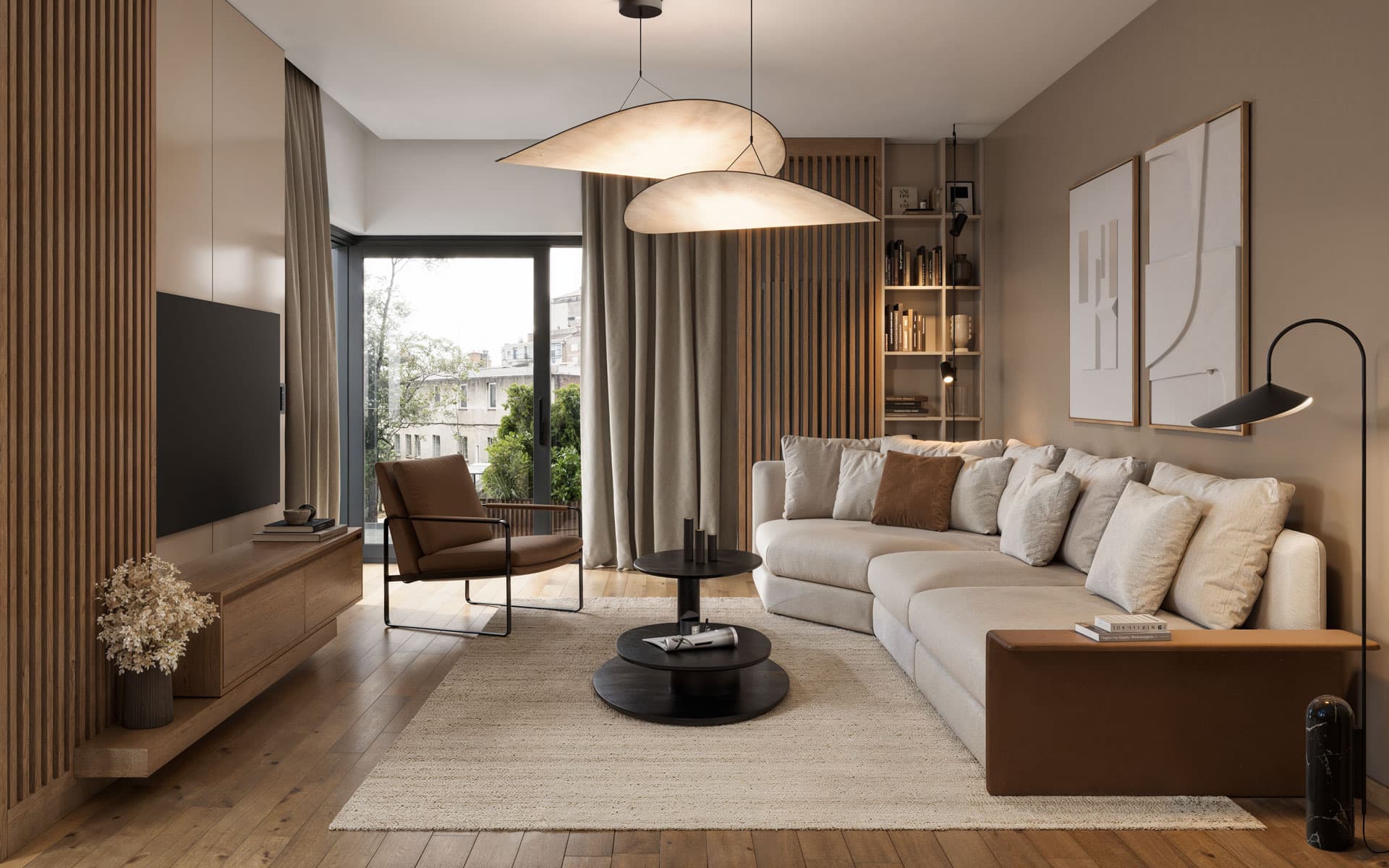
Altbau Interior Design Berlin: Period Apartment Specialists
Book Your Free CallAltbau interior design Berlin is a specialism in its own right. The pre-war apartment buildings that define Berlin's western boroughs - with their stucco ceilings, herringbone parquet floors, tall casement windows and generous room heights - demand a design approach that is both historically aware and uncompromisingly contemporary. House of Nuances has built its Berlin practice on precisely this combination.
What Makes Altbau Apartments Different
The Gründerzeit buildings constructed between 1870 and 1914 account for a significant portion of Berlin's luxury residential stock. Their defining characteristics - ceiling heights of 3.2 to 4 metres, large single-glazed or restored windows, decorative plasterwork, solid timber floors and thick masonry walls - create both exceptional opportunities and specific constraints for interior designers.
These buildings have proportions that modern construction rarely replicates. A room with a four-metre ceiling can absorb furniture scales and pendant lighting that would overwhelm a standard apartment. At the same time, the acoustic properties, the heating demands and the regulatory framework governing period features require experience to navigate correctly.
Working With Original Features
Our approach to Altbau interiors begins with the building itself. Stucco cornices, ceiling roses and original timber floors are assets, not obstacles. In our Midcentury Apartment project in Berlin, original architectural elements were restored and integrated into a contemporary scheme rather than concealed or removed. The result is a space that reads as entirely of today while remaining rooted in its building's history.
Where original features have been lost or damaged, we work with specialist craftspeople to restore or reinterpret them - ensuring that new joinery, lighting and plasterwork respond to the proportional logic of the existing space rather than fighting it. Our detailed guide to Berlin Altbau interiors explores this approach in depth.
Material Strategy for Period Buildings
Material selection in Altbau apartments is weighted differently from new-build projects. The existing palette - stone, timber, plaster, iron hardware - establishes a baseline that synthetic or highly processed materials tend to undermine. We favour natural stone for bathroom surfaces and kitchen counters, lime-based plasters for walls, solid timber for new joinery, and brass or patinated steel for fixtures and fittings. These materials age in a way that is compatible with the building rather than in contrast to it.
Read our guide to timeless interior materials and our post on bespoke kitchen design in Berlin to understand how we approach material specification in period properties specifically.
Lighting in High-Ceilinged Spaces
The ceiling heights that define Altbau apartments require a layered lighting strategy. A single central pendant - however beautiful - rarely provides adequate or interesting light in a four-metre room. Our approach combines ambient lighting at ceiling level with task lighting integrated into joinery and supplementary accent lighting at low level to animate the space at different times of day and season. See our thinking on lighting strategies for interiors for the principles behind this approach.
Regulatory and Technical Considerations
Berlin's Altbau buildings often carry regulatory protections - Denkmalschutz (listed building status) or partial heritage protection - that govern what can be altered and how. Our designers are experienced in working within these frameworks: understanding what requires approval, what constitutes a material change, and how to achieve contemporary performance standards (insulation, acoustics, ventilation) without compromising protected elements.
For projects in Denkmalschutz buildings, we work with the relevant authorities from the outset, ensuring that the design process accounts for approval timescales and that no work is undertaken that could create compliance issues later.
Our Berlin Altbau Projects
Our Berlin portfolio includes projects in Charlottenburg, Schöneberg and Mitte - the boroughs where the finest examples of Gründerzeit architecture are concentrated. Each project has required a different response to its specific building: different proportions, different states of preservation, different client briefs. What they share is an approach that treats the building as a collaborator rather than a constraint. Explore our full project portfolio or contact us to discuss your Altbau apartment.
Frequently Asked Questions
Can you design a modern interior in a protected Berlin Altbau building?
Yes. Denkmalschutz protection governs alterations to the exterior and to significant interior features - it does not prevent the introduction of contemporary furniture, lighting, kitchen or bathroom design. Most interventions in Altbau apartments are straightforward to achieve within heritage constraints. We advise on this from the outset of every project.
Should original parquet floors be retained or replaced?
In most cases, original herringbone or strip parquet should be retained. Original floors carry acoustic and thermal properties that modern equivalents rarely match, and well-restored original timber is significantly more durable and characterful than any reproduction. We restore where possible and replace only where damage is irreparable.
How do you handle the heating challenges common in Altbau buildings?
Altbau buildings typically have single-glazed or older double-glazed windows and limited wall insulation. Where window replacement is permitted, we specify thermally efficient windows that match the original profile. We also work closely with heating engineers to ensure that new or upgraded radiator positions are integrated into the design rather than added as an afterthought.
Do you work with Altbau apartments undergoing full structural renovation?
Yes. We regularly work alongside architects and structural engineers on projects where Altbau buildings are being comprehensively refurbished. In these cases, we are typically engaged early to ensure that structural and service decisions - ceiling heights, beam positions, pipe routes - support the interior design intent from the outset.
Ready to Get Started?
Schedule a free consultation with our team to discuss your vision and explore how we can bring your space to life.