Bespoke Kitchen Design in Berlin: Why Off-the-Shelf Never Fits
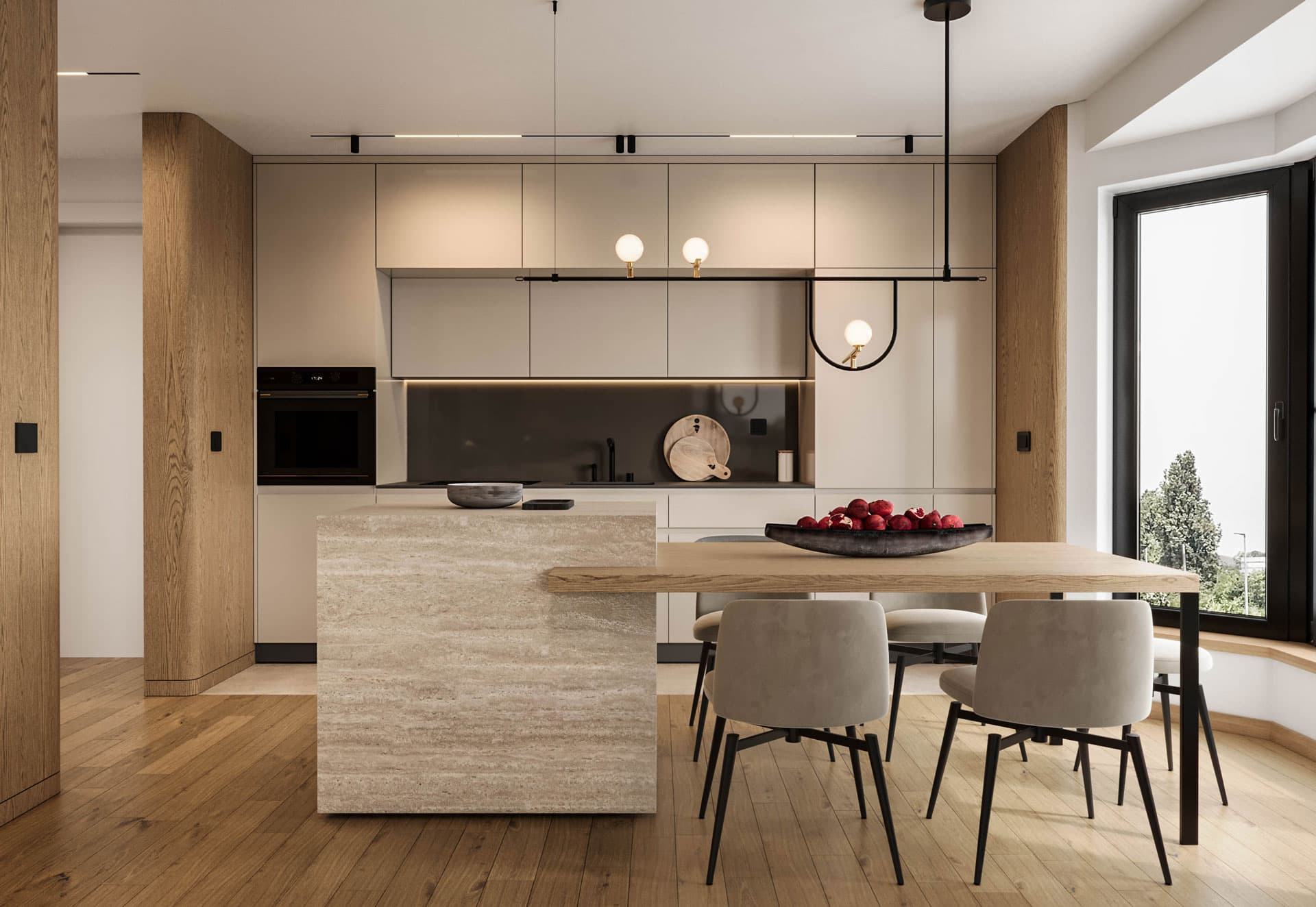
In Berlin's most considered apartments, the kitchen is rarely an afterthought - and bespoke kitchen design in Berlin has become the default choice for homeowners who understand that a catalogue solution, however well-configured, cannot account for the particularities of the space they actually live in. The gap between what a standard system offers and what a specific room demands is where most kitchen renovations quietly fail.
The Particular Challenges of Berlin's Apartment Stock
Berlin's residential architecture is unusually varied. Altbau apartments - the pre-war buildings that define Mitte, Prenzlauer Berg, Charlottenburg, and much of the inner city - come with high ceilings, generous proportions, and irregular room shapes that rarely align with standard modular kitchen grids. A 60cm gap here, an angled wall there, a structural column positioned exactly where a run of cabinetry needs to be. These are not edge cases. They are the norm.
More recently, the city's appetite for open-plan living has transformed how kitchens relate to the rest of the home. In many renovations, the kitchen is no longer a discrete room but a design element that must cohere with the dining and living spaces surrounding it. This demands a level of material and spatial continuity that off-the-shelf systems - designed as standalone units - cannot deliver.
What "Bespoke" Actually Means in Practice
The word bespoke is used loosely in the kitchen industry. For some manufacturers, it simply means selecting from a wider palette of finishes. True bespoke kitchen design starts from a blank sheet: dimensions, joinery, material specification, hardware, and appliance integration are all resolved from scratch around the specific room and the specific client.
This matters for three reasons. First, the kitchen is sized precisely - every centimetre of storage is considered rather than approximated. Second, material choices are not constrained by a catalogue: natural stone, solid oak, patinated brass, handmade ceramic tile can all be specified to the exact slab, grain, or batch. Third, the kitchen is designed as an architectural element rather than a product inserted into a room. That distinction is visible in the finished result.
Material Thinking: What Defines an Enduring Kitchen
The most enduring kitchens are defined by material honesty - surfaces chosen for how they age, not just how they photograph. In Berlin's high-end residential market, certain materials appear consistently in well-resolved kitchens:
- Natural stone worktops and splashbacks - marble, quartzite, and travertine. Each slab is unique; the veining becomes part of the composition rather than a liability to manage.
- Solid wood joinery - European oak, walnut, and smoked ash are common choices. Unlike veneered MDF, solid wood can be repaired and refinished across decades of use.
- Integrated appliances - concealed behind cabinet fronts that match the surrounding joinery, appliances become invisible, preserving the visual coherence of the room.
- Patinated metal details - unlacquered brass, blackened steel, and oxidised bronze age in place, developing character that factory finishes cannot replicate.
None of these materials are available through standard kitchen retail. They require sourcing relationships, material knowledge, and a design team with experience in specifying them correctly for the demands of residential use.
The Design Process: From Brief to Installation
A bespoke kitchen project begins well before any drawings are made. The first priority is understanding how a client actually uses their kitchen - cooking habits, storage needs, how the space connects to the rest of the home - because the best kitchen design is not about aesthetics alone but about spatial logic. A kitchen that looks exceptional in photographs but works poorly as a room has failed at its primary purpose.
From that brief, we develop measured drawings, joinery specifications, and material proposals. Options are presented at each stage, refined until the design is fully resolved. Only then does manufacture begin - typically with trusted German and European craftspeople whose standards we know well. Installation is coordinated with any wider renovation works, ensuring the kitchen integrates seamlessly with flooring, lighting, and adjacent rooms rather than sitting in isolation.
The process takes longer than purchasing a modular system. It also produces a result that is genuinely difficult to replicate - and that performs better over a longer period of time.
Layout Typologies in Berlin Altbau Kitchens
Berlin's Altbau apartment stock - predominantly built between 1880 and 1930 - presents a consistent set of spatial conditions that reward considered kitchen design. The kitchen was historically a discrete room, often separated from the main living areas and positioned toward the rear of the apartment. In contemporary renovations, one of the most common decisions is whether to retain that separation or open the kitchen to the living space. Neither answer is universally correct, but the decision has profound implications for how the kitchen is designed.
Closed kitchens allow for a more functional, less visually managed approach: materials, ventilation, and storage can be optimised without concern for how the kitchen reads from the adjacent room. Open kitchen plans demand a different logic entirely - every surface is a design statement, the ventilation must be quieter and more discreet, and the kitchen must cohere with the materials and palette of the dining and living zones around it. A bespoke approach is almost always the better route for open-plan configurations, because the kitchen needs to be designed as part of the room rather than as a unit placed within it.
Corner kitchens, galley arrangements, and island configurations all behave differently within the proportions typical of Berlin Altbau floor plans. A galley kitchen in a long, narrow room can be dramatically improved by extending joinery to full ceiling height, eliminating the dead space above cabinets that accumulates dust and diminishes the perceived scale of the room. An island that might feel cramped in a standard apartment becomes a central piece of residential architecture when its dimensions, material, and height are resolved specifically for the space it occupies.
Costs and Timelines: What to Expect from a Bespoke Kitchen in Berlin
Bespoke kitchen design in Berlin operates across a wide cost range depending on the scope of the project, the materials specified, and the complexity of the joinery. A straightforward bespoke kitchen in an Altbau - solid wood fronts, natural stone worktop, integrated appliances - will typically cost more than a comparable catalogue configuration, but the difference is narrower than many clients expect. The premium reflects the precision of manufacture and the quality of materials rather than an arbitrary luxury surcharge.
At the higher end, full bespoke kitchens incorporating backlit stone, custom metal details, and high-complexity joinery represent a more substantial investment. These are projects where the kitchen is not merely functional but architectural - where it defines the character of the entire apartment. The appropriate budget depends entirely on the role the kitchen is asked to play in the space.
Timeline from initial brief to completed installation is typically four to six months for a full bespoke project, with manufacture alone taking eight to twelve weeks depending on the craftspeople involved. This timeline cannot be compressed without compromising quality. For clients working toward a specific move-in date, beginning the kitchen design process as early as possible - ideally at the same time as structural and flooring decisions - is essential.
When Bespoke is the Right Choice
Not every kitchen project requires a fully bespoke approach. But for Berlin apartments where the layout is irregular, where the kitchen is visible from the main living space, or where the client's material expectations exceed what the mid-market can offer, bespoke is not a luxury - it is the most practical solution available.
Kitchen design has been central to several of our Berlin residential projects, including our Midcentury Apartment renovation, where the kitchen was instrumental in defining the character and flow of the entire home. You can see how material and spatial decisions compound across a project in our project portfolio.
Frequently Asked Questions
How much does bespoke kitchen design cost in Berlin?
A bespoke kitchen in Berlin typically starts at a moderate premium above high-quality catalogue systems and scales significantly depending on materials, joinery complexity, and appliance specification. Natural stone worktops, solid wood joinery, and custom metal details represent the most significant cost drivers. The more relevant question is whether the investment is appropriate for the role the kitchen plays in the apartment - in an open-plan Altbau where the kitchen is architecturally central, the answer is almost always yes.
How long does a bespoke kitchen take to design and install in Berlin?
From initial brief to completed installation, a full bespoke kitchen project typically takes four to six months. Design and specification take two to four weeks; manufacture requires eight to twelve weeks depending on the craftspeople and materials involved. Installation and finishing take one to two weeks. Starting the design process early - ideally at the same time as structural decisions - ensures the kitchen is ready when the rest of the renovation is complete.
Can bespoke kitchens work in small Berlin apartments?
Bespoke design is particularly well-suited to small and irregular spaces, precisely because standard systems cannot adapt to non-standard dimensions. A bespoke galley kitchen in a narrow Altbau room can maximise every centimetre of storage while maintaining a spatial coherence that modular systems cannot achieve. The constraint of the space becomes an opportunity for considered design rather than a compromise.
What materials are most common in Berlin bespoke kitchen design?
In Berlin's high-end residential market, the most enduring kitchen material combinations are: natural stone worktops (marble, quartzite, or travertine) with solid oak or walnut joinery; Calacatta or similar white marble with painted MDF and blackened steel details; and smoked oak or walnut with patinated brass hardware. These combinations share a preference for materials that age well and develop character - an approach to kitchen design that is very much aligned with how considered interior design works in Berlin more broadly.
Material selection is central to any bespoke kitchen - our guide to timeless interior materials explains which surfaces age best under daily use and why investing in natural materials consistently outperforms the alternatives.
If you are planning a kitchen renovation in Berlin and want to understand what a bespoke approach would look like for your space, we would be glad to discuss it. Get in touch with our studio for an initial conversation.