Japandi Interior Design: Materials That Make It Work
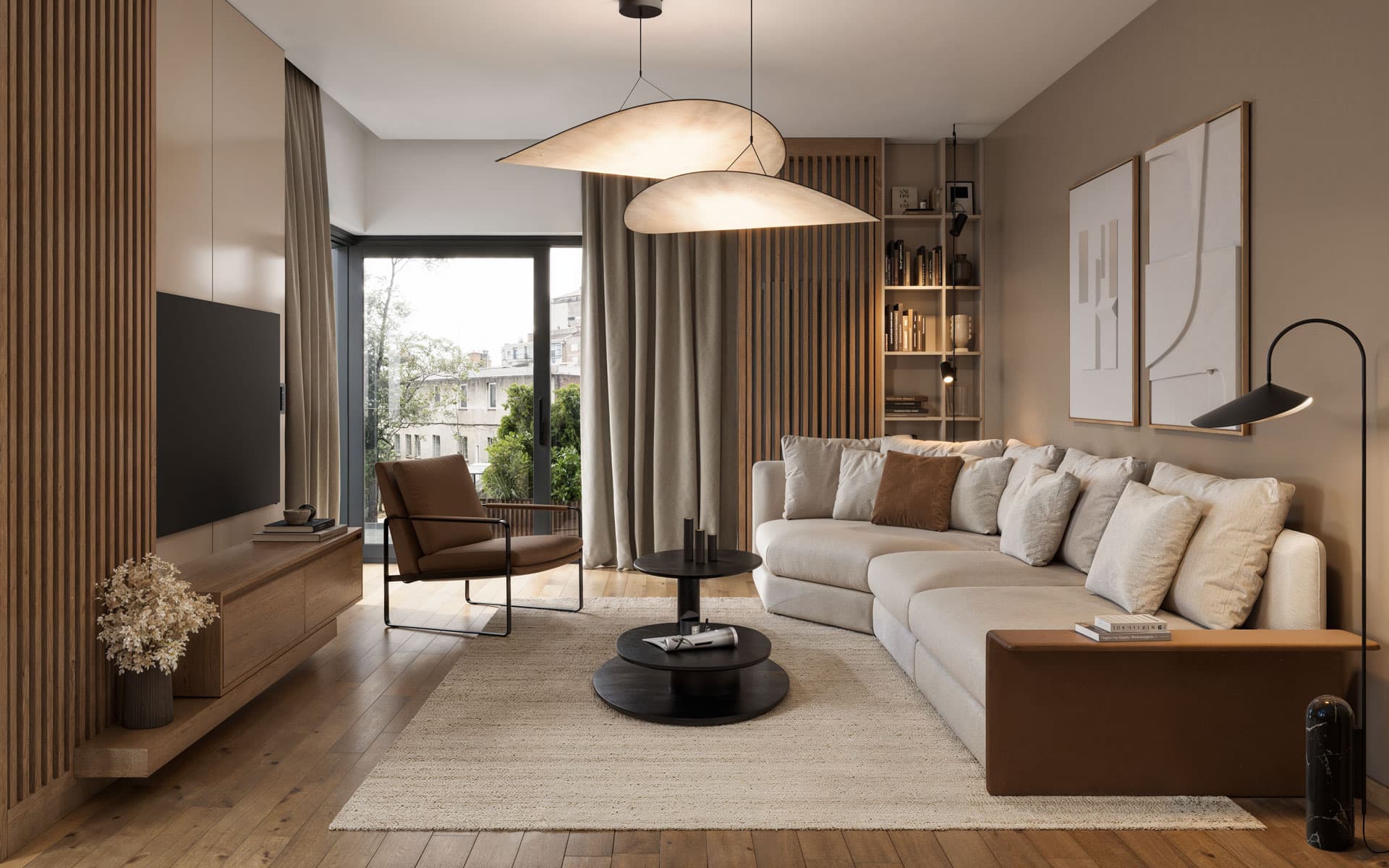
Japandi interior design succeeds or fails at the material level. The aesthetic - a synthesis of Japanese wabi-sabi restraint and Scandinavian warmth - is coherent in theory and widely misunderstood in practice. When the materials are right, the result is an interior with genuine depth and longevity. When they are wrong, you get a beige room with some rattan.
Japandi Interior Design and the Material Question
The confusion around Japandi usually starts with the visual surface: low furniture, muted tones, organic forms. These are the recognisable signals, and they are easy to copy. What is harder to copy - and what actually determines whether a space works - is the material quality underpinning those decisions.
Japanese design philosophy draws on wabi-sabi: the acceptance of imperfection, the appreciation of irregularity and transience. Scandinavian design draws on hygge and functionalism - a directness of form, an emphasis on craft and warmth. Both traditions are fundamentally material cultures. Neither is about appearance alone. The difficulty is that most Japandi interiors in the mainstream treat the look as a set of props rather than the result of material thinking.
In our studio work, including the Dorcol Apartment, we approach Japandi not as a visual style but as a material logic: every surface and object should earn its place through tactile honesty, craft, and the capacity to age gracefully. That framework changes which decisions matter.
Solid Wood: Which Species Work and Why
Wood is the most visible material in Japandi interiors and the most commonly compromised. The difference between a convincing Japandi space and a flat one often comes down to a single choice: solid wood versus veneer, and which species.
Japanese interiors have historically favoured cedar, hinoki cypress, and paulownia - lightweight, aromatic timbers with fine, consistent grain. Scandinavian design leans toward oak, ash, and pine - denser, more structural, with pronounced grain and natural movement. For Japandi, the best-performing species are those that share grain restraint with warmth of tone: white oak and pale ash both work because they read as calm without being cold.
What to avoid: tropical hardwoods with heavy grain (teak, wenge), very dark species (walnut in particular tends to read more Arts and Crafts than Japandi when used in volume), and any manufactured board product that mimics wood without the actual material variation. The material quality principles we apply across our projects are especially visible in Japandi work - here, you cannot hide behind pattern or ornamentation.
Finish matters as much as species
A hardwax oil or natural soap finish preserves the wood's tactile quality in a way that polyurethane cannot. The surface should feel slightly porous - receptive to light rather than reflective. Matte is non-negotiable. Any sheen on a Japandi timber surface works against the material's intent.
Natural Stone and Plaster: The Supporting Cast
Stone in Japandi is rarely the protagonist - it is the grounding material that prevents wood and textile from reading as too soft. The right stone choices share the quality of visual quiet: honed or brushed rather than polished, neutral rather than dramatic in veining, modest in presence.
Limestone in its various forms - Jura, Pietra Serena, French Vals - performs well because it is inherently calm. Soapstone works beautifully in kitchen and bath applications for its matte finish and fine texture. Sandstone introduces a slightly warmer, earthier quality. What typically does not work: book-matched marble with aggressive movement, high-gloss surfaces of any kind, or stone tiles with uniform machine-cut edges. The material should feel found, not engineered.
Venetian plaster and lime plaster deserve more attention in Japandi contexts than they usually receive. Both offer a depth of surface that no emulsion paint can replicate - light moves across them differently, and the minor variations in application give walls the kind of quiet character that wabi-sabi values. In the Berlin Bedroom project, we used a tinted lime wash across the walls that achieved this quality without introducing surface texture that would compete with the timber joinery.
Textiles: Linen, Wool, and the Weight of Quiet
Textiles carry more of the warmth in a Japandi interior than furniture. The distinction between a cold minimalist space and a genuinely liveable Japandi interior is often entirely textile-driven.
The correct textile palette for Japandi is narrow but not restrictive. Linen is the dominant fabric - undyed or naturally toned, loosely woven, substantial in weight. Belgian and French linen both have the right visual density. Japanese cotton-linen blends, often used in traditional work garments, bring a more artisanal quality when used for cushions or throws. Wool felt and coarse wool weaves add tactile weight without pattern complexity.
What does not belong: microfibre or polyester, patterned fabrics with strong graphic contrast, velvet, and linen that has been processed to a very smooth hand - the looseness of weave is part of the material's contribution.
Rugs as the room's floor-level material statement
A Japandi interior typically has one rug that anchors the main seating area. Flatweave wool or jute, hand-loomed with minimal pattern (if any), in tones that sit within the overall palette. What consistently fails: machine-made shag, Persian-influenced patterns regardless of quality, and any rug with a very white or very black ground - both pull the room out of the tonal middle register that Japandi inhabits.
Ceramics and Craft Objects: Irregularity as a Feature
The role of ceramics and craft objects in Japandi is specific: they are the points where wabi-sabi becomes visible. A well-chosen ceramic piece does not decorate a room - it demonstrates that the room is curated by someone who understands material quality.
Japanese pottery traditions - Bizen, Shigaraki, Hagi - produce pieces that carry their firing process on their surface: the flame markings, ash glazes, and clay body variations are considered integral to the object's value. Scandinavian studio pottery from the mid-twentieth century shares this directness, though with more formal restraint. Contemporary makers working in either tradition can serve the same purpose.
The principle is consistency: an irregular hand-thrown vase next to a mass-produced decorative object creates a contradiction that makes both look wrong. Japandi rooms work when every object has been considered with the same seriousness of attention. That applies to the door hardware, the light switches, and the objects on the shelf with equal force. Our approach to bespoke kitchen design in Berlin applies this same logic - in a Japandi kitchen, the handles are not an afterthought.
Colour: How Materials Define the Palette
Japandi is widely described as a neutral palette, which is true but incomplete. The neutrals are not arbitrary - they are derived from the natural colours of the materials themselves. Wood tones in the pale-to-mid range, stone tones in limestone and sandstone, linen's undyed straw, clay's fired earth. The palette is a consequence of the material choices, not a separate decision imposed on top of them.
This has a practical implication: if you choose the materials correctly, the palette largely resolves itself. Conflicts in Japandi colour schemes - rooms that feel muddied or incoherent - usually trace back to materials that do not belong in the same family. The tonal range should stay within a relatively narrow band, with black used sparingly as punctuation - in ironmongery, in a single pendant light, in the edge of a ceramic piece.
We explored the role of material and colour in combination in our sustainable design thinking, where many of the same material families recur - natural pigments, unfired clays, organic dyes - because sustainability and Japandi material philosophy converge at the same sources.
What Japandi Copy Gets Wrong
The most common failures in Japandi interiors are not design failures - they are material substitution failures. The visual language is copied while the material logic is replaced with cheaper or more convenient alternatives.
Engineered wood flooring that mimics white oak but has no tactile quality. Synthetic linen-look fabrics. Mass-produced ceramics that are deliberately imperfect in a factory-programmed way. These are not Japandi. They are the performance of Japandi without its substance - and the difference is legible, even to people who could not name it.
Genuine Japandi materials - hand-thrown pottery, solid timber joinery, hand-loomed textiles, honed stone - require both cost and curation. A studio that specifies the correct materials for the space, in the right quantities, with attention to how they sit together: that is what produces interiors that photograph well, age well, and feel right to inhabit.
Frequently Asked Questions
What makes Japandi different from Scandinavian minimalism?
Scandinavian minimalism tends toward formal clarity and functional precision - clean lines, considered proportions, light. Japandi introduces wabi-sabi: an acceptance of imperfection, asymmetry, and the material evidence of time. In practice, Japandi spaces are slightly warmer and less rigorous than Scandinavian ones - there is room for the irregular ceramic, the slightly imperfect surface, the object that carries visible craft history.
Can Japandi interior design work in a Berlin Altbau apartment?
Yes, and often very well. Altbau buildings - with their thick plaster walls, original parquet, and generous ceiling heights - provide a material backdrop that is already sympathetic to Japandi logic. The original materials of the building (wide-plank oak parquet, lime plaster walls, wrought iron hardware) belong to the same material family that Japandi draws on. The challenge is in the joinery and furniture specification: new pieces need to align with the building's material register, not fight it.
How do you avoid Japandi looking cold or stark?
Warmth in Japandi comes from texture and tone, not pattern or colour contrast. The key additions are: a rug of sufficient weight, textiles in warm linen tones, at least one wood surface that reads as warm rather than grey, and lighting that is warm in colour temperature (2700-3000K maximum). Bare surfaces with no textile presence are the most common reason Japandi rooms read as sterile.
What are the most important furniture pieces in a Japandi interior?
The pieces that most define a Japandi space are the ones that carry the most surface area: the sofa or seating, the floor, and any large storage or joinery elements. A low-profile sofa in natural linen, solid timber shelving or cabinetry, and a wood or stone floor will establish the register for the whole room. Secondary furniture - occasional tables, chairs, lights - should be read against that foundation rather than chosen independently.
If you are planning a Japandi interior for a Berlin apartment or international residence and want to discuss material specification, contact our studio for an initial conversation. You can also explore our full portfolio to see how we approach material curation across different project types and scales.