Travertine Interior Design: How to Specify the Stone Correctly
Travertine interior design has moved well beyond its association with hotel lobbies and spa floors. In the current luxury residential market, travertine is specified for kitchens, bathrooms, entrance halls, and feature walls - not as a trend response but because it is one of the few natural stones that improves with age, performs across multiple surface types, and holds its visual register across both warm and cool palettes. This guide addresses how to specify travertine correctly: which finishes suit which applications, how to approach the filled versus unfilled decision, what sealing requires, and which material pairings produce the most resolved results.
Travertine Interior Design: Why the Stone Is Being Specified Again
Travertine is a sedimentary limestone formed by calcium carbonate deposited by mineral springs. Its defining characteristic - the voids and channels formed during deposition - is also its most misunderstood quality. Those holes are not a defect. They are the material's identity. Filled travertine presents a smooth, even surface that reads more like conventional stone. Unfilled travertine shows its voids - raw, directional, with a texture that no manufactured material can credibly replicate.
The current return to travertine in luxury interiors is partly cyclical and partly structural. Cyclically, the material has had a long enough absence from high-end residential specification that it no longer carries the associations of a previous era. Structurally, its warm ivory-to-walnut colour range sits precisely within the natural, earthy tones that have dominated premium interior palettes for several years - but unlike trend-driven finishes, travertine's neutrality is intrinsic to the material, not a manufacturer's colour decision. It will not look dated when palettes shift.
In high-end residential work, travertine is now specified across kitchens (countertops and islands), bathrooms (floors, walls, and shower enclosures), entrance halls (flooring and cladding), and - increasingly - as a feature wall material in living areas and bedrooms. Each application has specific and distinct requirements.
Travertine in Kitchens: Countertops, Islands, and Worksurfaces
Travertine in a kitchen requires a clear decision on finish and fill. For countertops and island surfaces where food preparation happens, filled and honed is the standard specification. The filling - typically grout or a travertine slurry - creates a surface without open voids that would trap food and bacteria. Honed (matte) rather than polished avoids the reflectivity that shows every fingerprint and watermark, and maintains the material's natural warmth.
The maintenance reality is honest: travertine will etch if exposed to acidic liquids - citrus, wine, vinegar - without prompt cleaning. This is the condition of using any natural calcium-based stone in a working kitchen, not a flaw specific to travertine. The patina of a travertine worktop that has been genuinely lived in reads as luxurious in a way that surfaces engineered never to show age cannot.
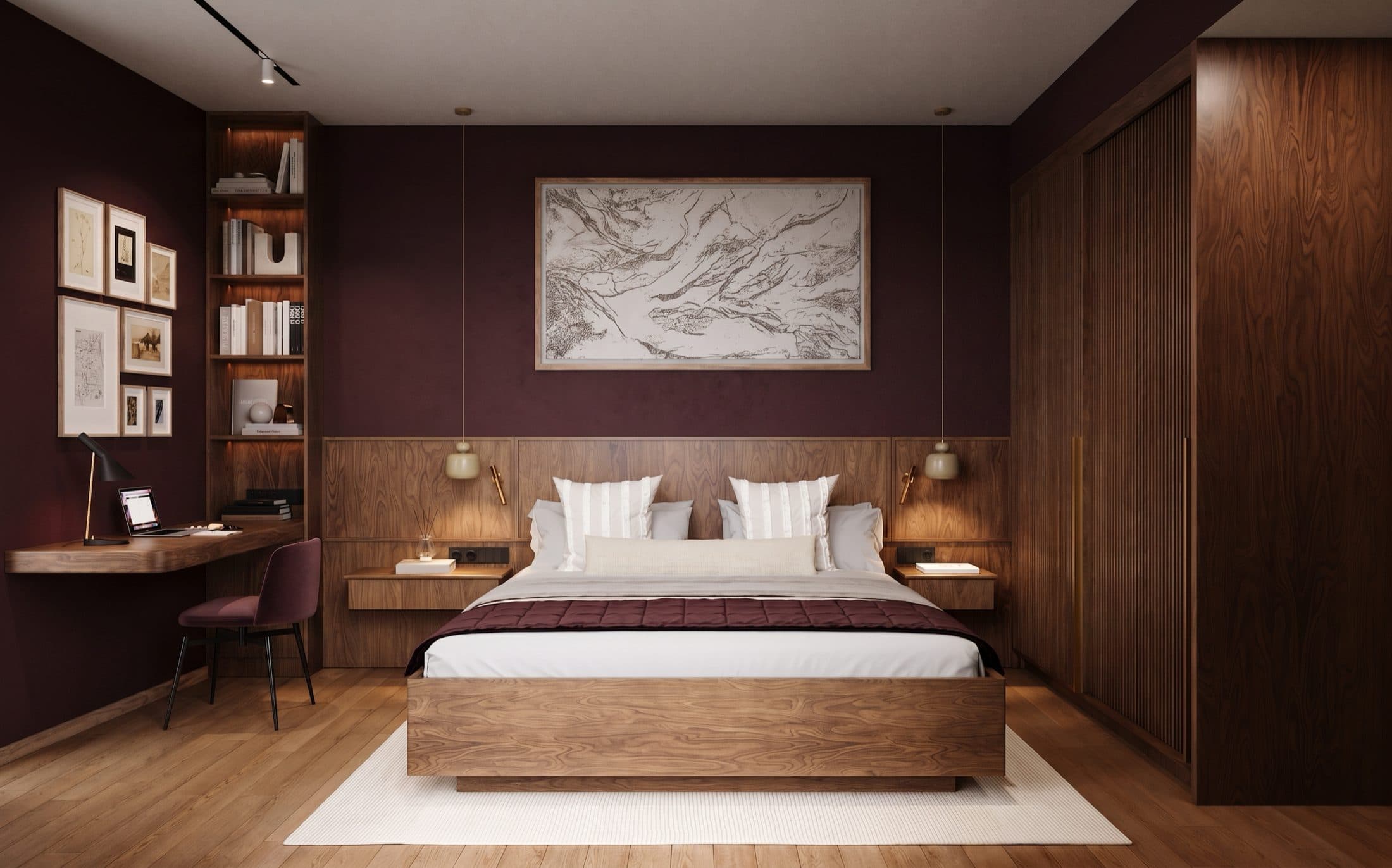
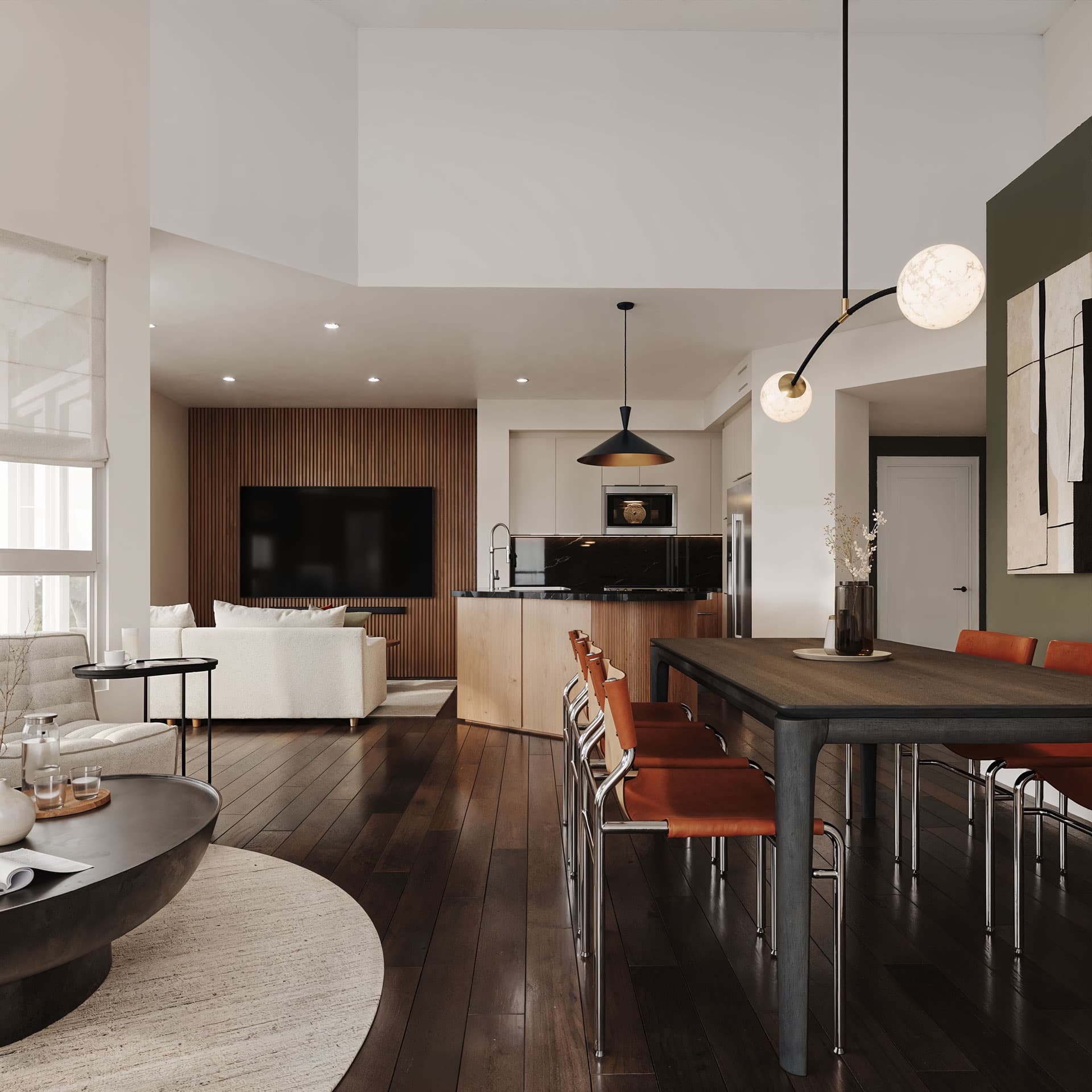
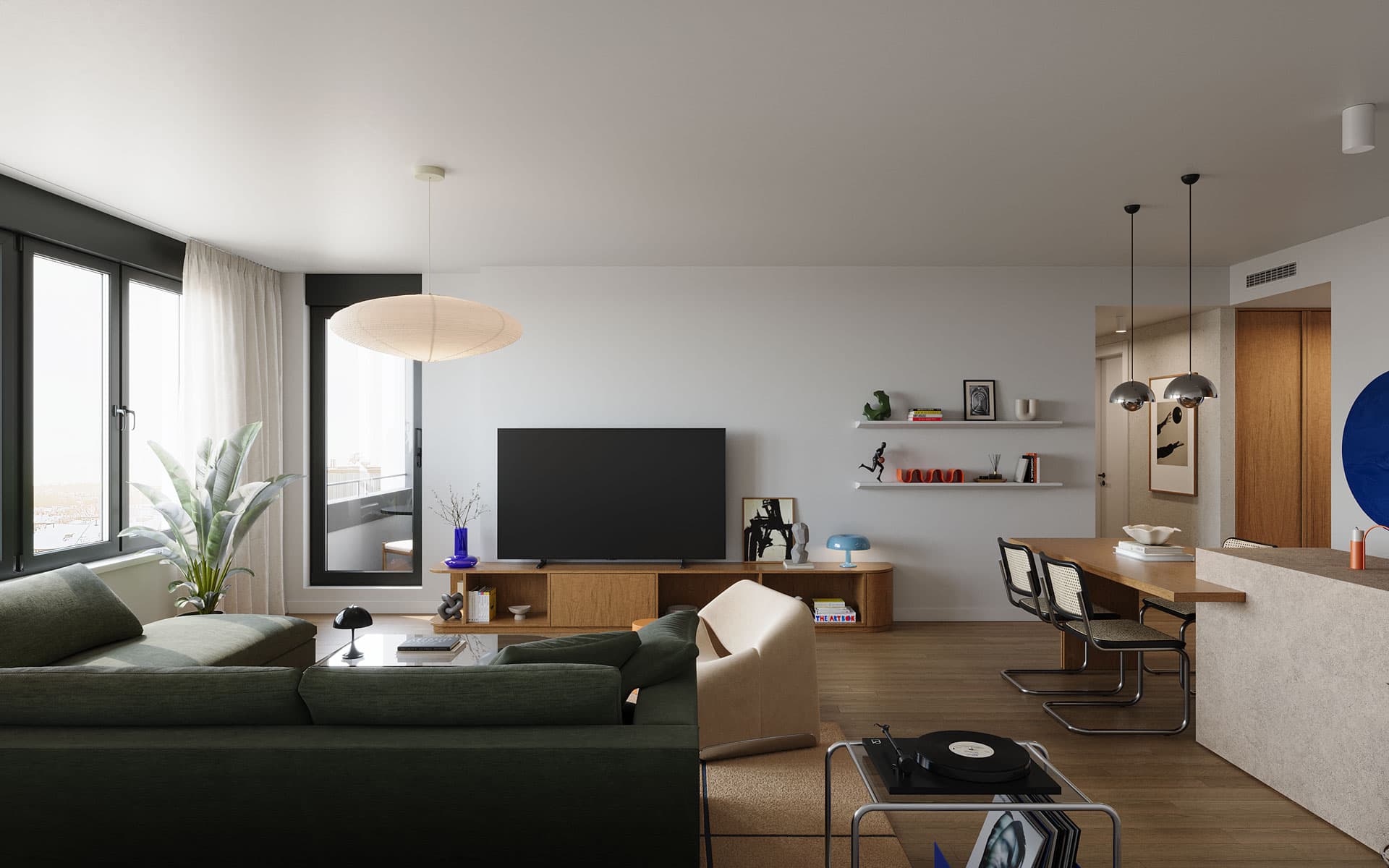
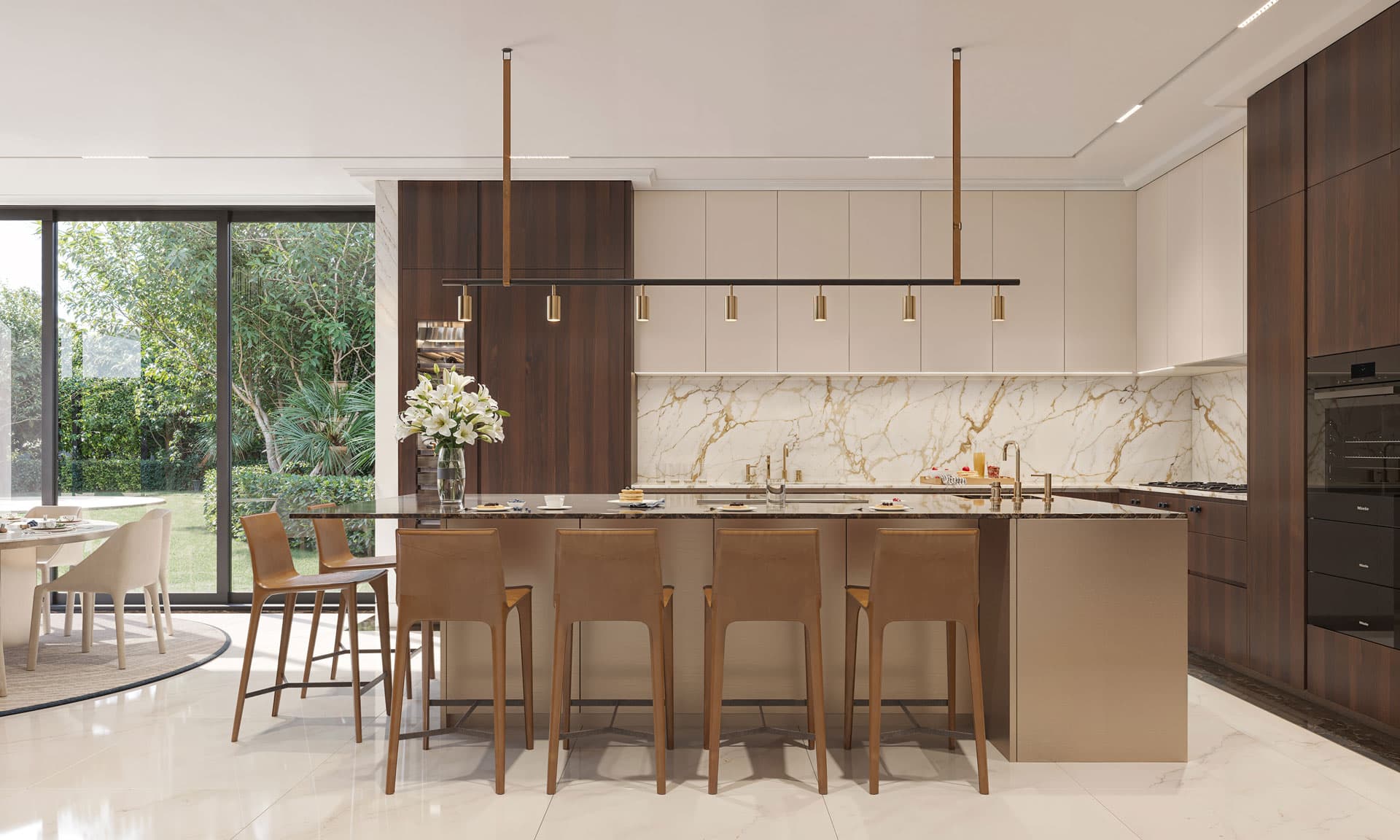
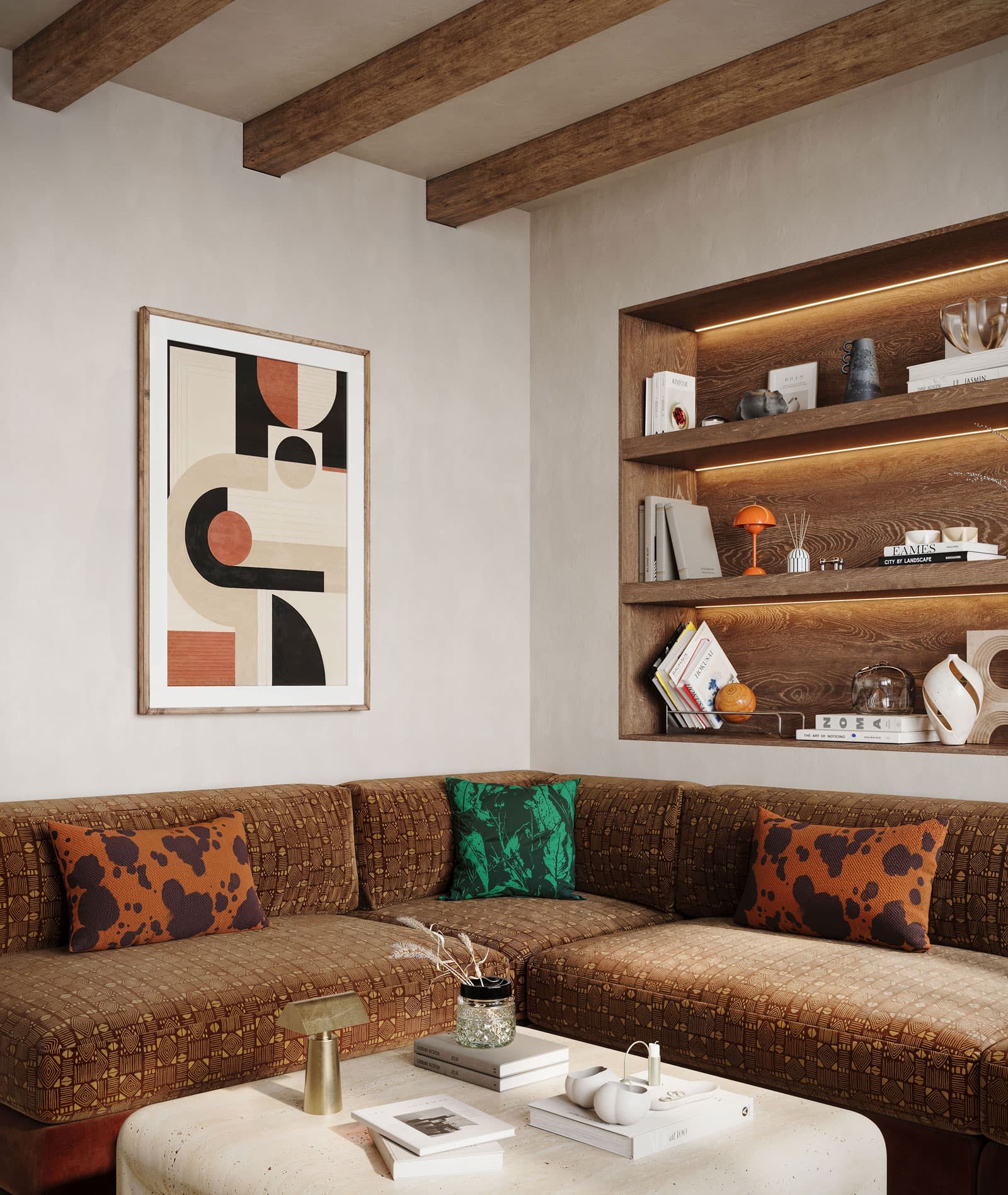
In the Dorcol Apartment, travertine was specified for the kitchen surfaces alongside warm wood island joinery. The material's veining and surface variation give the compact kitchen a depth that reads as genuinely material-rich - an effect that engineered quartz or laminate cannot produce at any price point. The kitchen functions well as a daily workspace because the travertine was correctly finished and sealed at installation.
Our Projects

Travertine in Bathrooms: Floors, Walls, and Wet Areas
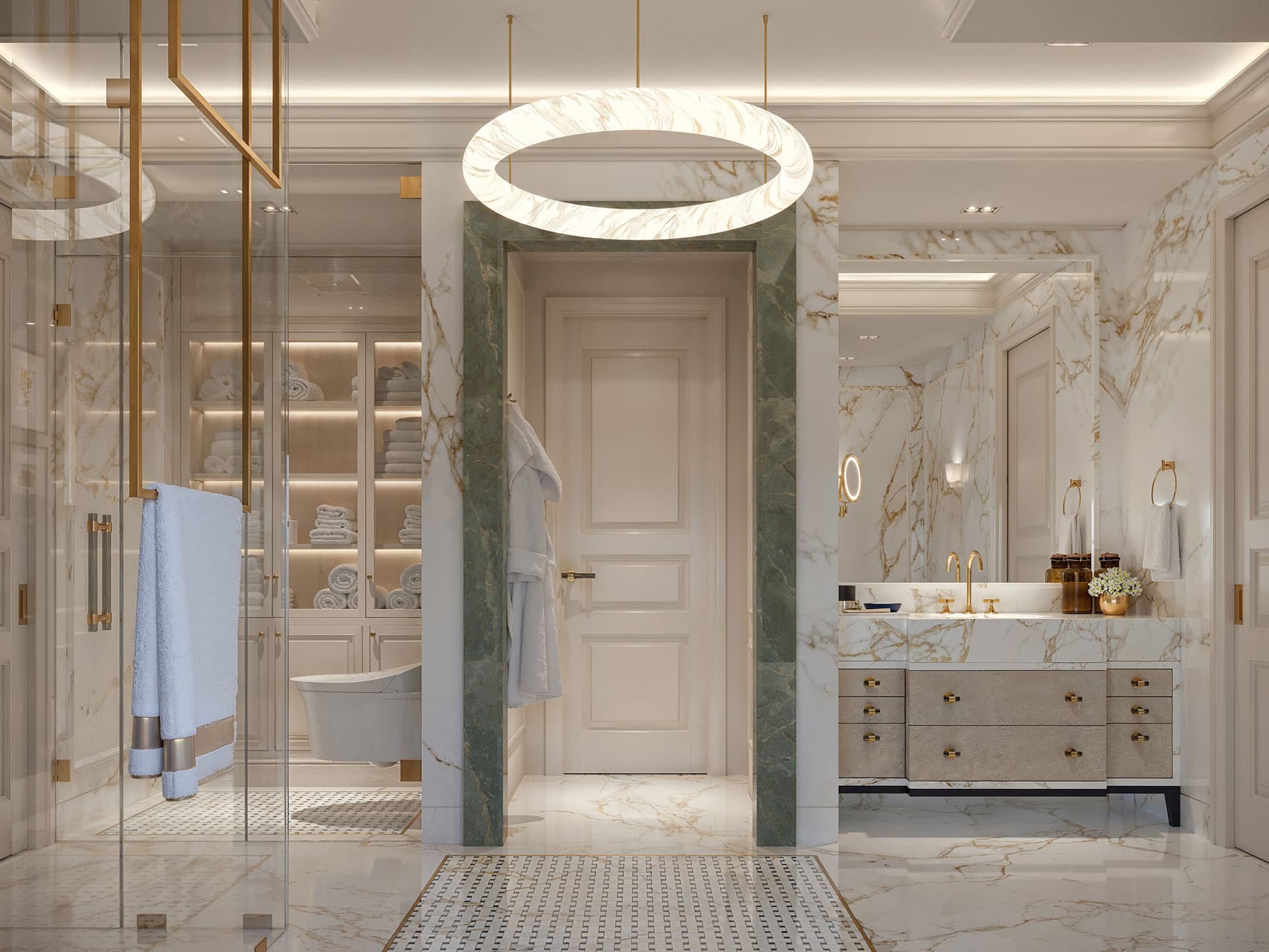
The bathroom is where travertine has its longest modern specification history, and for good reason: its warmth and natural variation translate exceptionally well into a room that benefits from visual calm and material depth simultaneously. Specification decisions are more complex here because different surfaces within the same bathroom have different requirements.
For bathroom floors, filled and honed is standard - but the finish must account for slip resistance when wet. A fine hone or brushed finish provides adequate traction without compromising appearance. Polished travertine floors in wet areas are not recommended: the combination of polish and water creates a surface that is both slippery and marks constantly. For shower walls and continuously wet cladding, sealing is the critical variable. Travertine in a shower receives sustained water exposure; unsealed or under-sealed travertine will absorb moisture, discolour, and deteriorate over time. A penetrating impregnator sealer applied at installation, with re-application every 12-24 months depending on usage, maintains long-term performance.
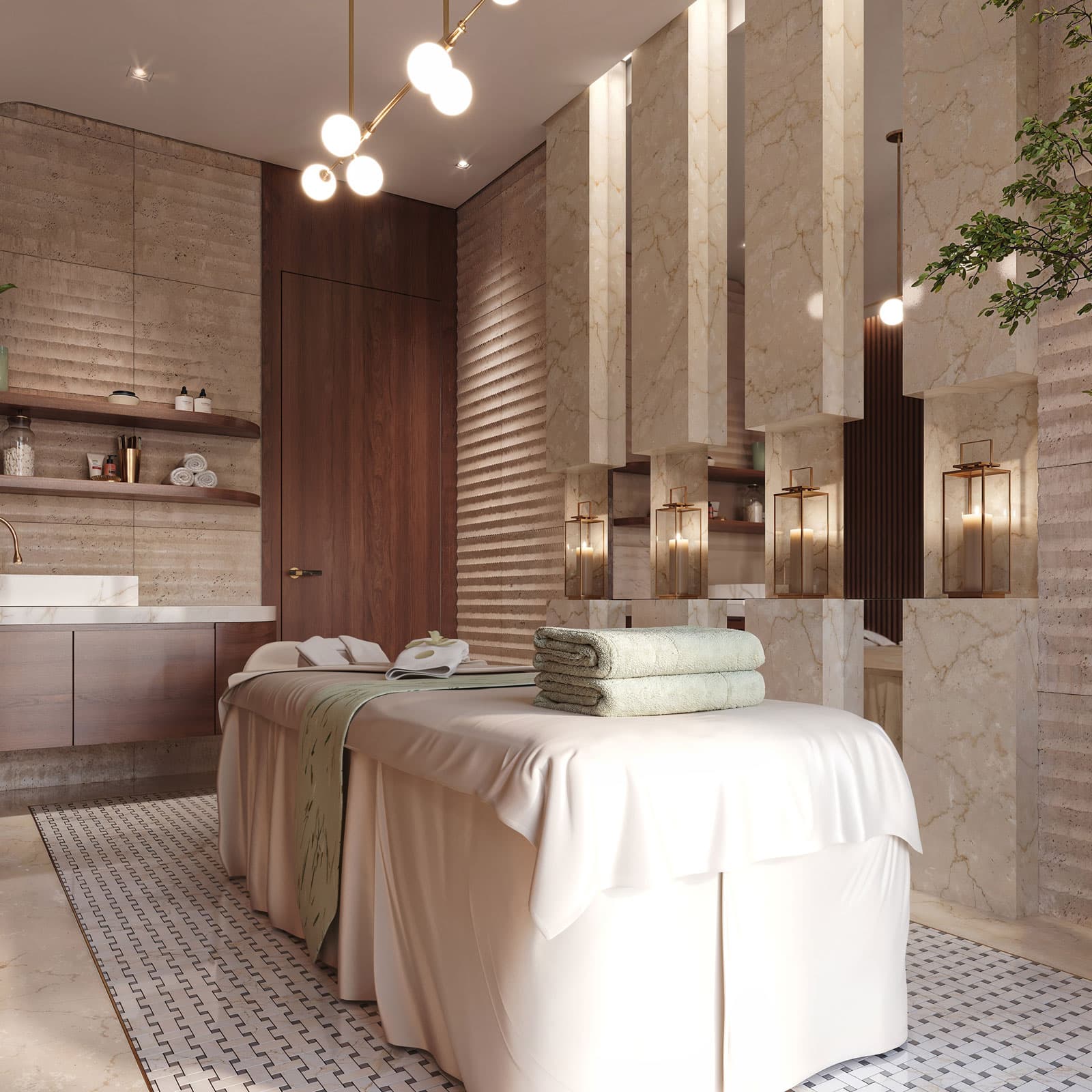
In the Ocean Villa, travertine was specified for the massage room walls - floor to ceiling, paired with a mirrored element that extended the visual field. Unfilled finish was chosen specifically because the room is not a wet area: the voids remain visible, the surface reads as architectural and textural, and the absence of filling gives the stone a quality the smooth filled version cannot match. This is the specification decision that separates a resolved travertine interior from a generic one.
Filled vs. Unfilled Travertine: The Decision That Changes Everything
The filled/unfilled decision is the most consequential specification choice in any travertine application. Most travertine sold for residential use in European and American markets arrives pre-filled from the factory - this is the version most clients encounter in hotels, spas, and showrooms. It is also the version that reads as least distinctive.
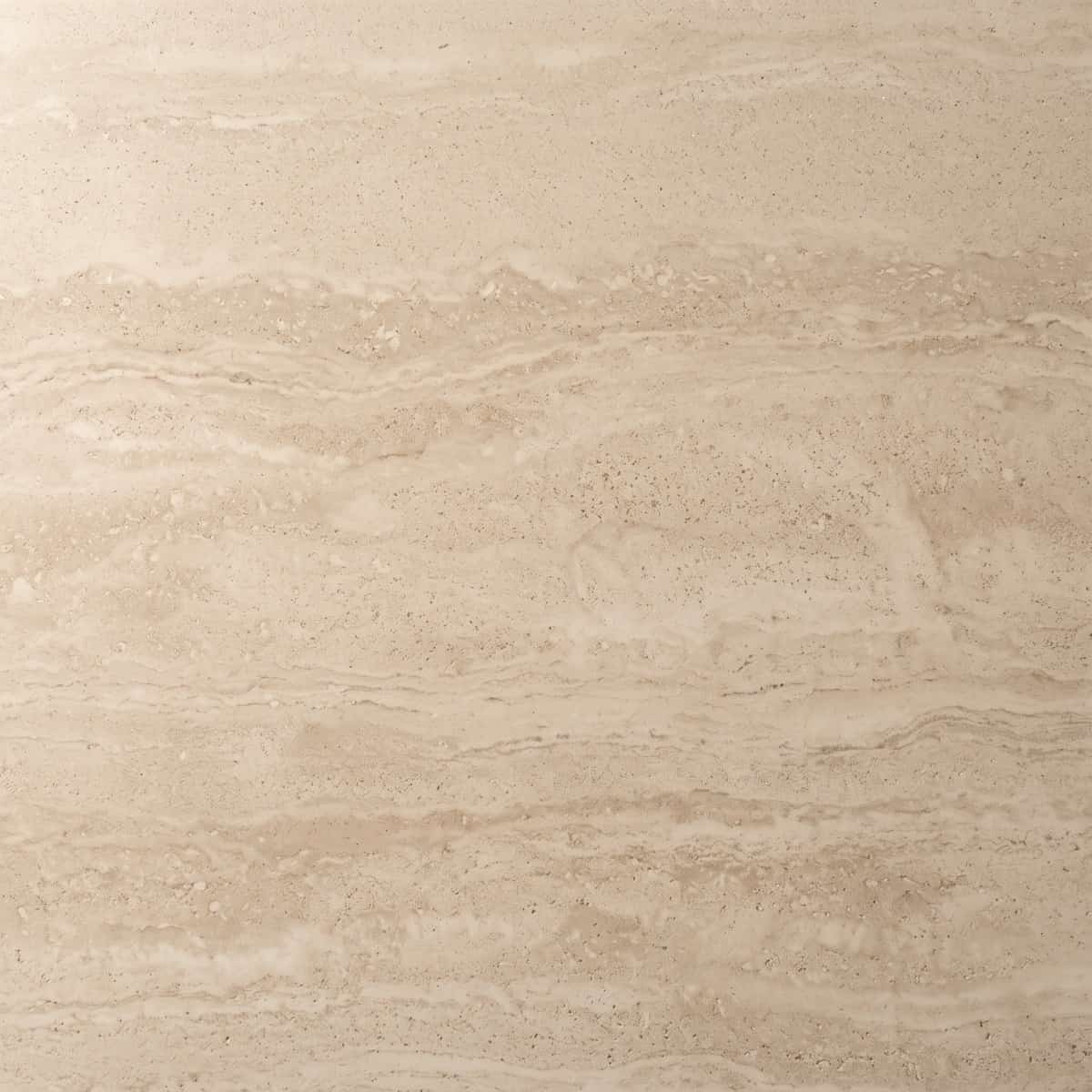
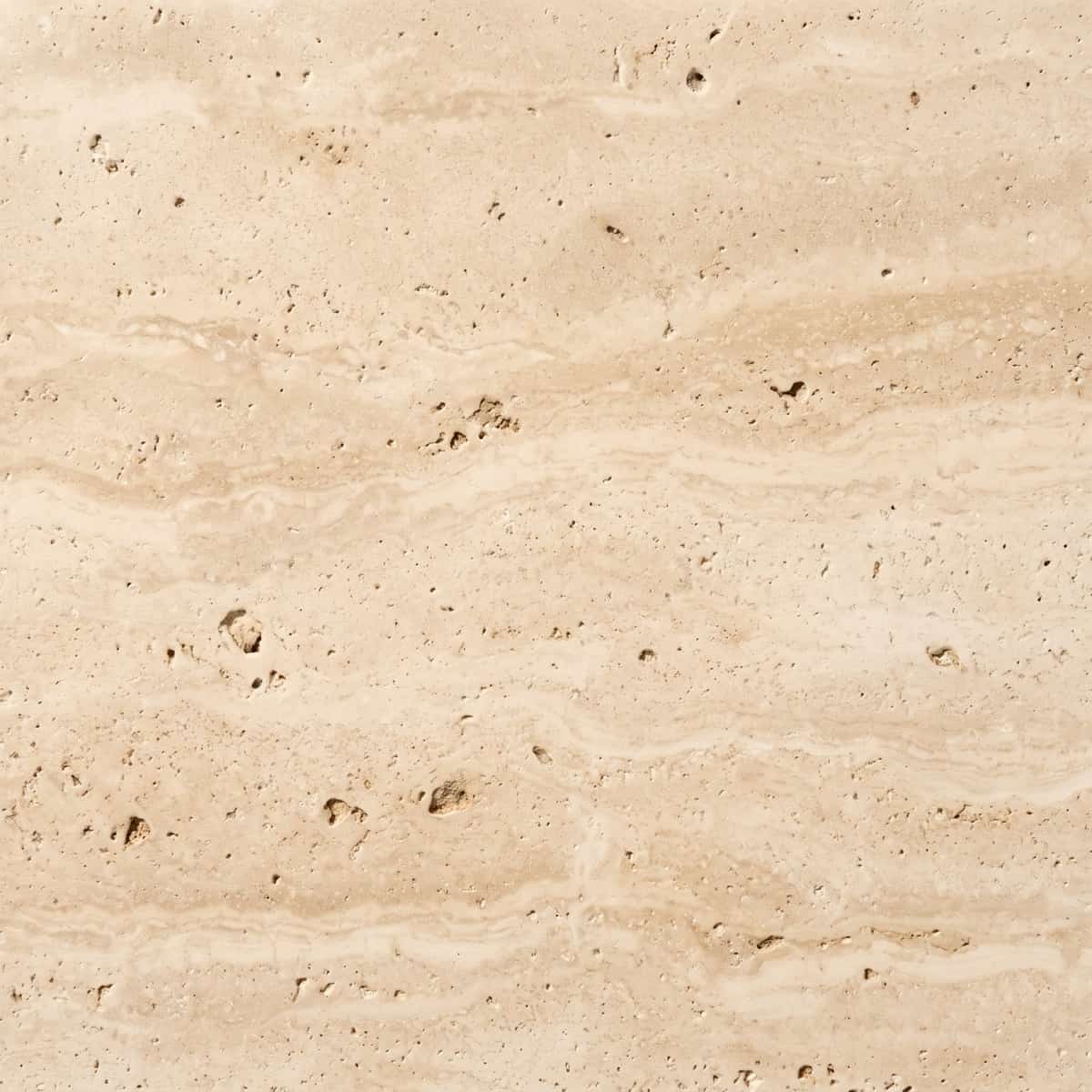
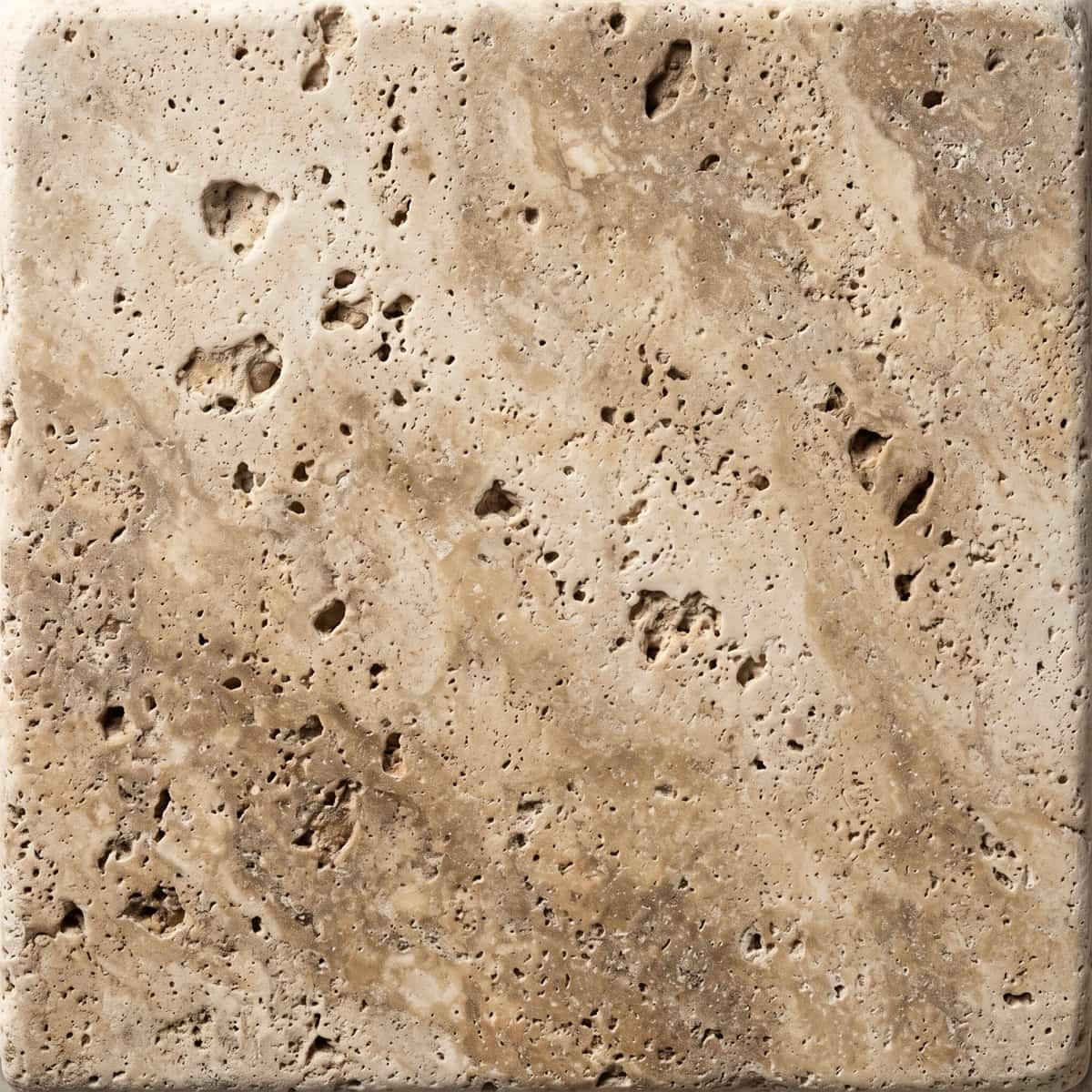
Unfilled travertine has a completely different visual character. The voids create directionality: the stone has a clear reading of how it was formed. The surface is textural in a way that light reads differently across it at different times of day. Against smooth plaster walls or the flat surfaces of adjacent timber joinery, unfilled travertine provides a material counterpoint that filled stone cannot replicate.
The practical constraint is clear: unfilled travertine cannot be specified in food preparation surfaces or continuously wet areas. It excels in feature walls (living rooms, entrance halls, bedroom headboards), bathroom vanity surrounds outside the wet zone, massage rooms and spa areas, and decorative flooring in dry environments. Understanding this distinction - and specifying accordingly - is where material knowledge makes the difference between a travertine interior that reads as considered and one that simply contains travertine.
Pairing Travertine: Material Combinations That Resolve
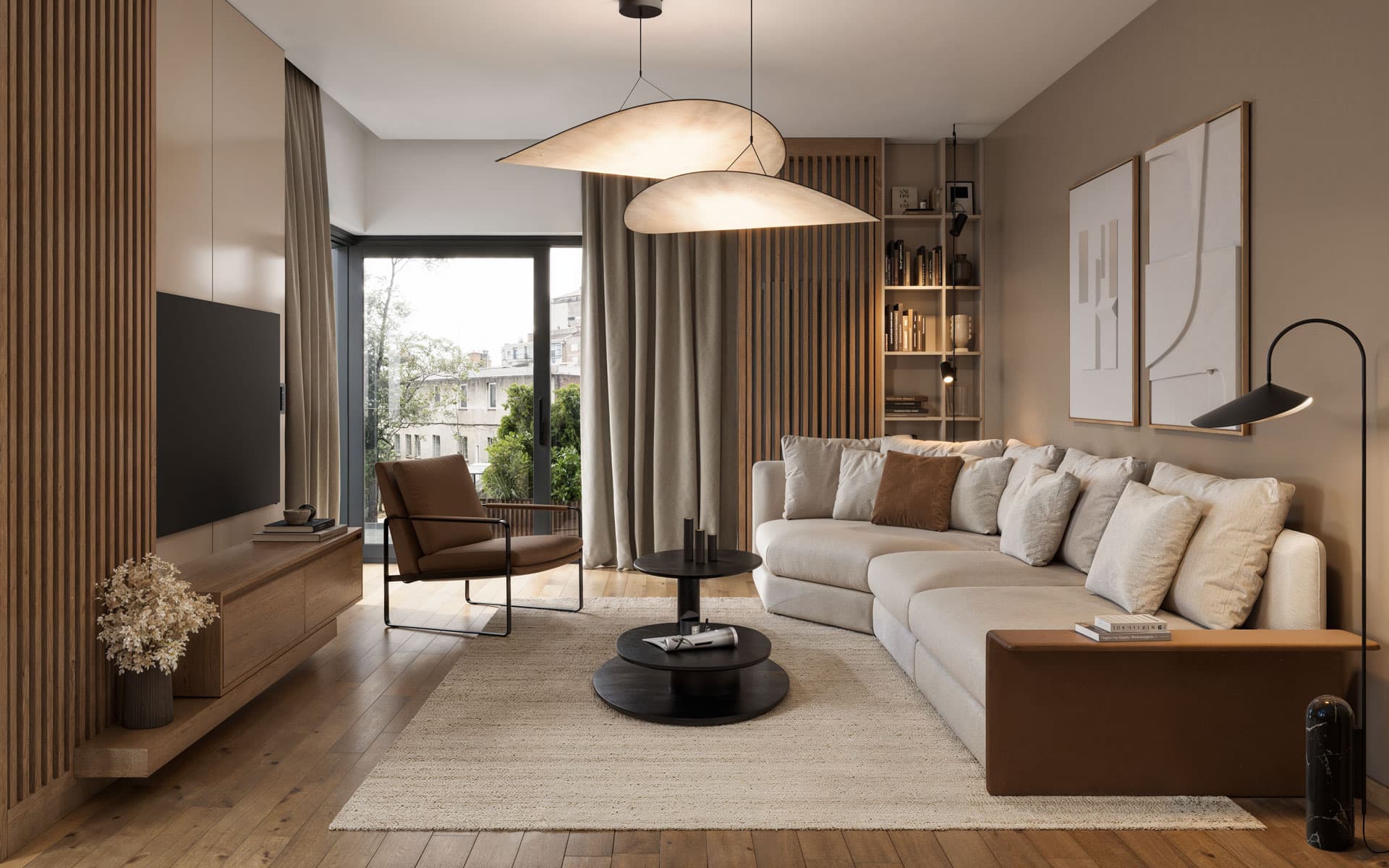
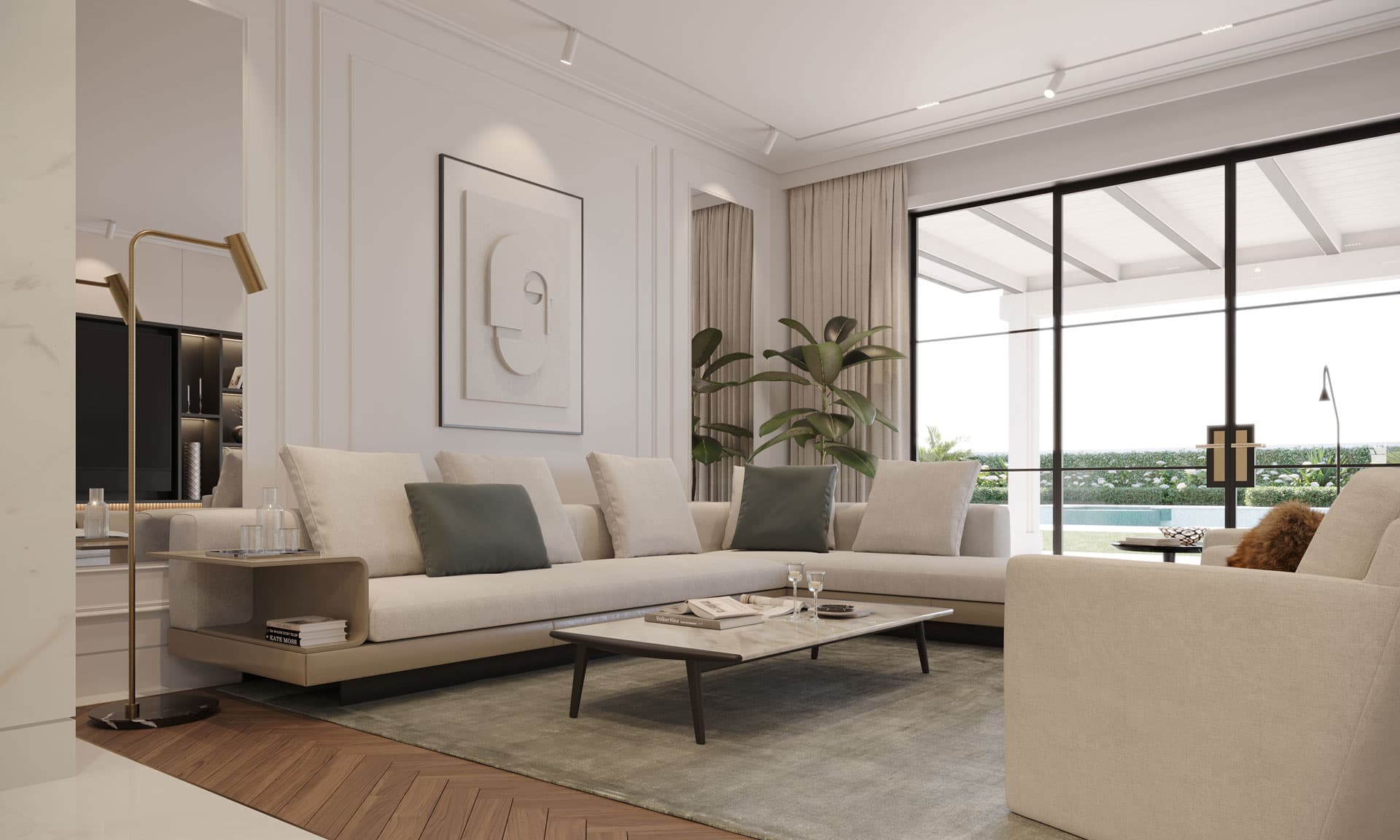
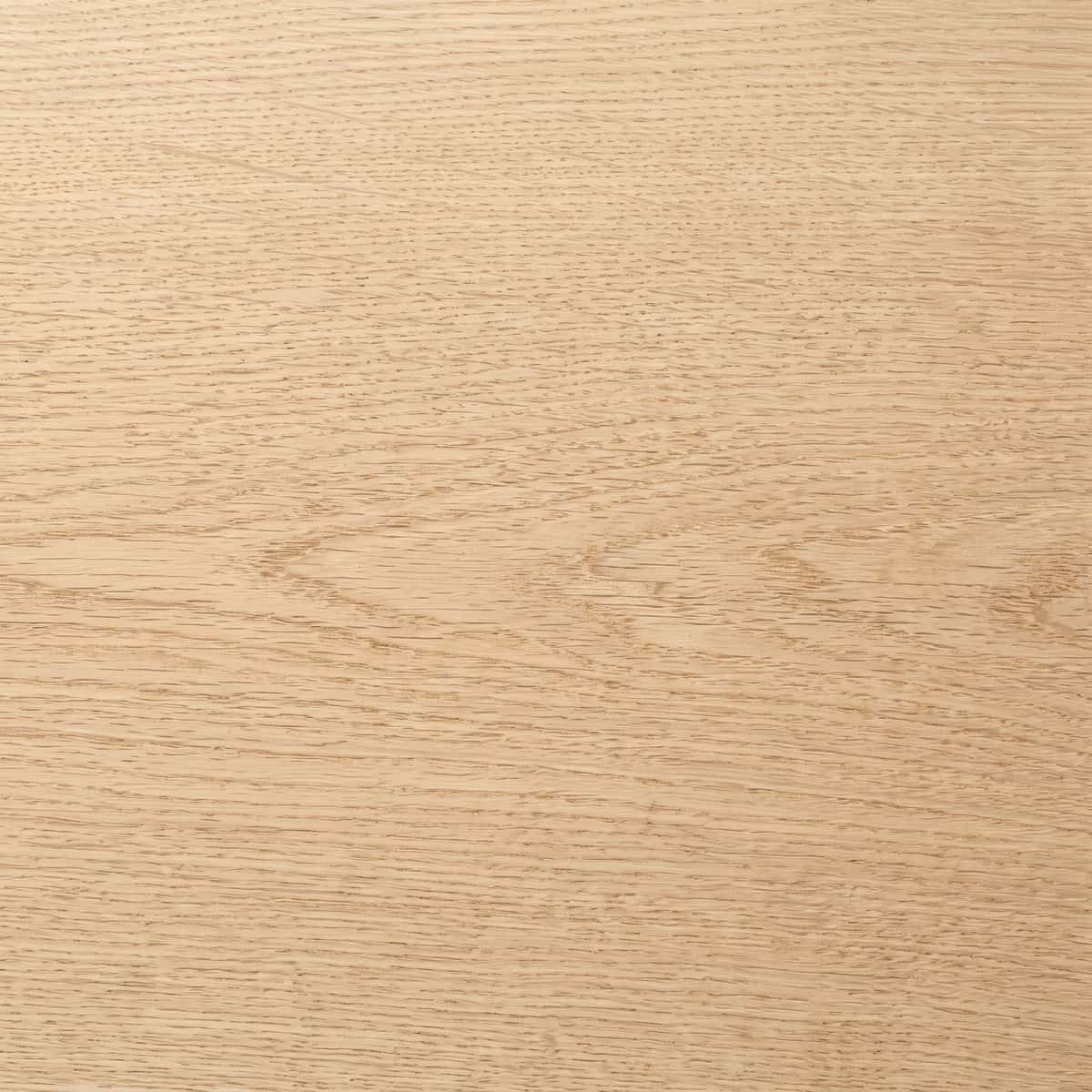
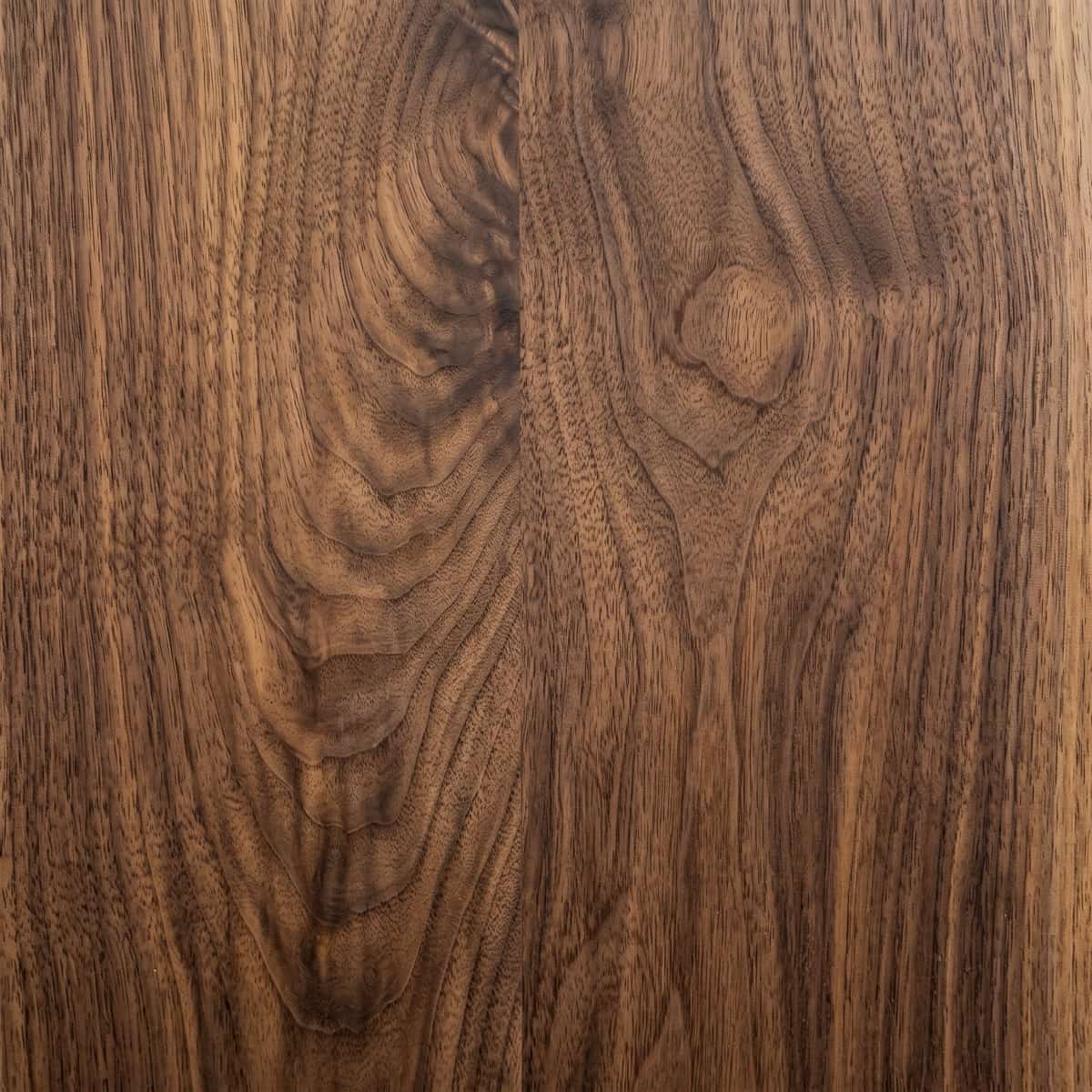
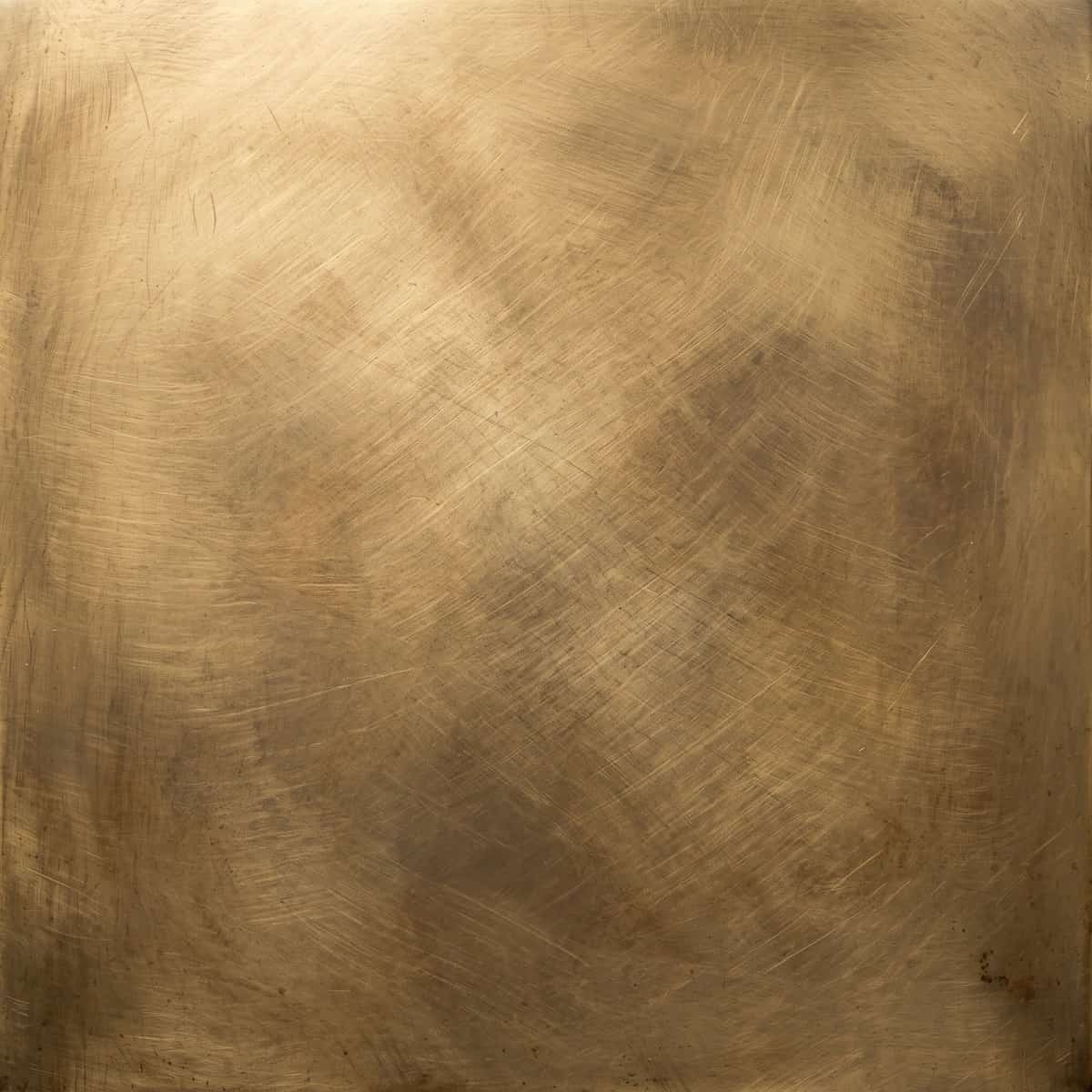
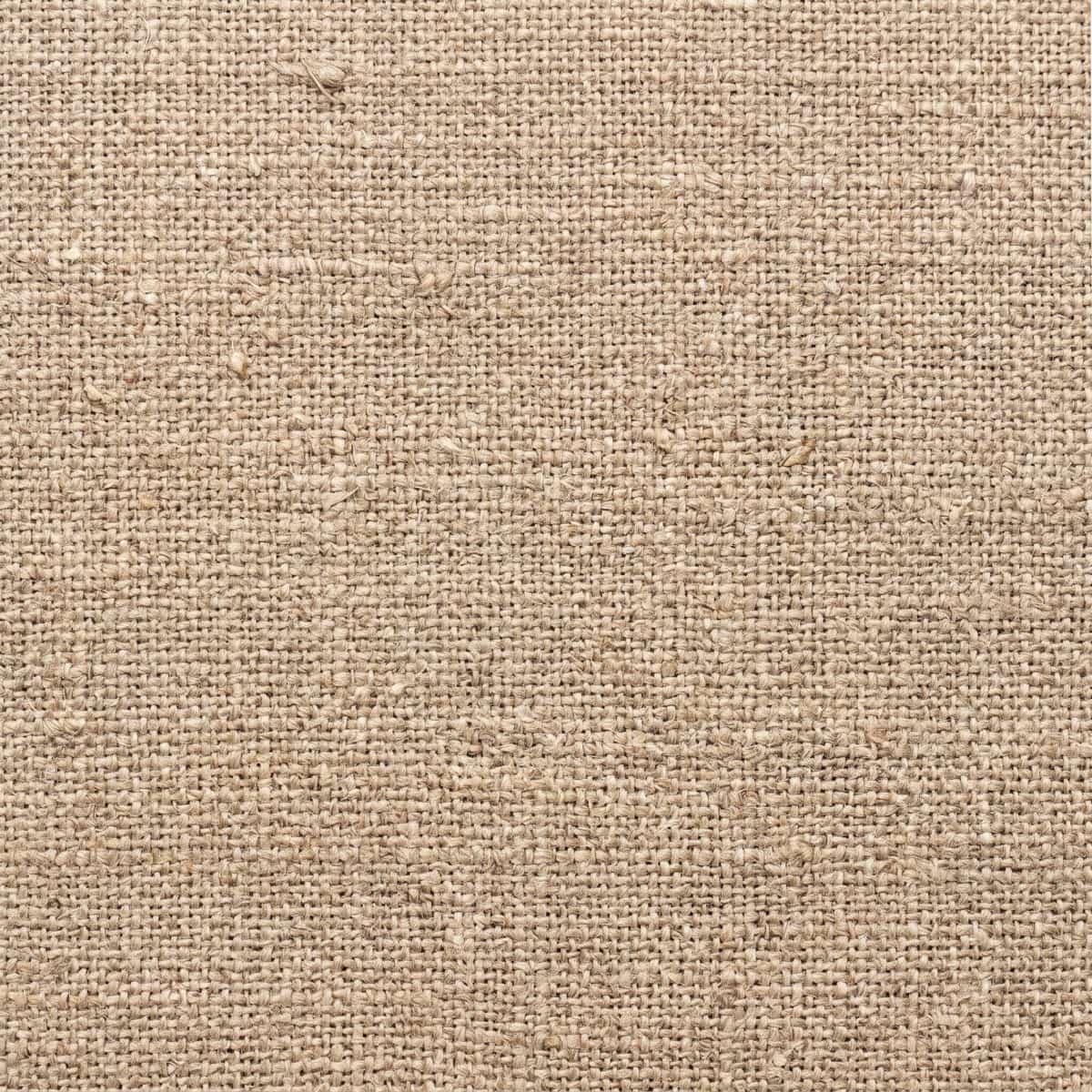
Travertine's colour range - ivory, walnut, warm gold, and cream with veining across the same spectrum - pairs naturally with a specific set of materials. The combinations that consistently produce resolved results: warm oak or walnut (wood grain reads against stone veining without competing), unlacquered or brushed brass (warm metallics align tonally), natural linen or bouclé textiles (soft textures against stone's hardness), and warm white or off-white plaster walls (the same tonal register makes the stone appear to belong rather than to contrast).
Pairings that produce less resolved results: cool grey stones (the tonal conflict registers as unresolved), chrome or polished nickel hardware (too cool for travertine's warm register), and strong colour applied extensively (travertine functions as a base material, not as backdrop for maximalist colour decisions).
Travertine performs best when given enough surface area to be legible as the room's primary material. A travertine island paired with everything else in the room at equal weight reads as an accent. A travertine island, countertop, and shelf - with all other materials selected to sit behind it - reads as the room's material foundation. The quantity decision is as important as the decision to specify the material at all. See the broader material logic in our guide to timeless material selection for luxury interiors.
Travertine and Longevity: The Sustainability Argument
Travertine is a quarried natural stone, which makes its environmental position more nuanced than manufactured alternatives. The primary variable is transport: European travertine quarried in Italy or Turkey travels far shorter distances to European projects than stone from more distant sources. Specifying European-quarried material for European renovations substantially reduces embodied carbon relative to intercontinental sourcing.
More fundamentally, correctly installed stone lasts generations. Travertine has no defined replacement cycle - unlike engineered stone or composite surfaces, which have finite lifespans before they degrade in appearance and require removal. A correctly specified travertine kitchen will outlast multiple cycles of trend-driven replacement. Our approach to sustainable material selection treats longevity as the primary environmental variable, and travertine's durability record makes a strong case on those terms.
How to Specify Travertine: A Practical Sequence
For clients and designers approaching a travertine specification, these decisions need to be made in order:
- Application: Kitchen countertop, bathroom floor, shower wall, feature wall, or entrance floor - each has distinct requirements that determine all subsequent decisions.
- Fill: Filled or unfilled, determined by whether the surface is food prep or wet area, and by the desired aesthetic character.
- Finish: Honed for most residential applications; brushed for a slightly more textural result; polished only for dry feature panels; tumbled for a deliberately tactile, less refined reading.
- Sealing: Penetrating impregnator sealer at installation; maintenance schedule appropriate to the application and frequency of use.
- Grout: Colour-matched to the stone's base tone to avoid a grid pattern interrupting the material's visual continuity; epoxy grout for wet areas.
- Source: European quarried for European projects; specify from a single batch where possible to ensure consistent veining and colour across the full installation.
For projects in Berlin and across Europe, we are glad to advise on travertine specification as part of a full design engagement. Further examples of our material approach are visible in the Ocean Villa and Dorcol Apartment.
Frequently Asked Questions
Is travertine suitable for kitchen worktops?
Yes, with the correct specification. Filled and honed travertine, properly sealed at installation, performs well as a kitchen worktop material. It will etch if exposed to acidic liquids without prompt cleaning - this is the condition of using any natural calcium-based stone in a working kitchen. The patina travertine develops with use is a quality of the material, not a defect.
What is the difference between filled and unfilled travertine?
Travertine naturally contains voids and channels formed during its geological development. Filled travertine has these voids grouted or resin-filled, producing a smooth, even surface. Unfilled travertine leaves the voids open, giving the stone a directional, textural appearance. Filled is appropriate for food preparation and wet area surfaces; unfilled excels in dry feature applications such as walls, headboards, and decorative flooring.
How do you maintain travertine in a bathroom?
Apply a penetrating sealer at installation. In shower or wet areas, re-seal every 12-24 months depending on usage intensity. Clean daily with a pH-neutral cleaner - never acidic, bleach-based, or abrasive products. Avoid leaving standing water for extended periods, particularly in unfilled applications.
Does travertine suit contemporary interiors, or only traditional ones?
Travertine works across both. Its warmth and natural variation sit comfortably within contemporary material-driven aesthetics - Japandi, organic modern, quiet luxury - as well as more classical schemes. Honed finish reads as contemporary; tumbled finish reads as more traditional. The material itself is neutral enough to follow the surrounding decisions rather than dictate them.
Ready to Bring These Ideas Home?
Tell us about your space and we will show you how these ideas could work for you. The first consultation is free and without obligation.