Invisible Lighting Techniques for Luxury Interiors
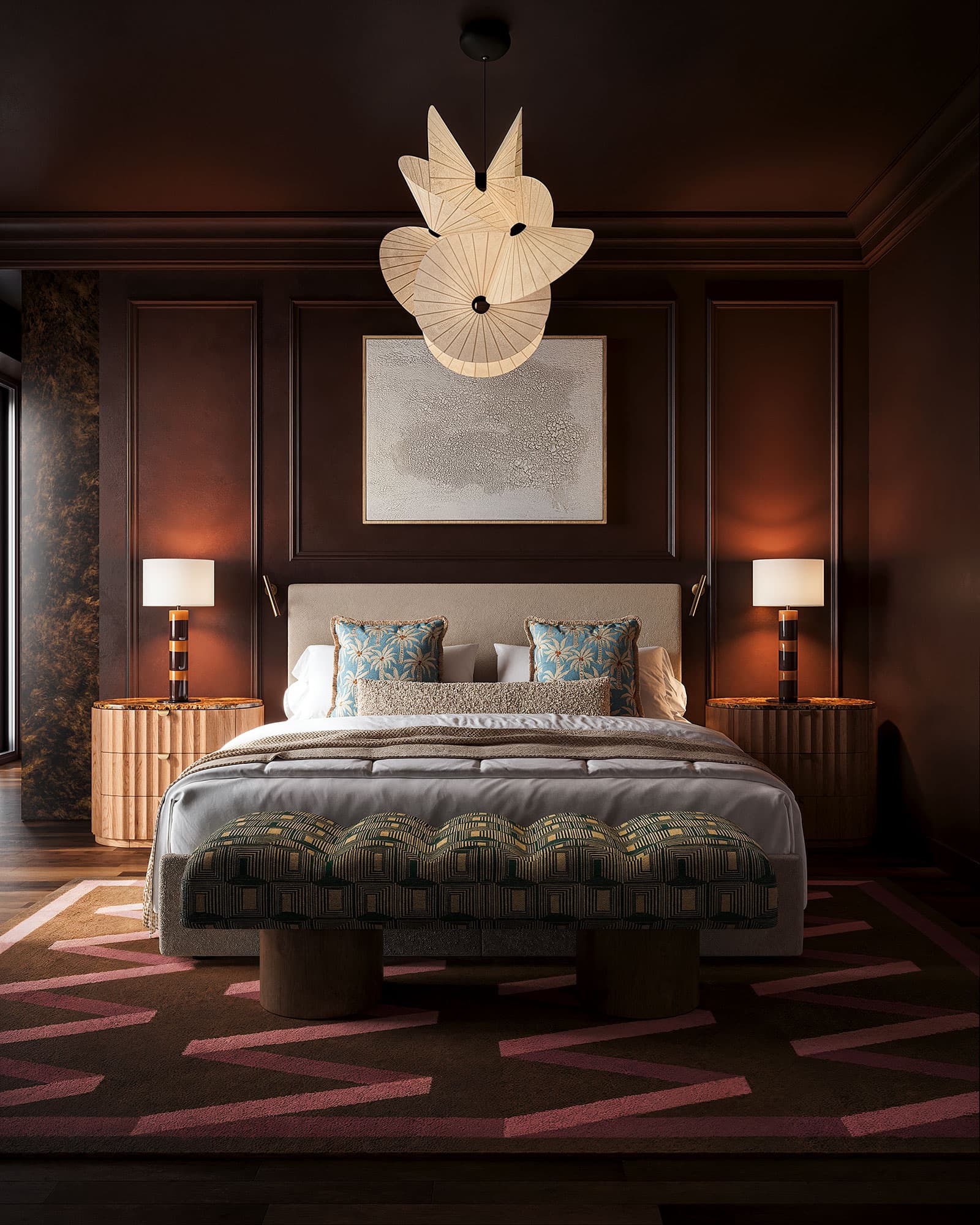
Lighting design in interiors is most effective when the source vanishes and only the effect remains. Walk into any space that feels genuinely refined - a considered hotel suite, a well-resolved private residence - and you will rarely be able to point to where the light is coming from. That quality of luminous ambiguity is not accidental. It is the result of deliberate, technically precise decisions made long before walls are painted or furniture placed.
Why Invisible Lighting Defines Luxury Interiors
The instinct in most renovations is to select fittings first. Pendants, sconces, and chandeliers are visible design objects - they are easy to specify and easy to understand. But architectural lighting, the kind embedded into the fabric of a space, operates on a different register entirely. It shapes how a room reads: the perceived height of a ceiling, the warmth of a wall, the drama of a material. When done well, a visitor cannot identify the mechanism. They simply feel that the room is beautiful.
This approach requires planning at the structural stage. Coves, slots, and channels must be built into ceilings and walls before they are finished. Retrofitting is possible but always more limiting. For clients undertaking a full renovation or new build, this is the moment to decide what kind of atmosphere a space should hold - and to design the light around that intention.
Cove and Coffer Lighting: Light That Breathes from the Architecture
Cove lighting is perhaps the most widely used technique in high-end residential design, and the most consistently misunderstood. A cove is a recessed ledge or channel built into a ceiling or wall, housing an LED strip that projects light outward rather than downward. The result is a soft wash across a surface - a ceiling that appears to float, or a wall that glows with gentle, even warmth.
The quality of a cove light depends almost entirely on its geometry. Too shallow, and the strip itself becomes visible - defeating the purpose entirely. Too narrow, and the light graduates awkwardly. The ideal proportion allows the light to diffuse fully before reaching the surface, creating a seamless gradient with no hot spots. Materials matter here too: a matte plaster ceiling reads very differently from a polished one under the same cove light. In our Dorcol apartment project, cove lighting was used to define the transition between the living and dining zones without any visible partition - the change in ceiling light was enough to give each area its own character.
Recessed Linear Strips and Architectural Slots
Where cove lighting washes surfaces broadly, recessed linear strips cut precisely. These are narrow channels routed into floors, ceilings, or walls to house low-profile LED profiles flush with the surface. When aligned with the direction of movement through a space - along a corridor, at the base of a staircase, at the perimeter of a kitchen island - they create a sense of direction and depth that is almost cinematic.
Floor-level linear lighting deserves particular attention. A thin slot of light running the full length of a hallway will make it appear longer and wider, independent of its actual dimensions. The same principle applies at the junction of wall and ceiling: a continuous line of light at cornice level pushes the ceiling visually upward. These are spatial illusions, but they are grounded in the physics of how the eye interprets luminance contrast. Used with discipline, linear recessed lighting is among the most powerful spatial tools available.
Backlit Surfaces: Stone, Glass, and Panelling
Backlighting transforms materials. A slab of translucent onyx or alabaster under conventional downlighting reads as a flat surface with pattern and colour. The same slab backlit becomes something entirely different - luminous, warm, almost alive. The material's internal structure becomes visible, and the light that passes through it carries a quality no artificial source can replicate directly.
Backlit surfaces are not limited to stone. Fluted or reeded glass panels, common in kitchen cabinetry and room dividers, take on a soft incandescence when lit from behind. Timber veneer panels with open grain can be backlit to beautiful effect. The critical consideration is uniformity: the light source behind the panel must be diffused evenly, or the individual LEDs will read through the material as points rather than a continuous glow. In our Ocean Villa project, a backlit stone feature wall anchored the entire living space - it needed no artwork, no decoration beyond itself.
Niche, Shelf, and Furniture-Integrated Lighting
One of the most underused techniques in residential design is lighting built directly into furniture and joinery. Open shelving with a recessed LED strip along its back wall transforms a simple storage element into a display feature. A floating sideboard lit from below appears to hover. A niche in a wall - often used to frame sculpture or objects - reads entirely differently with a narrow beam of focused light than without any.
The key to making furniture-integrated light feel architectural rather than theatrical is restraint. A single lit shelf among several unlit ones draws the eye in a way that feels considered. An entire wall of lit shelving can feel busy, even overwrought. The goal is to use light to create a hierarchy of attention - to guide the eye through the room deliberately, pausing at what matters.
Dimming and Scene Control: The Layer That Ties Everything Together
No invisible lighting scheme functions without proper dimming control. A cove light at full output in the evening is harsh and reads as a functional fixture rather than an atmospheric tool. At forty percent, the same light feels like candlelight at scale. The ability to set scenes - a morning configuration, a dinner setting, a late-night mode - is what allows a considered lighting design to serve a space across all hours and uses.
Modern control systems allow individual circuits to be grouped and recalled at the touch of a button or a voice command. For residential clients, the most practical approach is often a simple multi-scene panel per room rather than a full integrated smart home system. What matters is that every circuit in the space can be independently dimmed, and that the transitions between scenes are smooth rather than abrupt. This final layer is invisible in the best sense: the inhabitant simply notices that the room always feels right.
The Planning Timeline: When Invisible Lighting Must Be Designed
One of the most common frustrations in residential renovation is discovering, mid-construction, that the lighting design has been left too late. Invisible lighting is structural: coves, slots, and channels must be built before walls and ceilings are finished. Electrical conduit must be run to positions that will later be inaccessible. Changing a light position at the plastering stage is expensive. Changing it after painting is more expensive still. Attempting it once furniture is in place is almost impossible.
The practical rule is this: lighting must be fully resolved on paper before any building work begins. Every circuit, every dimming zone, every hidden channel must be specified and agreed. This requires a lighting designer or an interior designer with architectural lighting experience working closely with the contractor - not lighting specified from a showroom after the structure is complete. The investment in early design work pays for itself many times over in avoided mistakes and rework.
For full residential projects, we develop lighting plans alongside the spatial design from the earliest stages. The two are inseparable: a room's atmosphere is partly a function of its proportions and materials, but it is equally a function of how those elements are illuminated. Getting the architecture right while leaving the lighting as an afterthought produces spaces that look good in daylight and feel wrong at night.
Common Mistakes That Undermine Invisible Lighting
The most frequent error is visible LEDs. A cove built too shallow, a slot cut too narrow, or a LED strip installed without adequate diffusion will show the individual diodes as bright points rather than a continuous gradient. This is immediately obvious and almost impossible to correct without rebuilding the cove. Specifying the correct profile - the right diffuser, the right depth, the right distance from the surface to be lit - requires technical knowledge that goes beyond selecting a product from a catalogue.
The second error is inconsistent colour temperature. A cove light at 2700K next to a recessed downlight at 4000K will read as two entirely different rooms occupying the same space. Maintaining a consistent colour temperature across all circuits in a room - or using warm-to-dim LEDs that shift their colour temperature as they dim, mimicking incandescent behaviour - is the difference between a coherent lighting design and a collection of individual fixtures.
The third error is insufficient dimming. A circuit installed without a dimmer is not an invisible lighting circuit - it is a fixture set permanently to one output level. All invisible lighting must be fully dimmable, and the dimmer must be compatible with the LED driver. Incompatible dimmers produce flicker, buzzing, or a limited dimming range that defeats the purpose of the system entirely. Specifying driver and dimmer together, rather than separately, eliminates this problem at the outset.
Frequently Asked Questions
What is invisible lighting in interior design?
Invisible lighting refers to light sources that are concealed within the architecture of a room - built into coves, slots, joinery, or behind surfaces - so that only the light effect is visible, not the fixture itself. The result is a luminous atmosphere with no identifiable source, characteristic of high-end residential and hospitality interiors.
Can invisible lighting be retrofitted into an existing room?
It is possible but significantly more constrained than designing from scratch. Coves and slots can sometimes be added at cornice level without major structural work, and LED strip lighting can be introduced into existing joinery. However, recessed linear floor channels and backlit stone panels generally require structural access and are best specified during a full renovation.
How much does a professional invisible lighting scheme cost?
Costs vary considerably depending on the scope and the complexity of the control system. A single room with cove lighting and scene control can be achieved at a relatively modest premium over standard downlighting. A whole-home scheme with integrated smart controls, backlit features, and custom joinery lighting is a more substantial investment - but the cost is best understood as part of the overall interior specification rather than as a separate line item.
What colour temperature should invisible lighting be?
For residential spaces, 2700K is the standard for cove lighting and any ambient circuit intended for evening use. This is the warmest widely available temperature and creates the most comfortable atmosphere for living. Task lighting - over work surfaces or at reading positions - can be slightly cooler (3000K) without disrupting the overall warmth of the scheme.
For practical layering strategies in compact rooms - where ambient, task, and accent light must work harder - our guide to lighting strategies for small spaces covers the fundamentals in detail.
A lighting scheme of this kind requires planning, craft, and a clear understanding of what a space is for at every hour of the day. If you are considering a full interior project or a focused renovation, we would be glad to discuss how architectural lighting can define your space. Explore our projects to see how we approach light across different typologies, or reach out directly to begin a conversation.